
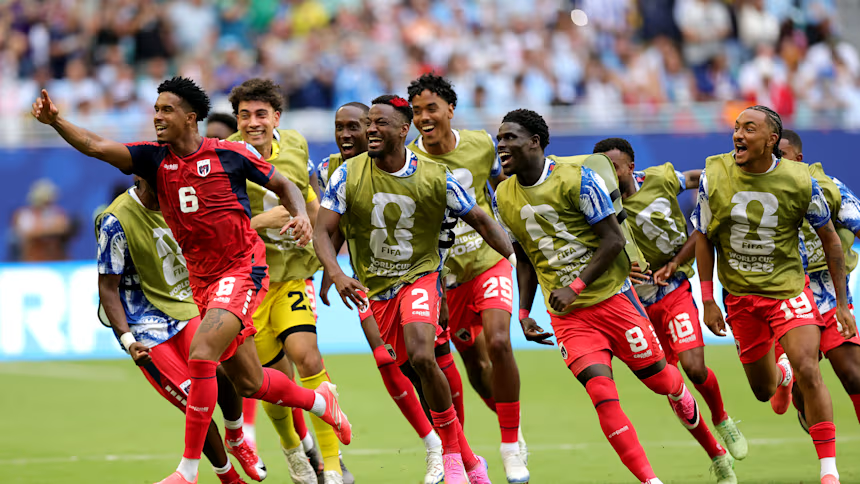
With a population of just over 500,000, Cape Verde has captured the world’s heart in the 2026 World Cup. After an emotional 0-0 draw against Spain, they secured a historic 2-2 draw against Uruguay, scoring their first ever tournament goals and proving the magic of football is alive.
We live in a world where football is often treated like a giant business. The sport is filled with massive television deals, billionaire owners, and players who cost more than a spaceship. Sometimes, it is easy to forget why we fell in love with this game when we were young. We forget the simple joy of kicking a ball on a dusty street. We forget the pure magic of dreaming big.
Then, a tiny island nation steps onto the brightest stage on earth and wakes us all up.
The Cape Verde 2026 World Cup journey is not a story about money or fame. It is a story about pure, unfiltered human spirit. This team traveled across the ocean to play in the biggest stadiums in the world. They faced teams packed with global superstars. They carried the heavy hopes of a small population and a massive, proud diaspora. They did not just show up to take photos. They came to fight. They came to play. They came to show the entire globe exactly who they are.
Over the course of two unforgettable matches, the Blue Sharks changed the entire feeling of the summer. They suffered against Spain, holding on for a miracle. Then, they attacked against Uruguay, proving they belonged. They gave us tears, they gave us goals, and they gave us memories that will last a lifetime. They reminded every single fan watching at home that football, at its very core, belongs to the dreamers.
A Love Letter to the Game: The Culture of Cape Verde Football
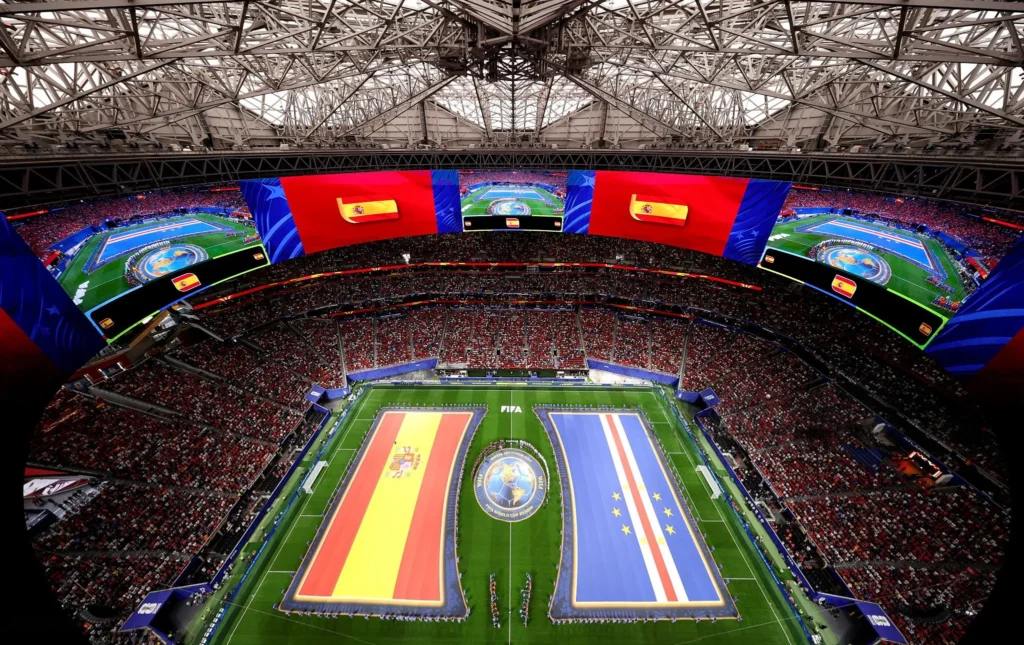
To understand this team, you must first understand the people. The islands of Cape Verde sit quietly off the western coast of Africa. It is a place defined by the deep blue ocean, bright sunshine, and a rich, beautiful history. But the true strength of this nation is not just found on the islands. It is found in the people who left home to build a better life, scattering across Europe and the United States.
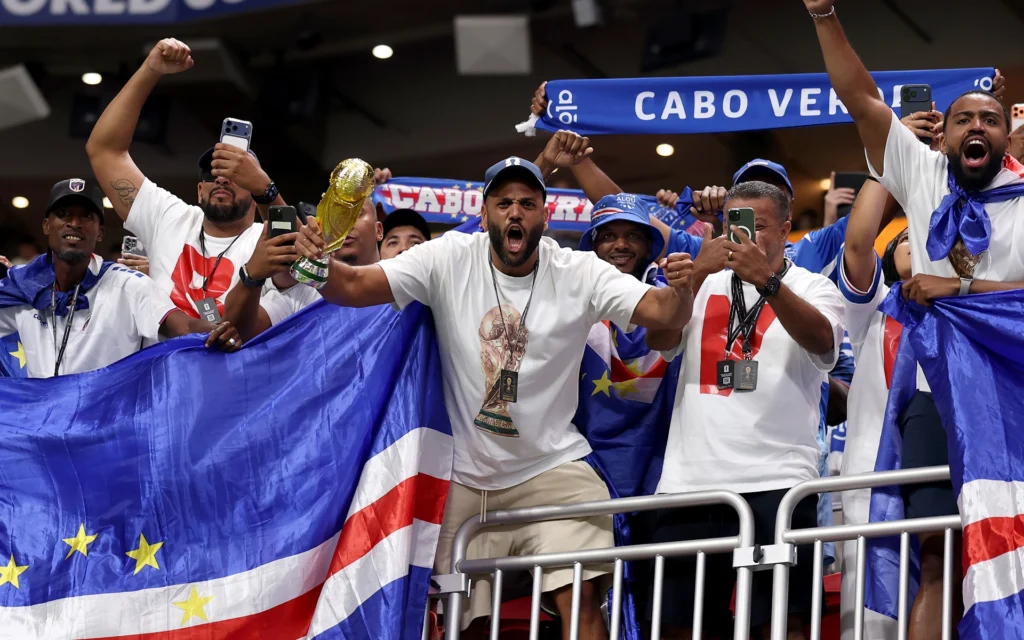
When people ask Why do fans love Cape Verde football, the answer is found in the stands. The stadiums in America turned into massive, vibrant family reunions. Thousands of fans dressed in bright blue and crisp white filled the seats. They brought their drums. They brought their flags. Most importantly, they brought their music.
The Cape Verde football culture is deeply tied to rhythm and song. During the matches, the fans did not just politely clap. They danced. They sang traditional songs of longing and hope. The music floated through the heavy summer air, turning a tense sporting event into a massive, joyful festival. Even when the team was trapped in their own half, defending for their lives, the fans never stopped singing. They provided a loud, beating heartbeat for the tired players on the grass.
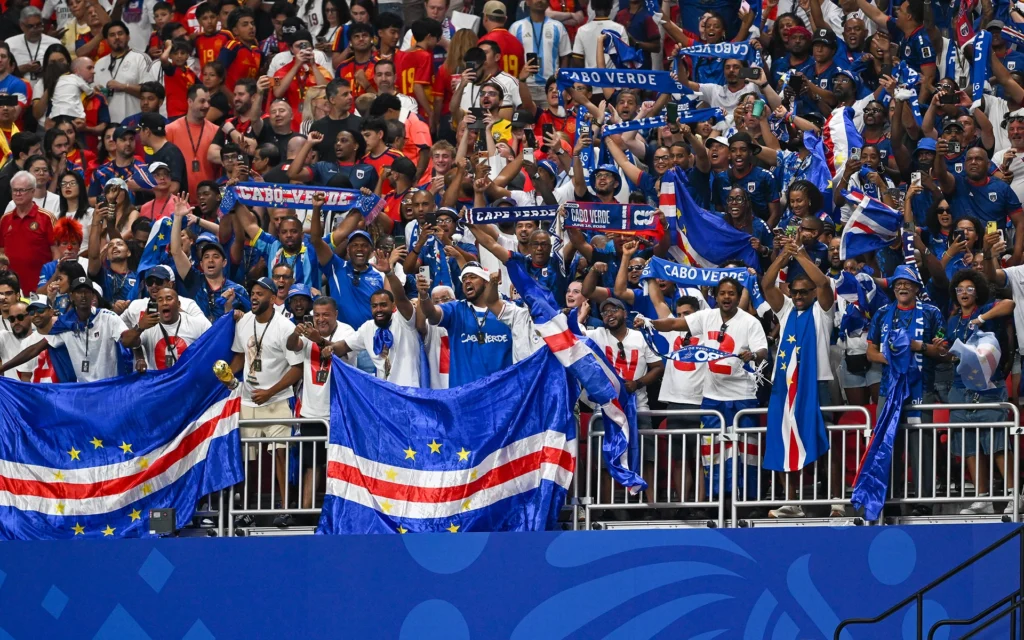
This joyful noise is the exact reason why neutral fans around the world quickly adopted the Blue Sharks as their second team. Football fans are tired of seeing quiet, boring stadiums filled with corporate sponsors. They want noise. They want passion. They want to see people who genuinely love their country.
The players feed off this incredible energy. You can see it in the way they tackle. You can see it in the way they run until their muscles cramp. They know they are not just playing for a golden trophy. They are playing for their grandmother watching on a small television in Praia. They are playing for the young kids wearing fake jerseys in the streets of Mindelo. They are playing for the immigrants working double shifts in New England. They play with a deep, heavy love. That kind of love cannot be taught in an expensive football academy. It has to be born in the soul.
Vozinha’s Tears and the Beautiful Resilience Against Spain
Every great story needs a hero. For Cape Verde, that hero wears goalkeeper gloves and carries the weight of a long, difficult career. His name is Josimar Dias, but the entire world now knows him simply as Vozinha.
In their opening match, the Blue Sharks faced the mighty Spanish national team. Spain is a footballing giant. They pass the ball with perfect rhythm. They attack in endless waves. They expected to crush the tiny island nation easily. For ninety brutal minutes, the Spanish attackers threw everything they had at the Cape Verde goal. The pressure was intense. It felt like standing in the middle of a terrible storm.
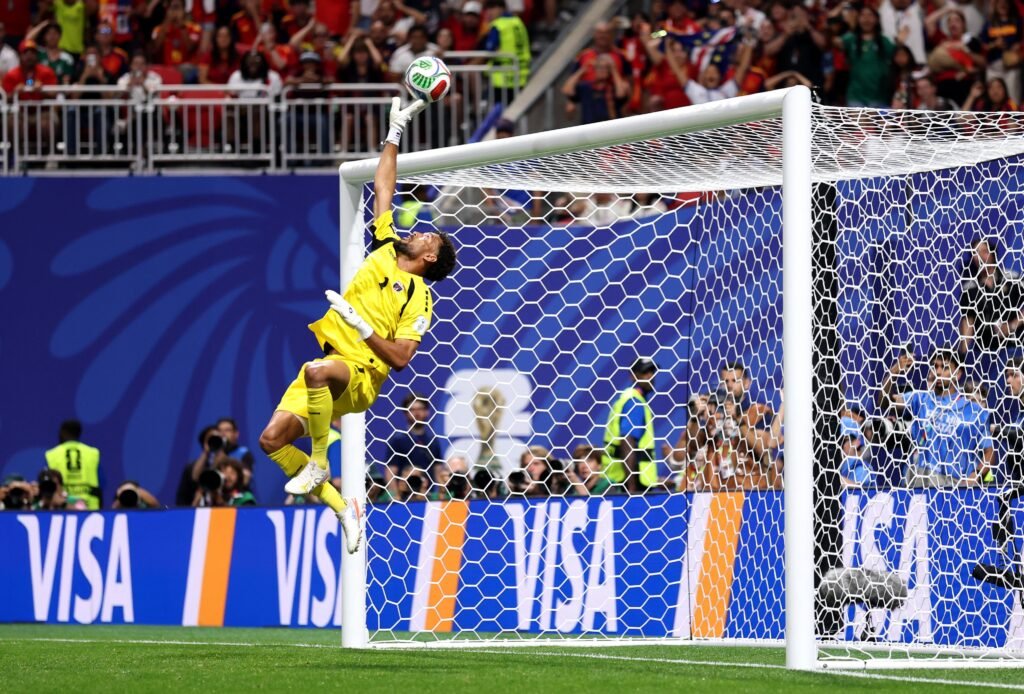
But Vozinha refused to let the storm break him. At 40 years old, he was the oldest man on the pitch. He had waited his entire life for this specific moment. He spent decades playing in quiet, unknown leagues far away from the bright lights. He grinded through the shadows, keeping his body strong and his mind sharp. When the Spanish shots rained down on him, he answered with pure magic.
He dove through the air to push the ball away from the top corner. He threw his body at the feet
of world-class strikers. He commanded his defense, shouting instructions until his voice went totally hoarse. He made save after save after save. He built an invisible wall across the goal line.
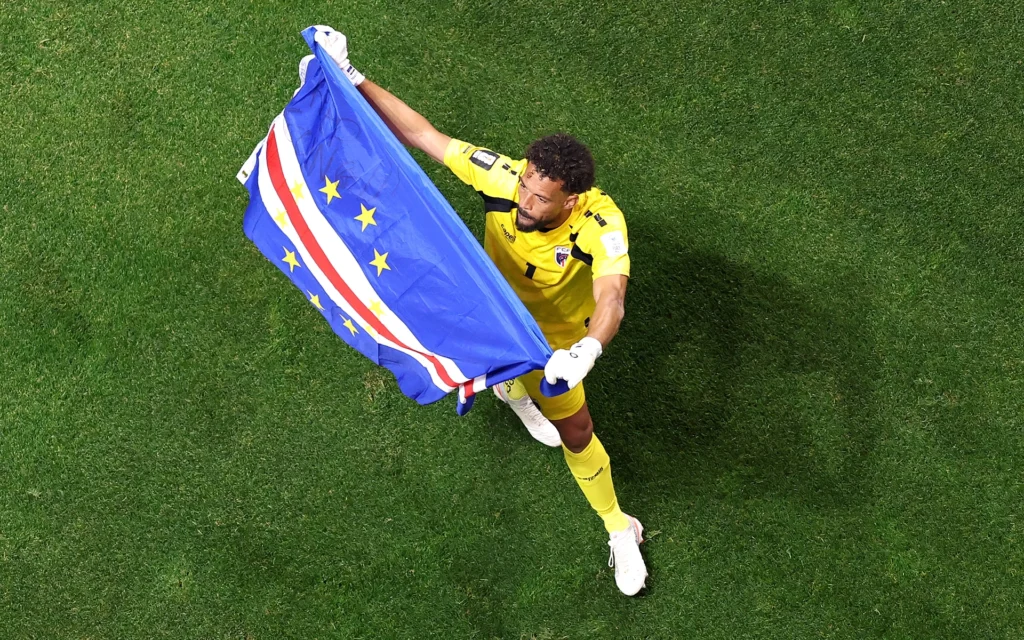
When the final whistle finally blew to confirm the 0-0 draw, the tension broke. The stadium exploded with noise. The Spanish players looked at the grass in shock. But the camera quickly focused on the 40-year-old hero. Vozinha collapsed to his knees right there in the penalty box. He buried his face in his large gloves. His shoulders shook violently.
The Vozinha goalkeeper’s World Cup moment broke the internet, but more importantly, it broke our hearts in the best possible way. These were not sad tears. These were tears of pure, overwhelming joy and deep relief. They were the tears of a man who realized his impossible dream had finally come true.
He cried for the years of hard work nobody saw. He cried for his mother, who could not get a visa to watch him play in person. He cried for the pride of his nation. In that single, beautiful moment, he was no longer just an athlete playing a game. He was a symbol of human resilience. He showed us that if you wait long enough, and fight hard enough, your moment in the sun will eventually arrive.
The Historic 2-2 Draw: Securing the First World Cup Goals
Holding Spain to a scoreless draw was a defensive masterpiece. It proved they could survive. But the team knew they needed to do more than just survive. They needed to show the world they could actually play the beautiful game. They got their chance in the very next match against a fierce, aggressive Uruguay team.
Uruguay is famous for their tough, physical style of football. They hit hard. They run fast. They know how to win difficult games. Early in the match, Uruguay attacked sharply and took the lead. Many critics thought the Cape Verde fairy tale was officially over. They assumed the tired islanders would simply give up and accept defeat.
Instead, the Blue Sharks bared their teeth. They pushed forward with reckless, beautiful bravery. They started stringing together fast, sharp passes. They took the fight directly to the tough South American defenders. And then, the ultimate breakthrough finally happened.
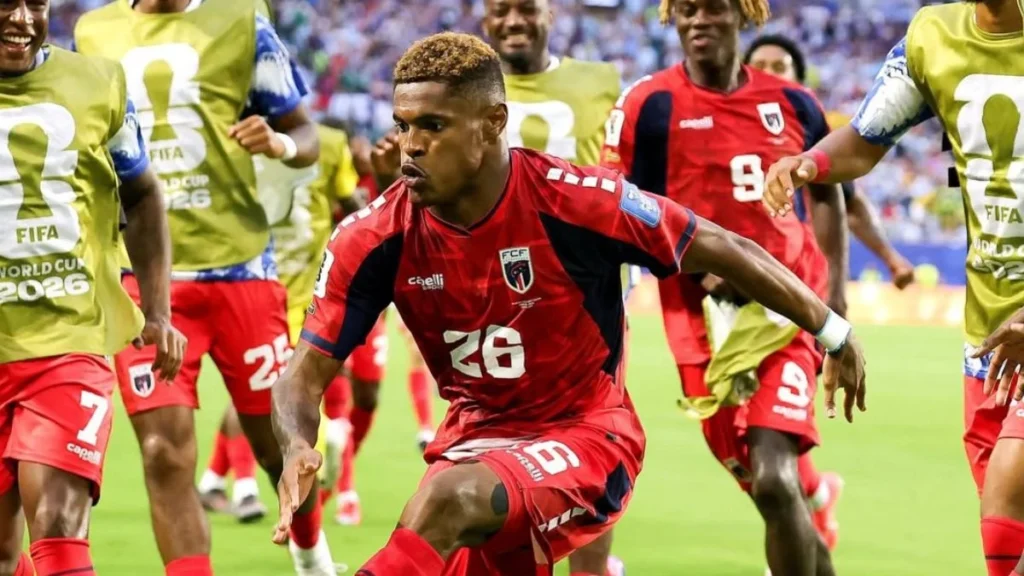
Midfielder Kevin Pina found a pocket of space near the edge of the penalty box. He looked up, set his feet, and struck the ball with pure, terrifying power. The ball flew through the humid air like a rocket. The Uruguayan goalkeeper stretched as far as he could, but it was useless. The ball smashed into the back of the net.
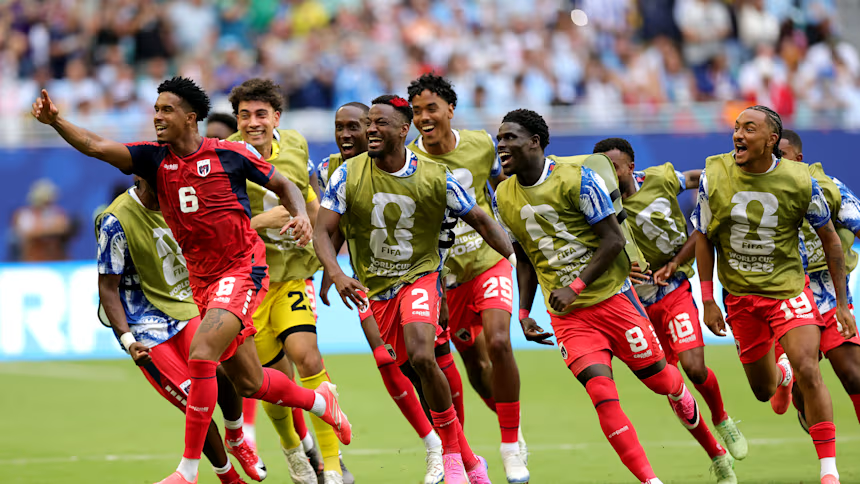
The stadium erupted into absolute chaos. It was the Cape Verde first World Cup goal in the history of the nation. Pina ran toward the corner flag, screaming at the top of his lungs. His teammates tackled him to the grass. The fans in the stands threw their drinks into the air, hugging strangers and crying openly. It was a moment of pure, electric joy.
But they were not finished. Later in the match, Helio Varela found another opening. He showed incredible calm under pressure, slotting the ball past the keeper to score the second goal. The noise in the stadium grew even louder. The ground literally shook beneath the feet of the fans.
The match ended in a thrilling Cape Verde vs Uruguay 2-2 draw. It was a massive result. It was a game filled with breathless attacking football, hard tackles, and wild celebrations. By scoring two beautiful goals against a former world champion, the Blue Sharks proved they were not just a lucky defensive team. They proved they belong on the same pitch as the giants. They proved they can punch back.
Why the Cape Verde 2026 World Cup Journey Matters to Us All
When we look back at the history of this tournament, we will remember the champions. We will remember the teams that lifted the trophy and celebrated in the confetti. But the true soul of the summer belongs to the team from the tiny islands.
Cape Verde proudly holds the title as one of the very few teams representing the Smallest country at the 2026 World Cup stage. Their presence alone is a massive victory. But the way they played the game is what truly matters.
They perfectly define the Meaning of the World Cup underdog. We love the underdog because they represent our own daily struggles. Most of us are not billionaires. Most of us do not have every single advantage in life. We have to fight for what we want. We have to scrape and claw for every little victory. When we see a tiny team wearing blue shirts stand up to the richest, most powerful countries on earth, we see ourselves.
We see our own hopes reflected in their tired eyes. We feel our own joy in their wild celebrations. They remind us that the world is not always ruled by the biggest and the wealthiest. Sometimes, a pure heart is enough to level the playing field. Sometimes, an island of 500,000 people can make the entire globe stop and watch in absolute awe.
This team did not need a massive stadium built of gold to validate their worth. They did not need expensive marketing campaigns to make fans fall in love with them. They just needed a patch of green grass, a round ball, and a chance to show their courage.
The beautiful game has become very complicated in modern times. It is tangled up in politics, money, and endless arguments on television. But for two glorious matches in the summer of 2026, the game was perfectly simple again. It was just a group of brothers fighting for their flag. It was a 40-year-old man crying tears of joy on the grass. It was a net shaking from a historic strike.
Cape Verde gave us the greatest gift a football team can ever give. They gave us back our childhood romance with the sport. They proved that no matter how big the giant is, the underdog still has teeth. They reminded us, with every single tackle, pass, and tear, exactly why the World Cup exists.