
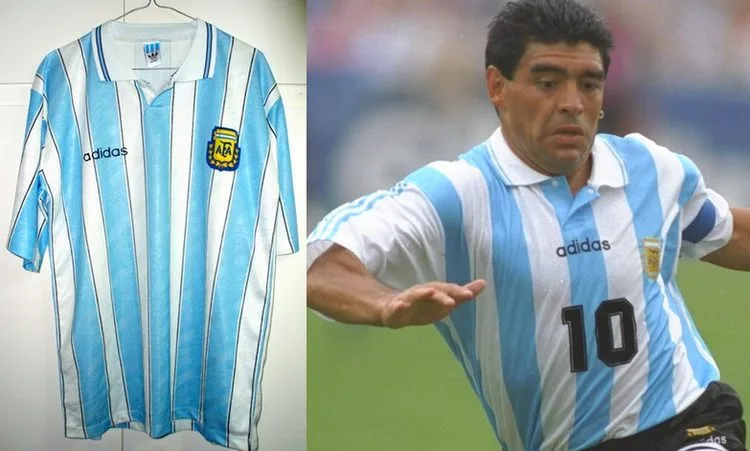
Football apparel is rarely defined by what it fails to become. Usually, a kit’s legacy is forged under the stadium lights, but the Argentina 1994 unreleased jersey proves that occasionally, a garment achieves a dark, mythological status precisely because it was never allowed to breathe. This engineered Adidas prototype is the ultimate sartorial ghost. It is a piece of high-stakes fashion architecture that was systematically erased before it ever saw the pitch. To truly understand this garment, one must abandon the standard metrics of sports analysis and approach the silhouette with a profound sense of mourning. This is not just a shirt; it is an aborted future. It represents an alternate timeline of aesthetic evolution, violently cut short by the rigid, unflinching dogma of national heritage and bureaucratic fear.
A Philosophical War Over the Banned Kit
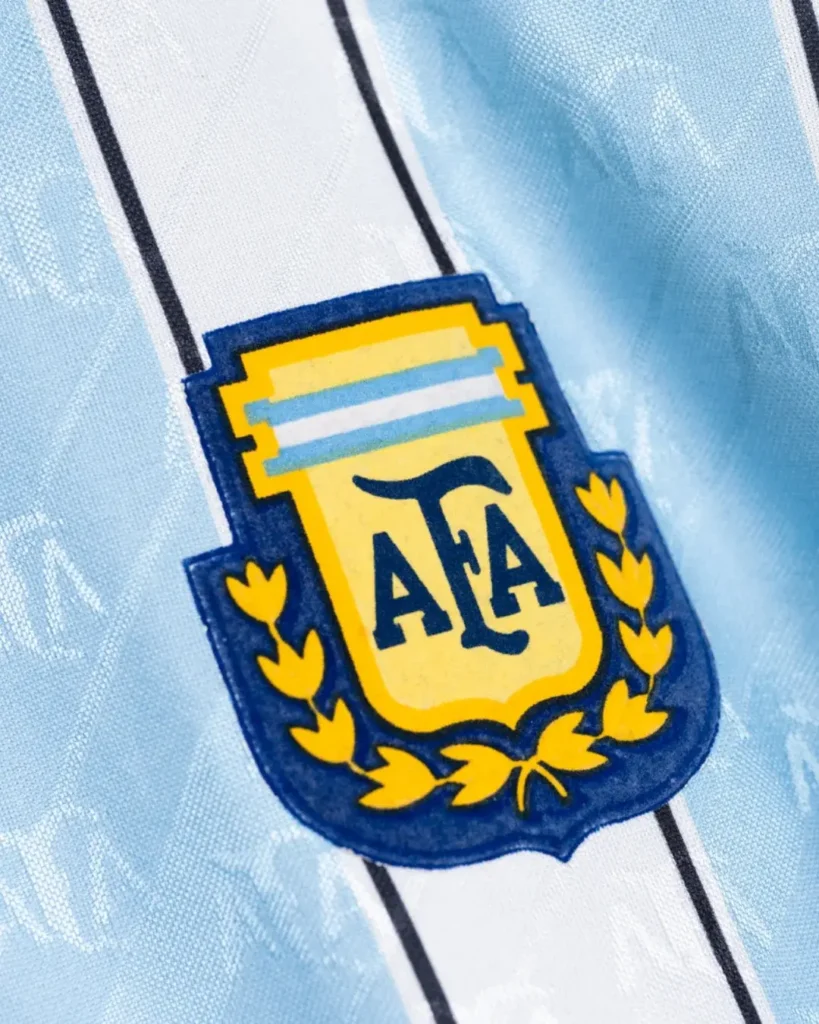
The emotion woven into the Argentina 1994 unreleased jersey is one of profound tension. Adidas, sensing the shifting cultural tides of the mid-1990s, attempted to pull the sacred Albiceleste into a disruptive new era. They wanted to weaponize the design, making it heavier, more structural, and distinctly modern. However, they underestimated the fierce, almost religious protectionism governing the Argentine Football Association (AFA). The ensuing clash was not a mere disagreement over fabric; it was a philosophical war over the visual identity of a nation.
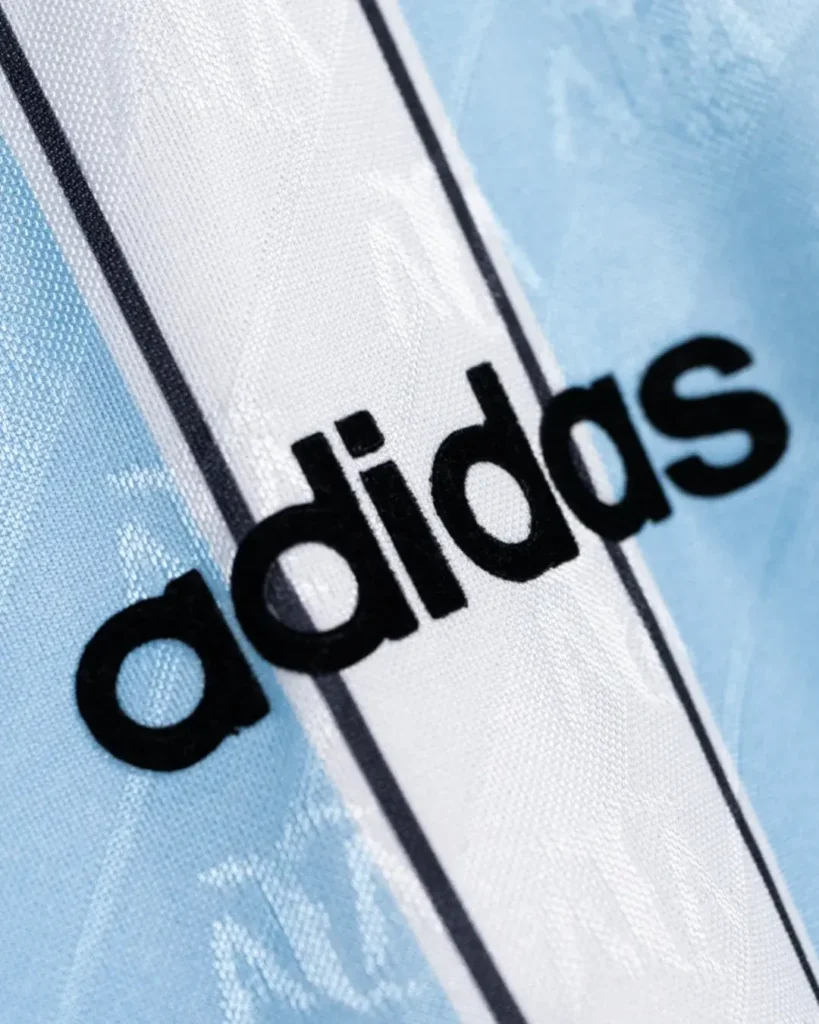
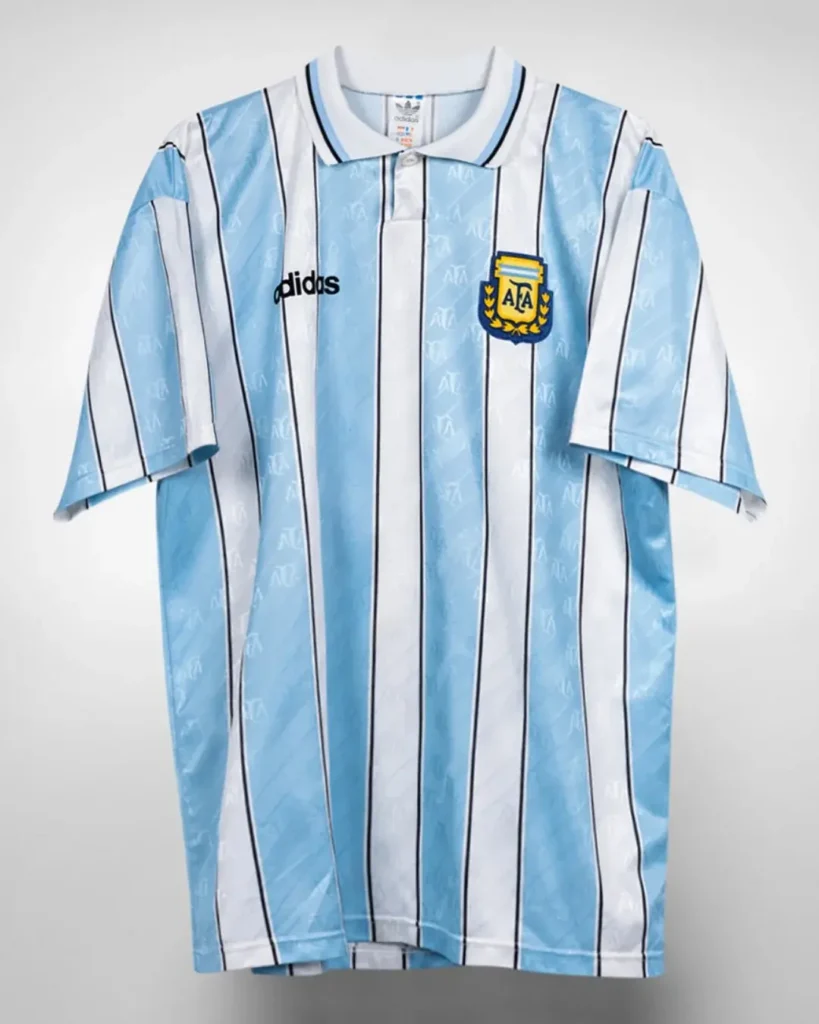
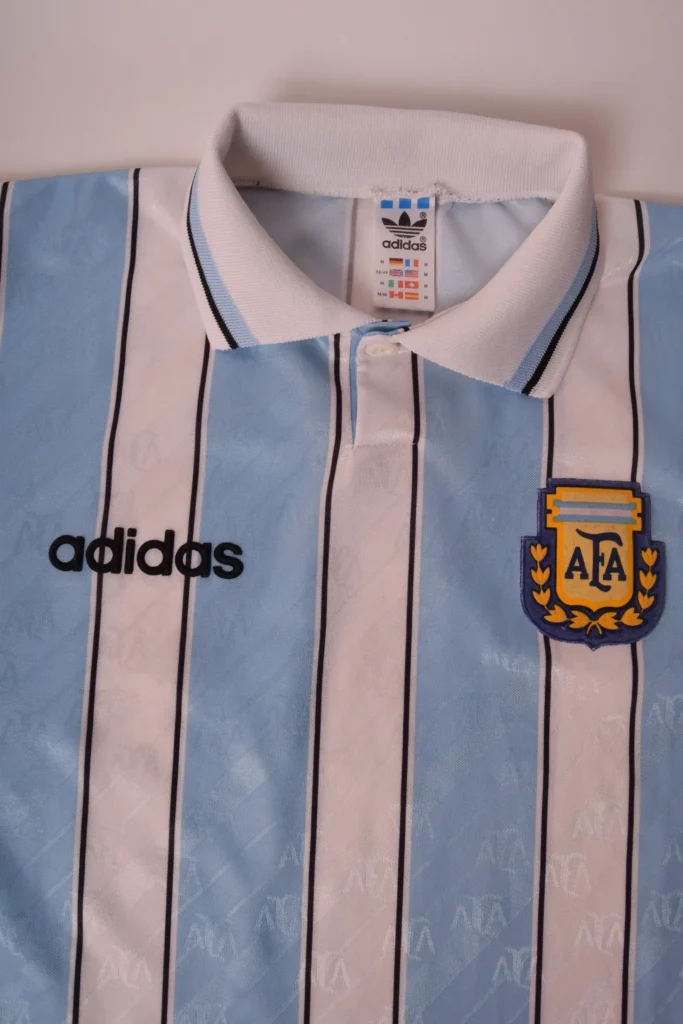
To comprehend the emotional severity of the ban, we must dissect the exact moment of rejection. In the lead-up to the 1994 World Cup in the United States, Julio Grondona, the formidable president of the AFA, was presented with the prototype. The atmosphere in that boardroom must have been glacial. Adidas had committed what the federation viewed as an unforgivable aesthetic heresy. The classic, untouched light blue and white vertical stripes, the untouchable canvas of Argentine football, had been altered. The designers introduced a third color into the sacred matrix: black.
By utilizing dark, heavy black outlines to border the Albiceleste stripes, the architecture of the Argentina 1994 banned shirt fundamentally changed. The black borders added a severe, aggressive depth to the garment, framing the pastel blue in a cage of industrial contrast. From a pure design perspective, it was a masterstroke, it gave the shirt a three-dimensional, imposing visual weight that traditional flat stripes lacked. But to Grondona and the AFA purists, this was a desecration. The federation’s strict visual mandates allowed only the traditional light blue and white on the home kit. The inclusion of black was seen not as an innovation, but as a pollution of their heritage. The prototype was unceremoniously killed, stripped from production lines, and replaced by the safer, more palatable kit the team ultimately wore.
The 1994 World Cup: Maradona and the Argentina 1994 Unreleased Jersey
The emotional resonance of this forbidden drop is inextricably bound to a human tragedy. It is impossible to analyze the Argentina 1994 prototype Adidas kit without addressing the ghost that haunts it: Diego Armando Maradona. The 1994 World Cup in the United States was meant to be the ultimate swan song for the defining genius of a generation. Instead, it became a theater of profound heartbreak. Following a failed drug test for ephedrine, Maradona was unceremoniously expelled from the tournament, his international career violently terminated under the harsh glare of the global media.
There is a devastating, almost poetic symmetry between the player and the garment. Both the Argentina 1994 prototype Adidas silhouette and Maradona himself were ultimately deemed unacceptable by the governing authorities. Both were expelled from the American stage just as the spotlight hit them, discarded into the shadows of what could have been. When one looks at the heavy black lines of the prototype today, they no longer look like mere design accents; they look like mourning bands. The shirt feels like a sartorial premonition of the grief that would soon engulf the nation. The tragic end of Maradona’s World Cup journey imbues this unreleased fabric with a dark, romantic sorrow that no mass-produced, championship-winning kit could ever hope to possess.
Narrative Scarcity and the Holy Grail of Collecting
In the contemporary landscape of high-end football apparel collecting, the psychology of value has shifted entirely. Modern consumers are drowning in a sea of retro re-releases and synthetic nostalgia. Physical scarcity is considered a luxury, but narrative scarcity is utterly priceless. This is why the banned Argentina 1994 jersey has ascended to the status of an absolute holy grail. It exists outside the commercial cycle. Because it was never officially mass-produced or validated by on-pitch glory, it remains entirely pristine in the cultural imagination. It is a secret shared among those who truly understand the deep cuts of sportswear history.
Acquiring one of the few surviving factory prototypes requires navigating a highly insulated, obsessive secondary market. Collectors treat these surviving pieces not as clothing, but as illicit artifacts, like smuggled pieces of controversial art. The emotional high of securing this silhouette is not about showing off a brand logo; it is about the quiet, intoxicating thrill of possessing a piece of history that the establishment tried to erase. It represents the ultimate flex of aesthetic and historical fluency. To own the banned Argentina 1994 jersey is to curate a private museum of rebellion, holding onto a design that was deemed too dangerous, too disruptive, for the global stage.
Styling the Argentina 1994 Unreleased Jersey for the Modern Street
How does a garment burdened with such intense political and emotional weight translate to the modern street? With an undeniable, heavy authority. To wear the Argentina 1994 unreleased jersey in a contemporary high-fashion context is to make a deeply analytical statement. This is not a piece for casual streetwear styling; it demands a severe, respectful curation. The deep contrast of the black-outlined stripes provides a sharp, almost aggressive foundation that regular national kits simply do not possess.
The silhouette should be styled to emphasize its brutalist, interrupted history. Because the shirt carries the metaphorical weight of a funeral for an era, the street translation thrives when paired with stark, severe tailoring. Picture the prototype anchoring an outfit built on heavy, distressed black denim, a structured, oversized leather trench coat, and stark, architectural combat boots. The garment should feel caged, protected by the heavy outer layers, allowing only glimpses of the forbidden black-and-blue geometry. By removing the 1994 Argentina prototype from the context of joyous sporting celebration and placing it within the stark, moody framework of luxury styling, the wearer honors its true identity. It is a beautiful, melancholic masterpiece, a dark blueprint of the 90s that continues to cast a long, undeniable shadow over the architecture of modern football fashion.
