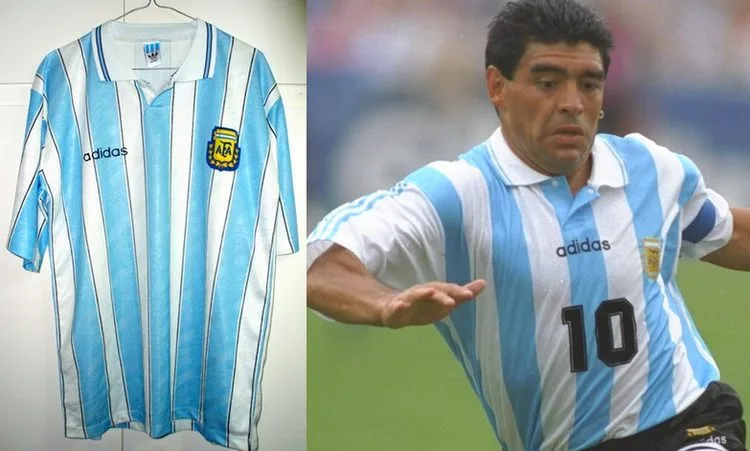
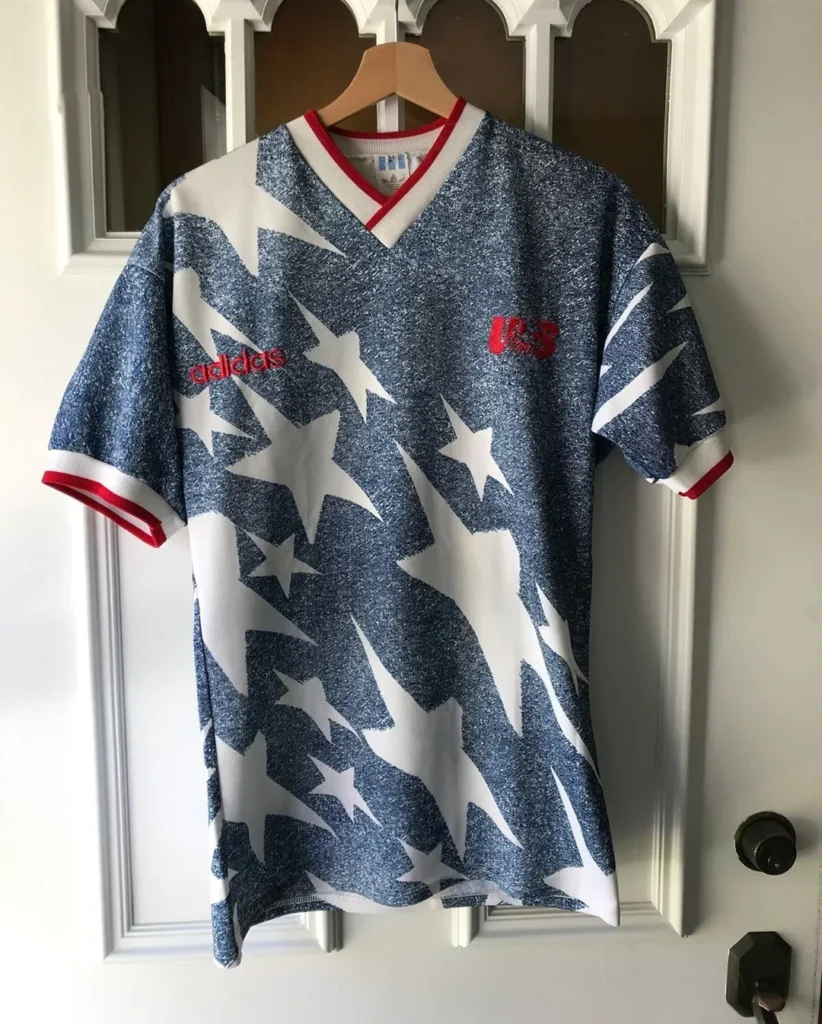
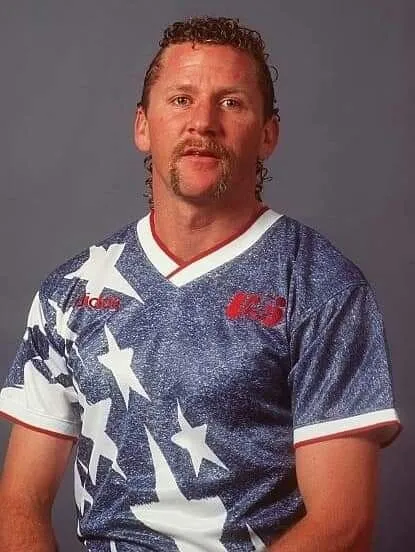
To truly comprehend the chaotic, blinding magic of the USA 1994 denim kit, one must first run a hand across the fabric of this iconic football jersey and confront the ultimate, beautiful deception: it isn’t denim at all. In the grand, highly curated archives of classic USMNT jerseys, nothing captures the frenetic, neon-soaked rebellion of the USA World Cup era quite like this heavy, synthetic armor. The story begins not on the pitch, but in the sterile, heavily air-conditioned design rooms of Adidas, and later, deep within the subterranean, concrete tunnels of the Pontiac Silverdome. Imagine the visceral sensory collision of the moment. It is the summer of 1994. A group of men, hearts pounding a frantic, anxious rhythm, are pulling over their heads a heavy polyester garment printed with a faux acid-wash fade and violently scattered, oversized white stars. It is an aesthetic provocation. It does not smell of history or oiled leather; it smells of fresh, industrial ink and unapologetic, blinding hubris.
To understand the sheer audacity of walking onto a pitch wearing printed jeans, we must zoom out and breathe in the strange, culturally fractured tapestry of the early 1990s in USA. The global congregation of football viewed the 1994 World Cup with a deep, ingrained, and highly vocal hostility. To the traditional purists of Europe and South America, the United States was a sprawling, ignorant wasteland of baseball diamonds and concrete shopping malls. They lacked a professional outdoor league; they lacked the blood-soaked, generational suffering that defined the sport’s true believers. The Americans were viewed as profane, unworthy hosts of a sacred, ancient ritual.
Tasked with outfitting this heavily scrutinized host nation, Adidas faced a profound philosophical crossroads. They could attempt to assimilate, dressing the Americans in the traditional, muted, elegant tailoring of the European powerhouses, hoping to quietly blend in. Or, they could aggressively lean into the loud, abrasive, cultural tsunami of 1990s Americana. They chose the absolute, chaotic latter.
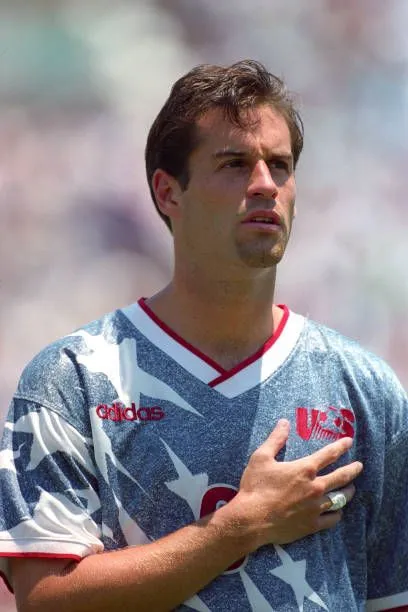
The squad selected by Bora Milutinovic was not a team of polished, academy-bred tacticians raised in the shadows of great cathedrals. They were a bizarre, eclectic, fiercely defiant band of misfits. Alexi Lalas, with his fiery, untamed beard and acoustic guitar, radiated a pure grunge-rock aura straight from the damp clubs of Seattle. Tony Meola guarded the net while sporting a heavy, majestic mullet. Cobi Jones moved with frantic speed, his dreadlocks swinging like chaotic pendulums. To drape these deeply unpolished men in traditional, conservative solids would have been a fundamental lie.
Instead, they were encased in a woven parody of their own national stereotype, a faded blue-jeans print paired with violently, painfully red shorts. It was the visual equivalent of a distorted, overdriven electric guitar chord echoing aggressively through the hushed, deeply serious halls of international football. It was immediately perceived by the European establishment as a sartorial tragedy, a clown suit designed for a team of imposters who were expected to be swiftly, mercilessly eradicated from their own tournament.
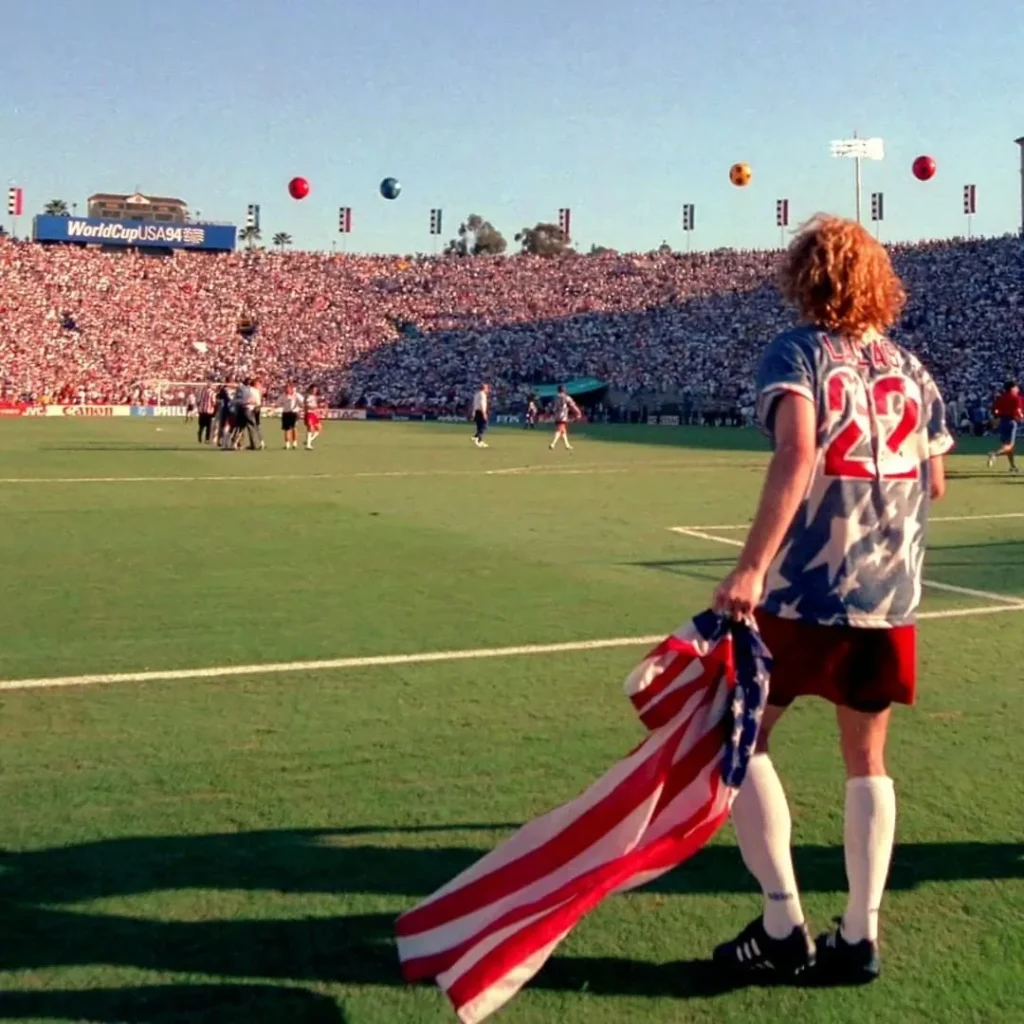
The true, defining climax of this fabric’s history unfolded on June 22, beneath the merciless, bleaching sun of Pasadena, California. The Rose Bowl was a colossal, baking oven, a sweeping bowl of baking concrete trapping the midday heat and pressing it down onto the ninety-three thousand souls packed into the stands. The opponent was Colombia. Draped in their iconic, pure canary yellow, the South Americans radiated a traditional, fluid menace. They were dark horses, a terrifyingly brilliant ensemble heavily favored to dismantle the hosts with rhythmic, hypnotic passing.
As the teams emerged from the tunnel, the visual and atmospheric contrast was absolutely jarring. There was Carlos Valderrama, his golden afro, a halo of pure, undisputed footballing royalty. And opposite him stood the Americans, sweating profusely, clad in their fake denim. The synthetic fabric, heavy and entirely unforgiving in the extreme heat, clung desperately to their skin. Every heavy challenge, every frantic, lung-busting sprint sent violent ripples through the artificial white stars.
The match that followed was not a display of tactical sophistication; it was a chaotic, lung-burning bar fight played out on meticulously manicured, parched grass. In the 34th minute, a heavily driven American cross was violently deflected into his own net by Andrés Escobar, a dark, haunting moment that would tragically bleed into real-world horror days later. But on the pitch, in that blinding, suffocating sunlight, the faux-denim armor seemed to grant the Americans an irrational, frenetic invincibility. They played with the frantic, desperate energy of cornered animals.
Look closely at the 52nd minute. The footage is grainy, but the energy is undeniable. Earnie Stewart breaks the high Colombian line. He is a blur of fake denim and red shorts, accelerating through the blistering heat, his boots kicking up microscopic clouds of dry Californian dust. The pass arrives. His finish is cold, precise, sending the ball crashing into the netting. The stadium completely erupts, a primal, deafening, seismic validation of the absurdity.
In the dying, desperate minutes of the match, Marcelo Balboa launches his massive, heavy frame into the air for a bicycle kick. He misses by mere inches, but the image, his red shorts and starry blue torso rotating in a violent, kinetic flash against the pale blue sky, perfectly encapsulates the lawless, unhinged energy of the era. The United States secured a 2-1 victory. They had dragged the elegant, terrifying Colombians down into the chaotic, unpolished mud of American soccer and beaten them with sheer, unapologetic noise.
When the final whistle blew on the 1994 tournament, the denim kit was almost immediately violently discarded. It was quickly written off by the global sporting press and domestic critics alike as a grotesque, embarrassing anomaly. For years, it was treated as a painful joke, a bizarre, shameful footnote in the sprawling evolution of athletic apparel.
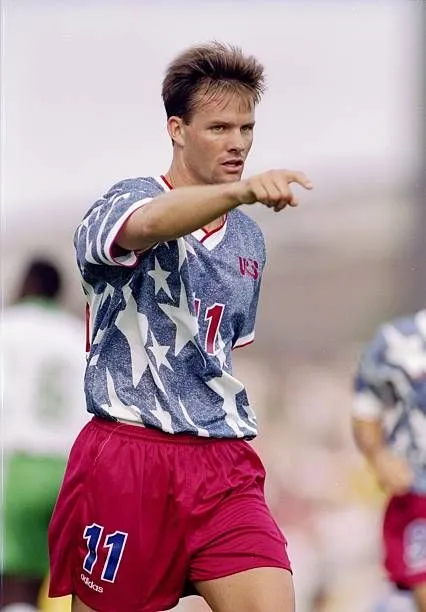
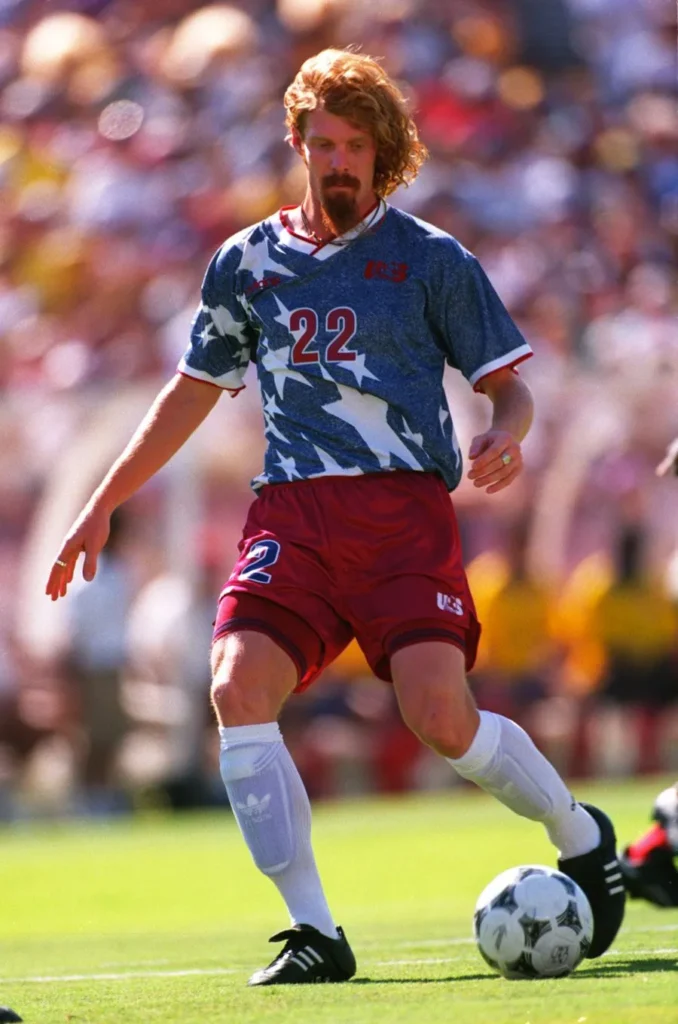
Yet, time possesses a strange, purifying magic. As the decades passed, the sport underwent a ruthless, clinical sterilization. Today, the world of international kit design is a highly sanitized, heavily templated ecosystem. It is dominated by corporate minimalism, microscopic performance tech, and focus-group-tested geometric patterns designed to offend no one. Modern jerseys are so perfectly engineered, so devoid of friction or distinct personality, that they frequently blur into a monotonous, forgettable sea of poly-blends.
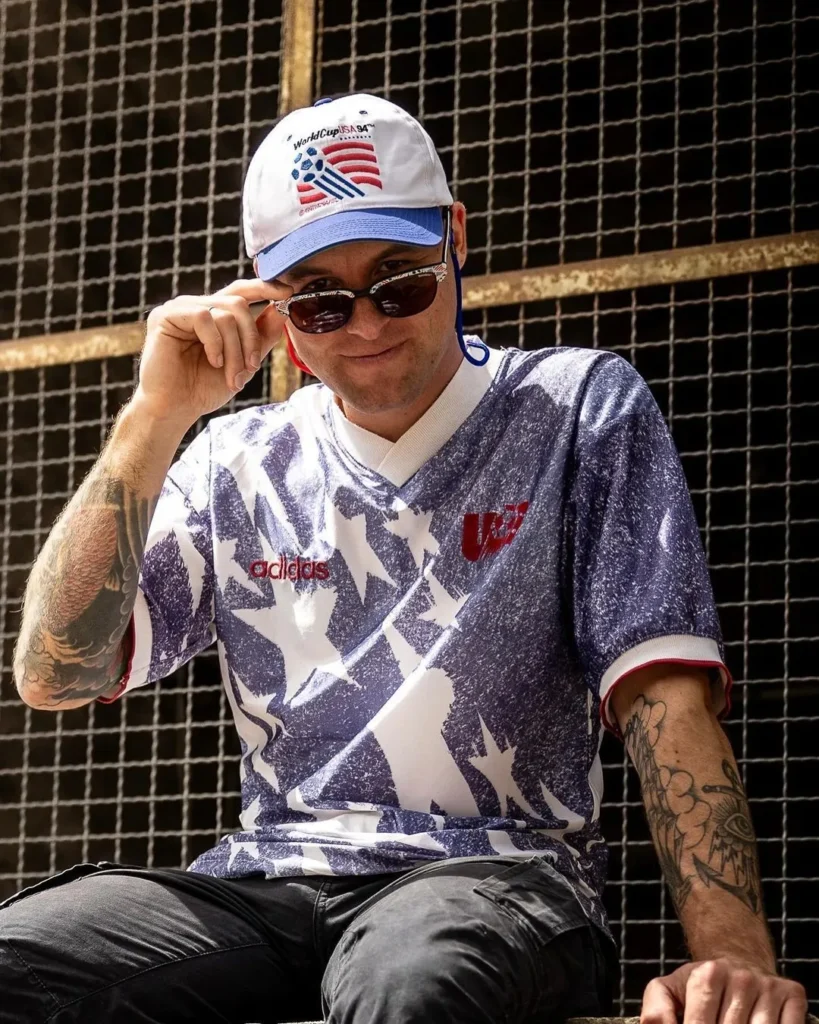
In this sterile, heavily manicured void, the ghosts of 1994 began to loudly rattle their cages. The widely mocked “disaster” slowly, inevitably morphed into a holy grail. Kit collectors now scour the dark, hidden corners of the internet, paying exorbitant, almost illogical sums to possess an original, heavily faded cut of that chaotic, starry fabric. The USA 1994 denim kit has become a massive, undeniable cult classic. It is fiercely revered today precisely because it was so deeply flawed, so brazenly offensive to the established, serious order of the global game.
Today, it haunts the modern USMNT locker room. Every single year, when a new, safe, meticulously uninspiring plain white or navy jersey is unveiled to the public via a slick, soulless PR campaign, the American congregation inevitably looks back over their shoulders to that sweltering, impossible summer. They long for the unapologetic, visceral rebellion of the faux denim. They mourn the permanent loss of the rugged, unpolished outsiders who were brave enough, or perhaps ignorant enough, to wear a tragic American stereotype into the fiercest battle on earth, and somehow emerge as legends. The faux denim is no longer a joke; it is a permanent, deeply woven testament to an era when American soccer was completely, beautifully, and dangerously out of its mind.