
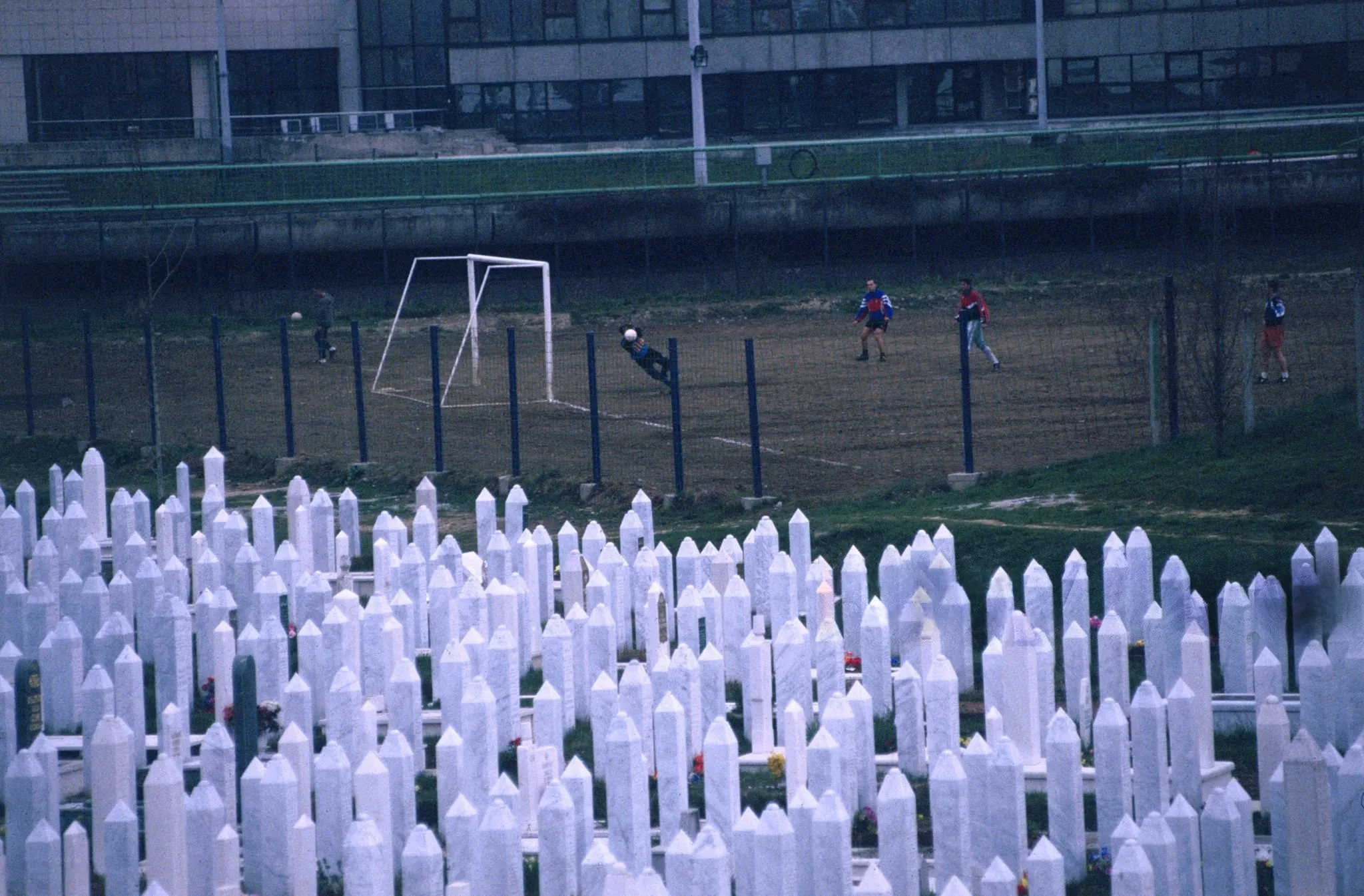
For the Bosnia Herzegovina 2026 World Cup squad, advancing to the knockouts is an act of ultimate resistance. Bridging war survivors like Edin Džeko with diaspora talents like Esmir Bajraktarević, the team faces the USA, carrying the weight and pride of a nation that survived.
A Country That Was Not Supposed to Exist
Every four years, the globe reorganizes itself around the beautiful illusion of the World Cup. For a single month, sprawling concrete stadiums transform into fleeting, utopian homes for wandering nations. We watch flags wave in the summer wind, we listen to anthems echo into the night sky, and we allow ourselves to believe that the world is measured only by the grace of a rolling ball. It is a beautiful, temporary dream. But for one nation stepping onto the manicured grass in North America this summer, the tournament is not a dream. It is a defiant, flesh-and-blood declaration of existence.
To truly comprehend the monumental weight of the Bosnia Herzegovina 2026 World Cup run, one must look away from the floodlights and stare directly into the darkest abyss of modern European history. You must travel back to the fractured spring of 1992. When the former Yugoslavia shattered, a systematic, ruthlessly calculated genocide was unleashed upon the Bosniak population. It was an orchestrated campaign of ethnic cleansing designed to completely erase a people, their culture, their religion, and their memory from the face of the earth.
The mathematics of the atrocity remains a staggering wound on the conscience of humanity. Sixty thousand Bosniaks were murdered in cold blood. Millions of men, women, and children were violently ripped from their ancestral homes, forced to scatter across the globe as displaced refugees. To this very day, the soil of the Balkans hides the bones of the dead, with over 7,500 bodies still missing while the international community watches in bureaucratic paralysis. The perpetrators of this violence intended to leave nothing behind but ghosts and ash.
Therefore, when the starting eleven of the national team walks out of the stadium tunnel, standing shoulder-to-shoulder under the blue and yellow crest, they are achieving the impossible. The mere existence of this squad is a geopolitical miracle. When we ask how the Bosnian football team survived the genocide, the answer is not found in sporting infrastructure or corporate funding. It is found in an unbreakable, collective refusal to disappear. Every pass they complete, every anthem they sing, and every victory they claim is a living, breathing rejection of the forces that tried to extinguish their name. They are playing for a country that, according to the architects of war, was never supposed to exist.
When Pitches Became Graveyards: The Dobrinja Massacre
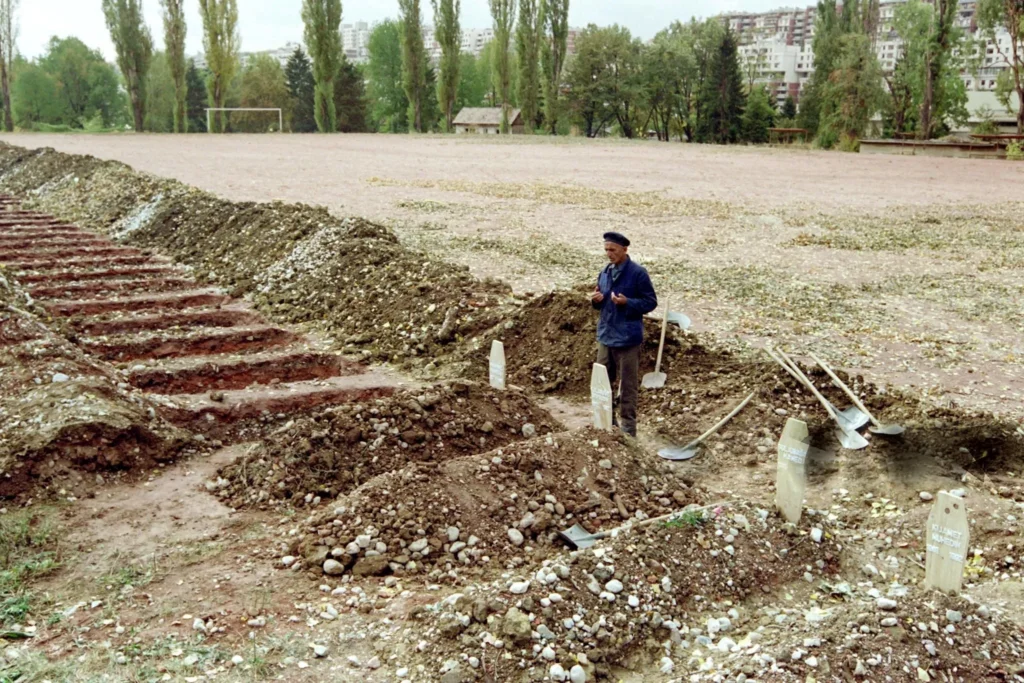
In a nation under siege, geography rapidly loses its original meaning. During the 1,425-day siege of the capital, the longest military blockade of a capital city in the history of modern warfare, the physical spaces designed for joy were violently repurposed for grief. Because the sniper fire from the surrounding hills was so relentless, and the civilian death toll climbed so rapidly, the people of Sarajevo ran out of safe places to bury their dead.
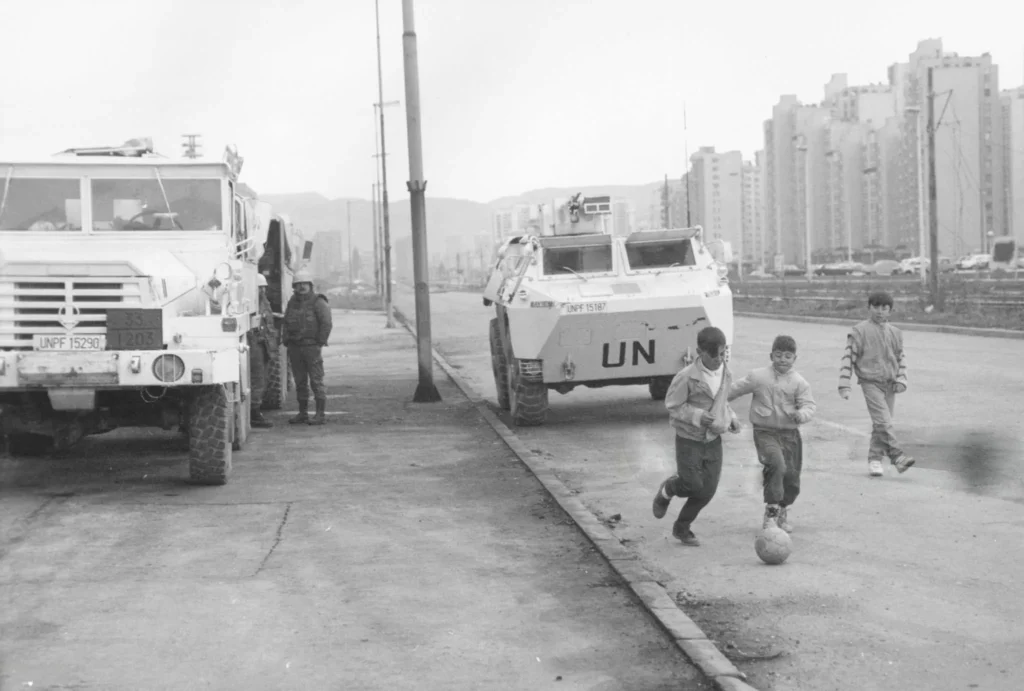
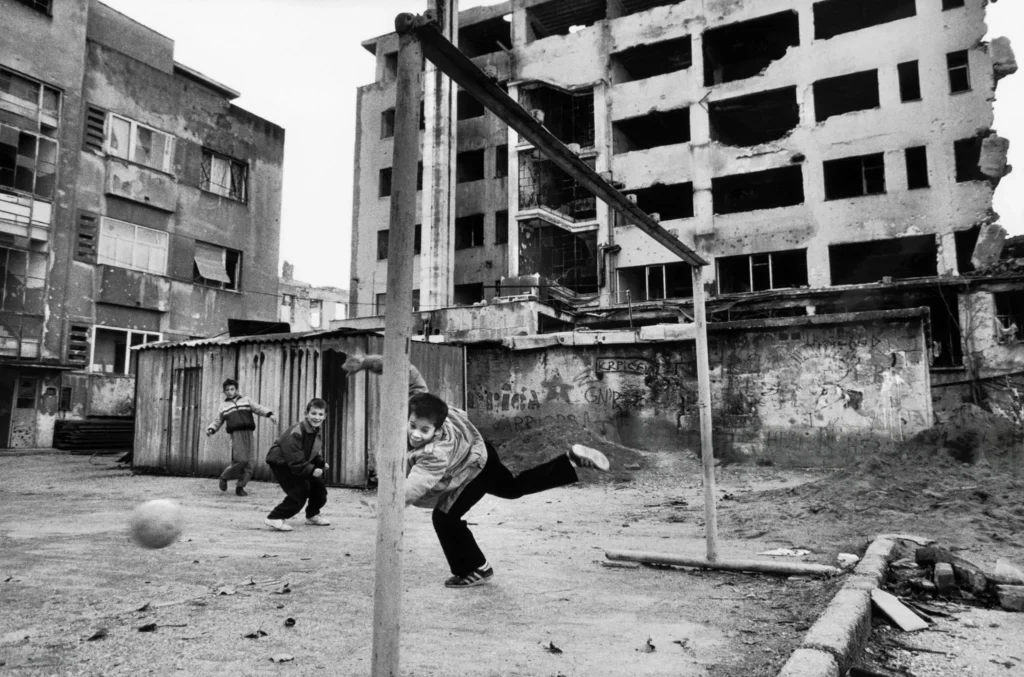
The lush, green football pitches and the quiet, tree-lined training grounds of the city were systematically dug up. The penalty boxes where children once practiced their free-kicks were transformed into sprawling, makeshift graveyards. White wooden markers replaced the white painted lines of the touchline. With the grass turned over to the dead, the children who survived were forced to play the beautiful game on jagged, concrete streets, kicking deflated balls mere feet away from the rusted, jagged craters left behind by exploding mortar shells.
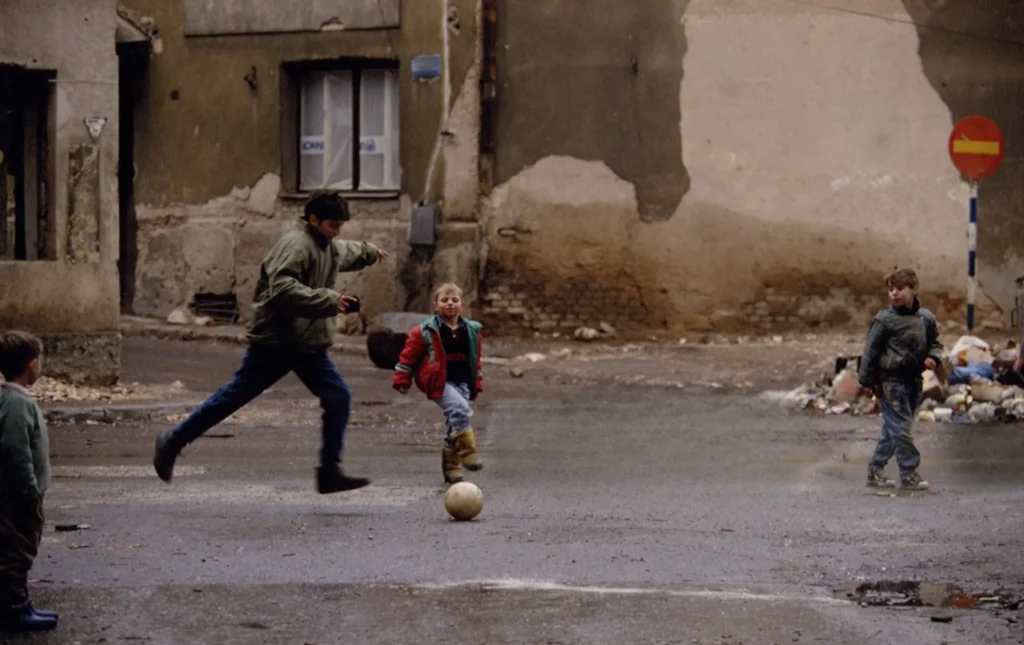
In this suffocating environment, football ceased to be a simple pastime. It evolved into a desperate, psychological act of resistance. To step outside and kick a ball while surrounded by artillery fire was to loudly proclaim that you were still alive. But that defiance came with a devastating price.
The grim reality of this resistance peaked in the quiet neighborhood of Dobrinja in June 1993. On a day of religious celebration, a group of local residents organized a makeshift football tournament on a concrete parking lot, attempting to carve out a single afternoon of normalcy amidst the slaughter. As the children played and the community watched, the artillery in the hills took aim. Two mortar shells rained down directly onto the asphalt pitch.
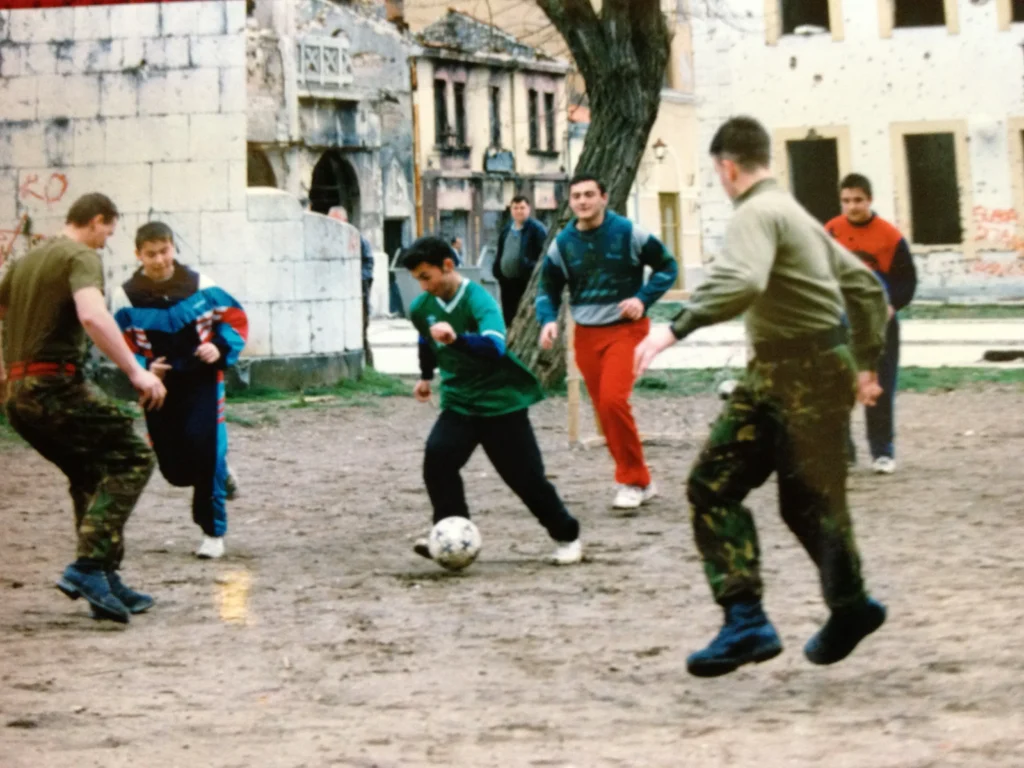
The explosions tore through the crowd, instantly killing 13 people and wounding over 130 others. The blood of players and spectators stained the very concrete where they had sought a moment of joy. When this current national team puts on their boots, they are not just lacing up for a tactical fixture. They are stepping onto the pitch to honor the ghosts of Dobrinja, carrying the memory of the children who died simply because they wanted to play the game they loved.
The Survivor and the Son: Edin Džeko and Esmir Bajraktarević
The true power of this 2026 squad lies in its architecture. It is a living bridge between two distinct eras of trauma, connecting the survivors who stayed in the fire with the children of the diaspora who were born in the ashes.
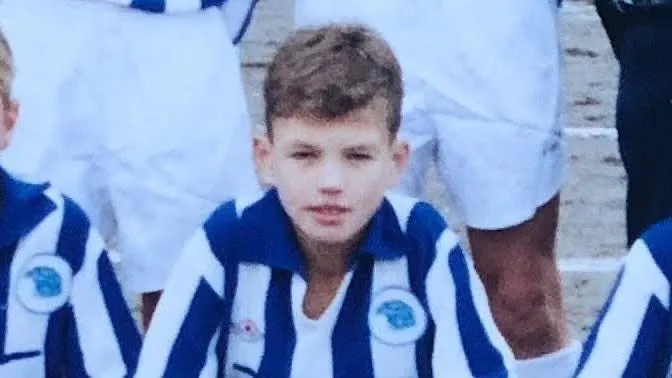
The undisputed soul of the team is their veteran captain. The Edin Dzeko childhood Bosnia war story is permanently etched into the folklore of the nation. Before he was lifting trophies in Europe’s elite leagues, he was a frightened boy navigating the terrifying reality of the Edin Dzeko Sarajevo siege. He spent his formative years hiding in basements, his ears tuned to the high-pitched whistle of falling shells. On one fateful afternoon, a young Džeko begged his mother to let him go outside and play football with his friends in the local park.
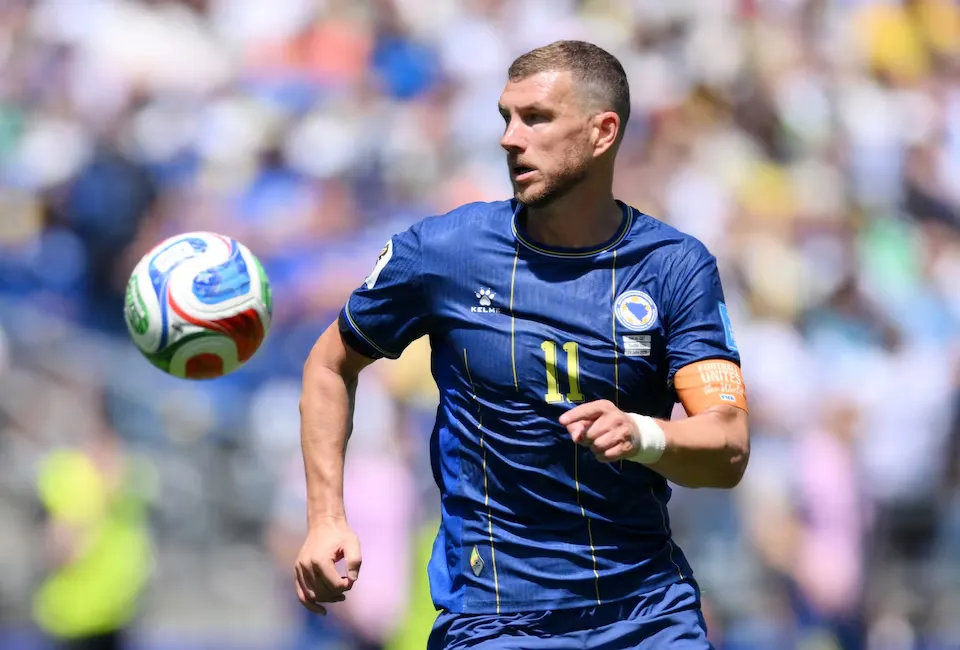
Driven by a mother’s inexplicable premonition, she strictly forbade it, leaving the boy in tears. Minutes later, a mortar shell decimated that exact playground, killing and maiming the children who had gathered there. His tears of frustration had saved his life. Today, he leads the national team as a living monument to the children of the siege who were spared.
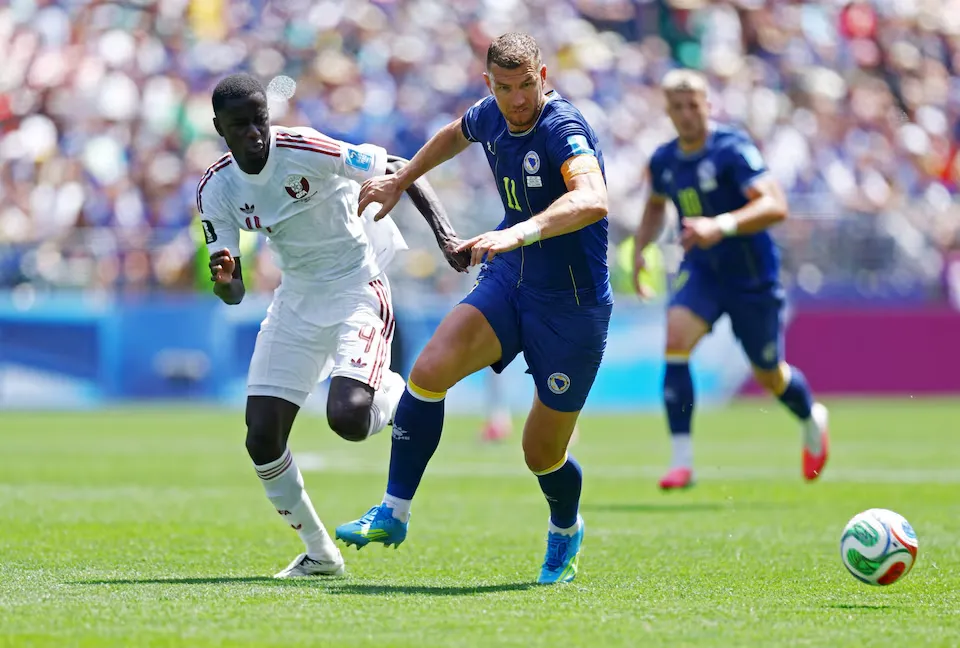
But as Džeko approaches the twilight of his legendary career, he is passing the torch to a generation with an entirely different relationship to the homeland. Enter Esmir Bajraktarević, the electrifying 21-year-old winger currently dismantling defenses for PSV Eindhoven. The Esmir Bajraktarevic PSV storyline is the ultimate manifestation of the Bosnian diaspora.
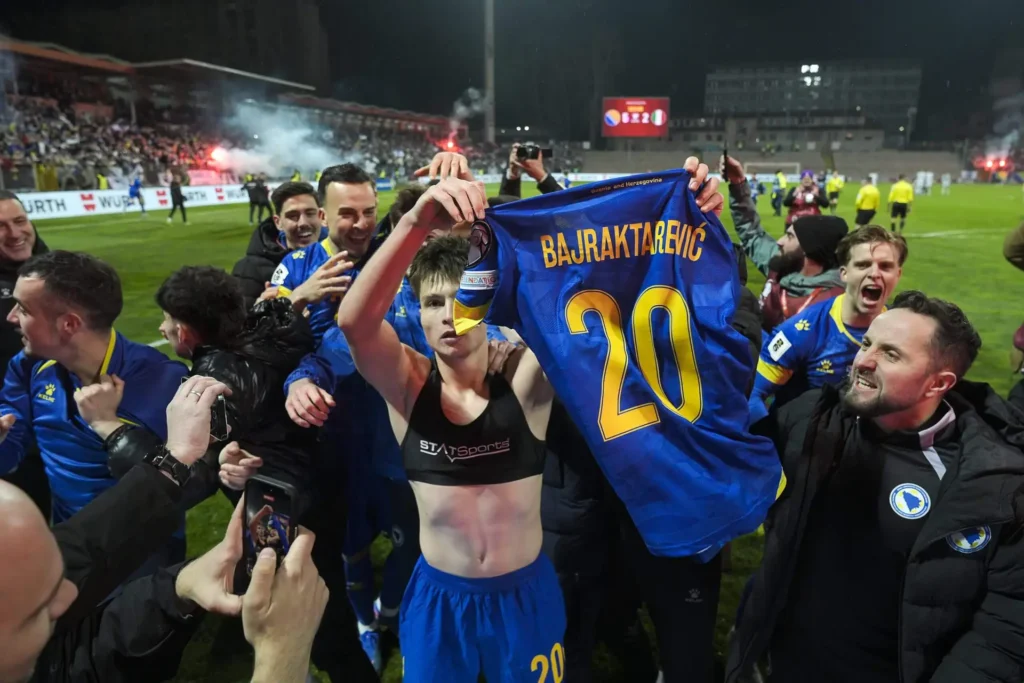
In July 1995, Esmir’s father, Elmir, was trapped in the sprawling nightmare of the Srebrenica genocide. Facing certain death, he fled into the dense, dark forests, marching for agonizing days through minefields and ambush zones to escape the systematic slaughter that claimed the lives of over 8,000 Bosniak men and boys. Elmir miraculously survived the death march and eventually secured passage across the Atlantic Ocean, settling in the quiet, snowy suburbs of Wisconsin as a refugee.
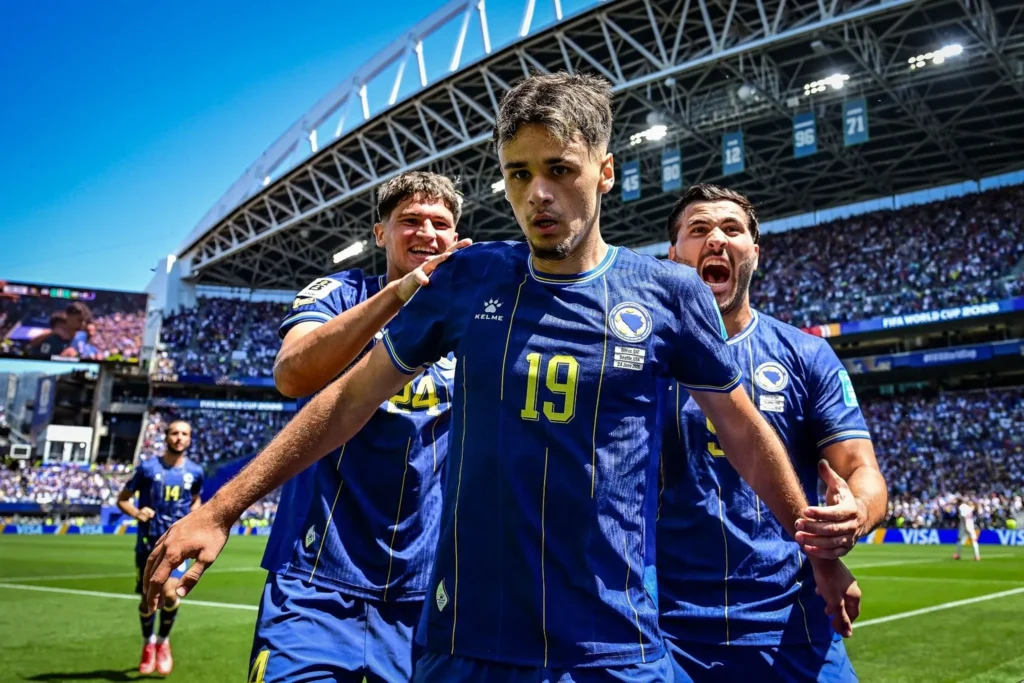
It was there, thousands of miles away from the blood-stained soil of his ancestors, that Esmir was born. He grew up speaking the language of his parents inside the house and learning the language of the United States outside of it. He is one of the many Bosnian diaspora football players who honed their world-class skills in foreign academies, only to bring those talents back to the motherland.
For the diaspora, the national team jersey is not just a uniform; it is the only physical piece of the homeland they have ever truly known. When Džeko passes the ball to Bajraktarević, it is a profoundly poetic exchange. It is the survivor handing the future over to the son of the displaced, proving that the bloodline could not be severed.
The Ultimate Poetry: Facing the USA in the Knockout Rounds
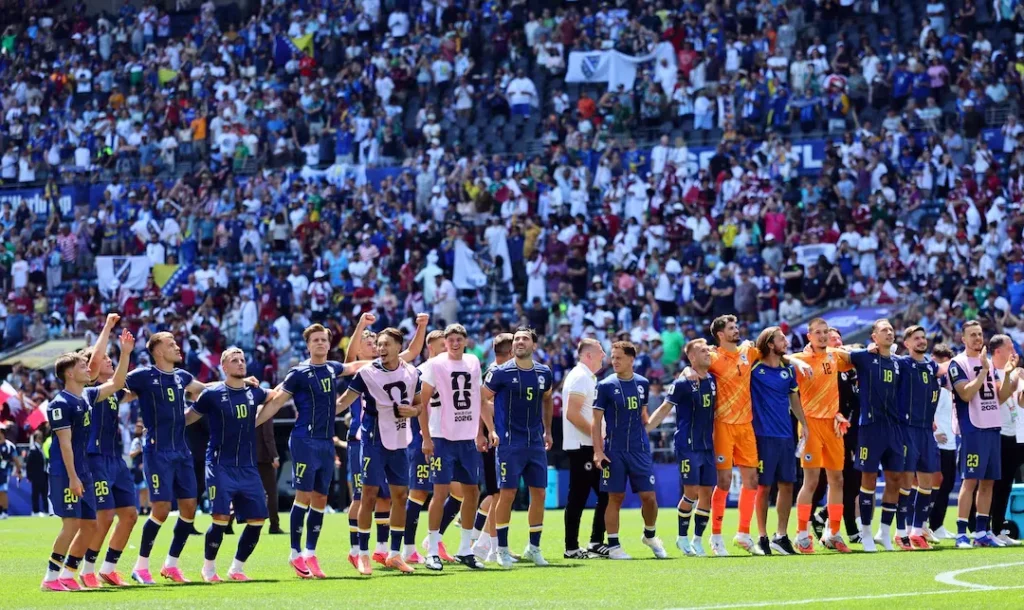
The journey to the knockout stages of this tournament has already been written into the history books. They survived the grueling gauntlet of Group B, securing their progression with a masterful, decisive 3-1 victory over Qatar. That match belonged to the youth, highlighted by a stunning strike from 18-year-old Kerim Alajbegović, who etched his name into the record books as the fearless vanguard of the new generation. But surviving the group stage was only the prologue. Now, the brackets have aligned to deliver a geopolitical script so deeply ironic, so intensely poetic, that it borders on fiction.
The opponent waiting for them is the United States of America.
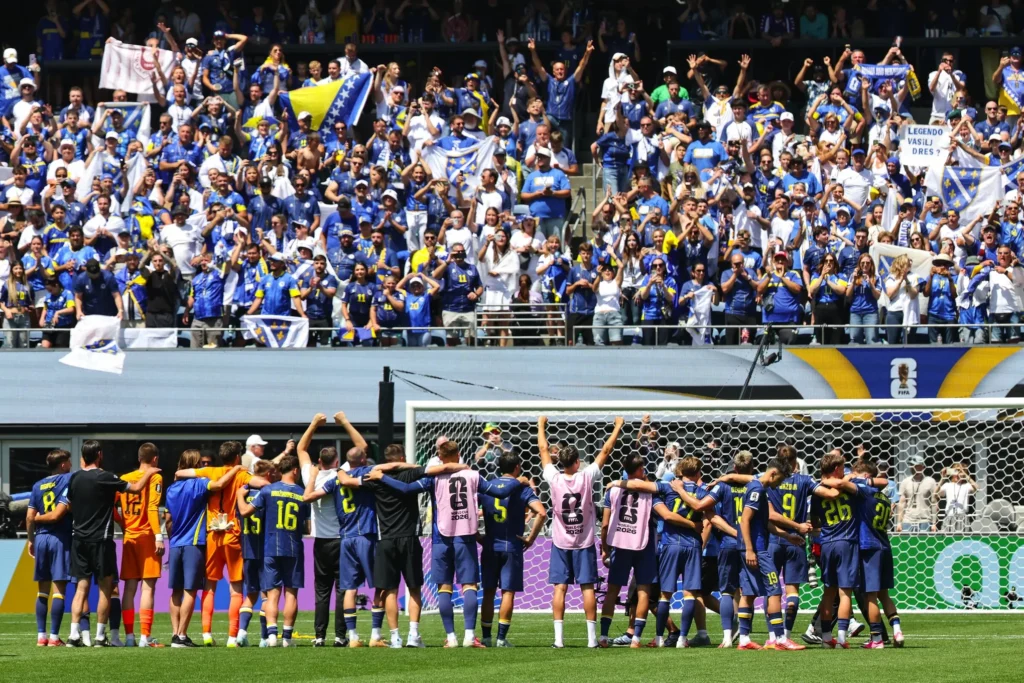
The Bosnia vs USA World Cup knockout clash represents a surreal, emotional paradox that perfectly encapsulates the modern refugee experience. When the teams line up in the tunnel, the cameras will inevitably focus on Esmir Bajraktarević. The young man affectionately dubbed the “Milwaukee Messi playing against USA” will step onto the pitch to actively eliminate the very country that issued his passport.
When the stadium speakers play the Star-Spangled Banner, Esmir will hear the anthem of the nation that opened its doors to his traumatized family when they had absolutely nothing. The United States gave his father a safe harbor, a quiet street, and a chance to rebuild a shattered life in peace. But when the opening chords of Jedna si jedina ring out across the grass, Esmir will place his hand over a crest that represents his blood, his ancestors, and the immense, unspoken sorrow of Srebrenica. America gave his family their physical survival, but Bosnia gave his family their soul.
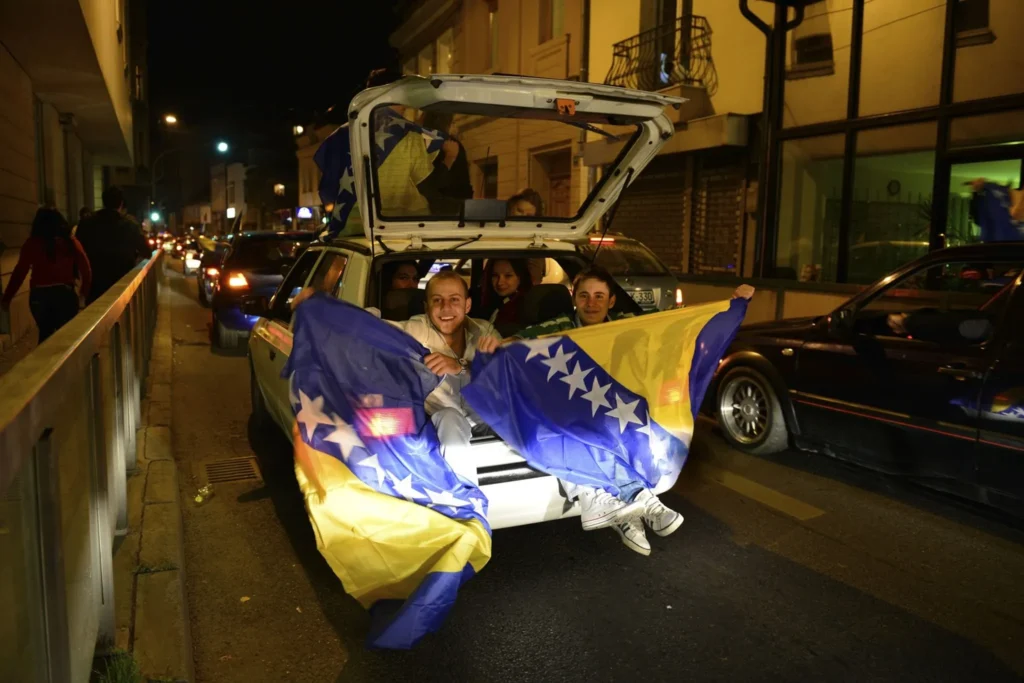
In this monumental knockout fixture, tactics and formations will eventually fade into the background. It will not be about low blocks, passing percentages, or athletic endurance. It will be about the weight of history crashing into the present moment. For the American squad, this match is a vital athletic milestone on home soil. But for the men in blue and yellow, this match is an existential right.
Every single time they contest a header, block a shot, or launch a counter-attack, they are carrying the survival of millions on their backs. They are playing for the bodies still missing in the forests, for the children who died on the concrete of Dobrinja, and for the fathers who marched through the darkness so their sons could one day run in the light.
When the referee blows the final whistle, regardless of the numbers on the scoreboard, the ultimate victory will have already been secured. They are here. They are breathing. They are beautiful. And they will never, ever be erased.