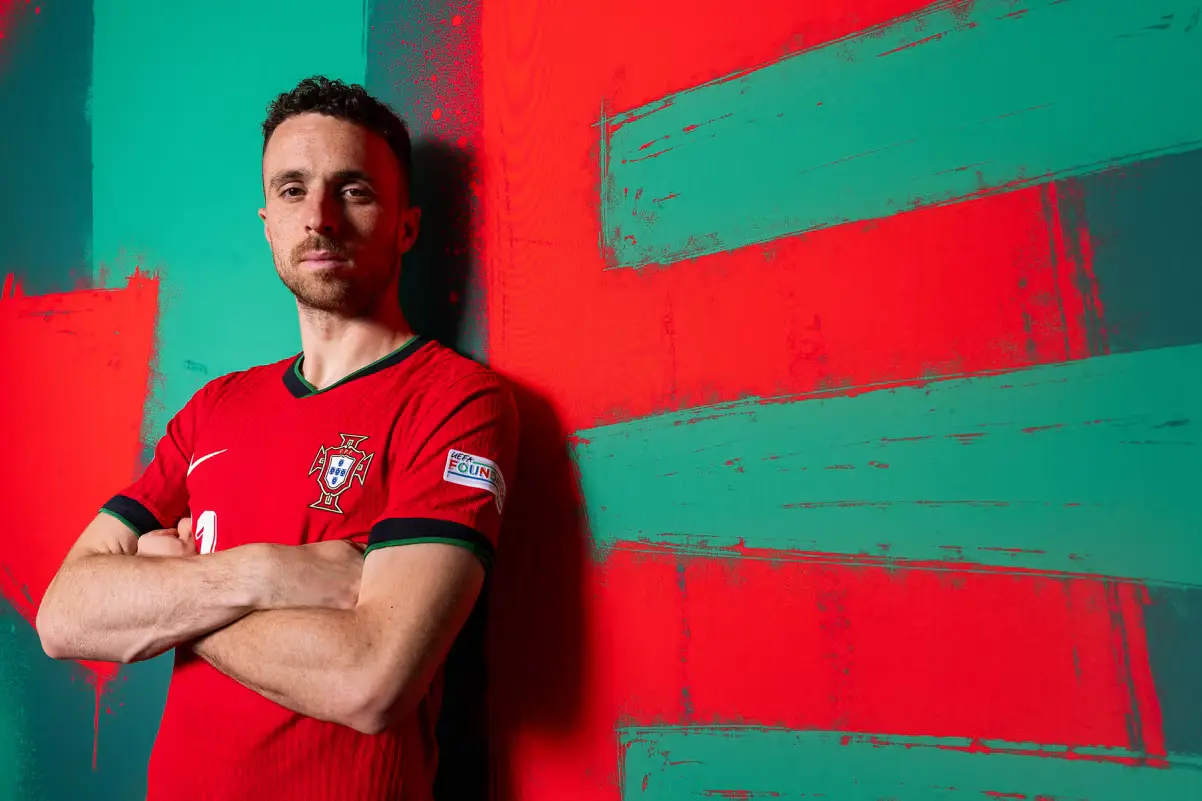
During the 2026 World Cup, the Portugal national team honored the late Diogo Jota as 12th Man of Portugal.’ Following his tragic passing in July 2025, players wear commemorative bracelets to carry his memory onto the pitch as they face Croatia in the Round of 32.
The 12th Man: Carrying Jota’s Memory in North America
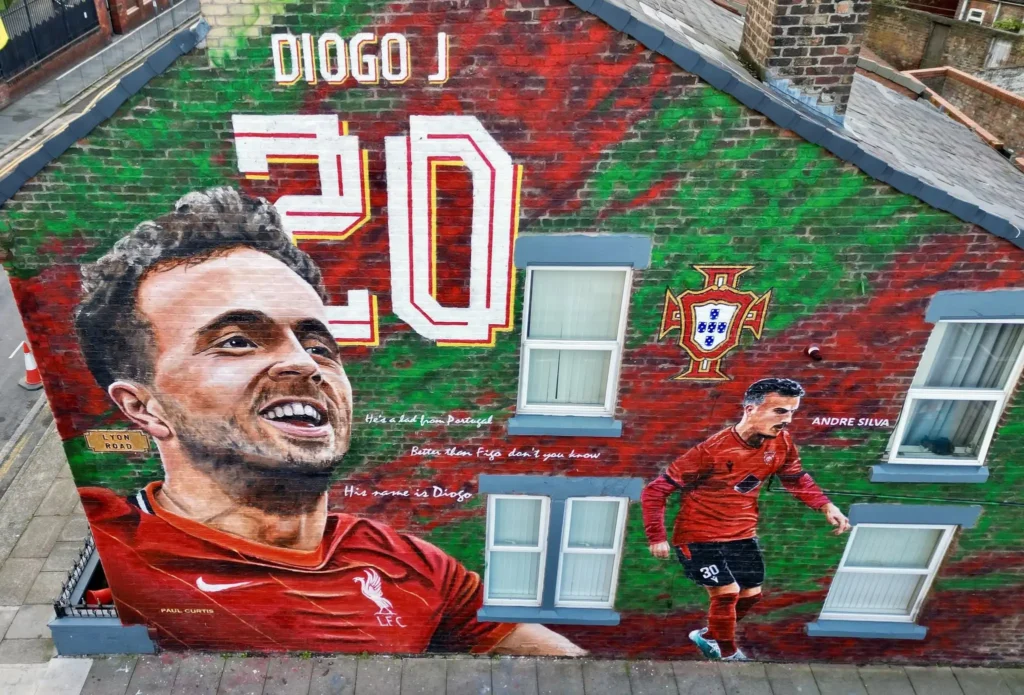
When millions of global supporters look closely at their television screens this summer and ask why Portugal is wearing Diogo Jota bracelets, the answer reveals a heartbreaking, deeply profound act of brotherhood that completely transcends the boundaries of sport. This squad did not travel across the Atlantic to North America simply to chase a gold trophy; they arrived to fulfill a collective, unspoken promise to a fallen brother.
Since the devastating loss of their teammate twelve months ago, the entire squad has embraced the philosophy of the Portugal national team of 12 men on the pitch. This is not a hollow marketing slogan. It is a living, breathing emotional framework that holds the dressing room together. Every single player, from the seasoned veterans who shared a decade of international duty with him to the youngest debutants, wears a subtle, custom-crafted black bracelet upon their wrist. Etched into the dark band in fine gold lettering is their own name, bound eternally alongside Diogo’s.
It is a quiet, immensely powerful testament that he is still with them. Inside the dressing room before every match, his number 20 kit hangs in its rightful place. When the players walk out of the tunnel and step onto the stadium grass, they touch their wrists. This Diogo Jota World Cup tribute has transformed profound, paralyzing grief into an undeniable, emotional driving force. When the players press through the physical exhaustion of the final minutes, when their lungs burn and their legs grow heavy, they are no longer just fighting for a spot in the next round. They are fighting for the man who can no longer run beside them. They refuse to let his memory end in silence.
A Portrait of the Player: The Ghost in the Penalty Box

To fully grasp the magnitude of his absence, one must understand exactly what kind of player Diogo Jota was. He did not play football with the detached arrogance of a global superstar. He played with a desperate, brilliant urgency. He played like a man who was endlessly grateful just to be on the pitch, combining relentless blue-collar work ethic with world-class technical execution.
For the national team, he was the ultimate problem-solver. Despite not being the tallest forward in the squad, his spatial awareness was staggering. He possessed an innate, almost supernatural understanding of timing, arriving in the penalty box exactly when the cross fell. He was a phantom who could slip between towering, heavily armored center-backs to score towering headers. When Portugal lost possession, it was always Jota who initiated the high press, sprinting tirelessly to close down defenders and win the ball back. He was the engine that never stopped running.
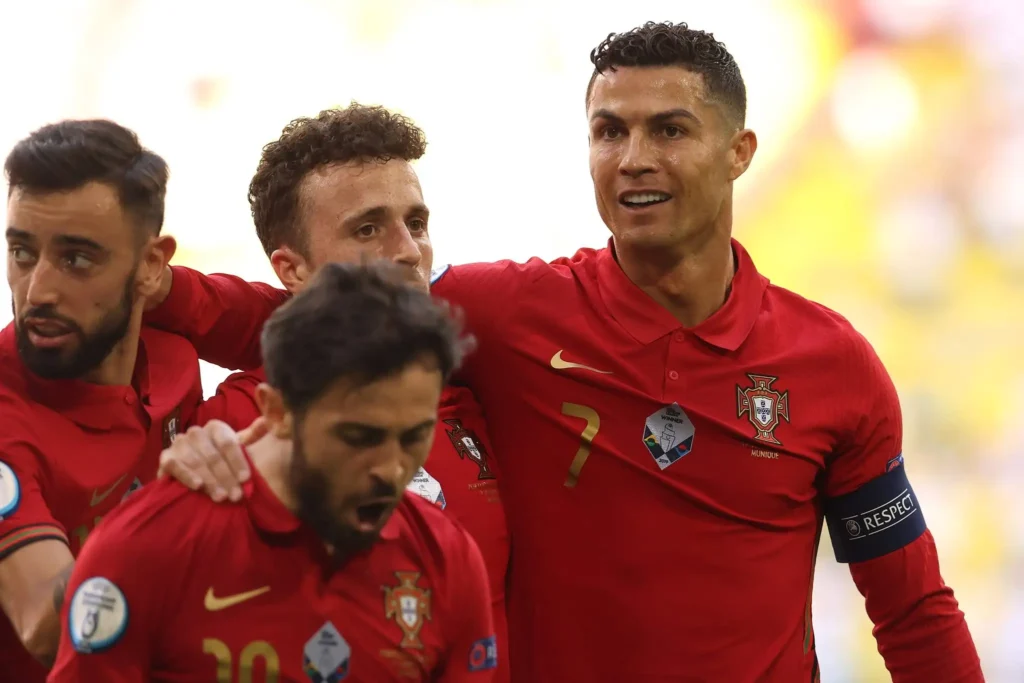
The current attackers in the Roberto Martinez Portugal squad feel this absence acutely. When Bernardo Silva looks up to deliver a cross, or when Bruno Fernandes threads a through-ball into the penalty area, the spaces where Jota used to arrive are now filled with a heavy, echoing silence. To honor him, the current forwards are attempting to replicate his selfless energy. They are running harder, pressing higher, and sacrificing their own personal statistics for the collective good of the team. They are trying to play the game exactly how Diogo played it: with absolute heart, total commitment, and zero fear.
The Dressing Room Sanctuary: Roberto Martinez’s Heaviest Task
Navigating the psychological landscape of a World Cup is incredibly difficult under normal circumstances. Navigating it while carrying the collective grief of a nation is nearly impossible. This impossible task falls entirely upon the shoulders of head coach Roberto Martinez.
Martinez’s role has shifted dramatically over the past year. He is no longer just a tactical architect; he has become the emotional guardian of his players. He understands that grief is not linear. It arrives in sudden, crashing waves. A specific song playing on the team bus, a familiar drill on the training ground, or a quiet moment in a Canadian hotel lobby can instantly trigger a flood of devastating memories for players who grew up with Diogo in the youth academies.
Martinez has masterfully cultivated a sanctuary within the camp. He has created an environment where vulnerability is not viewed as a weakness, but as the ultimate expression of love. If a player needs a moment of silence, they are given it. If they need to weep in the dressing room, they are held by their brothers. The manager is ensuring that the sorrow is channeled into a beautiful, dignified performance rather than allowing it to crush their spirits under the blinding, unforgiving pressure of the global stage. He has united them in their vulnerability, forging a squad that is emotionally unbreakable.
The Silence in the Stands: A Nation United in Sorrow
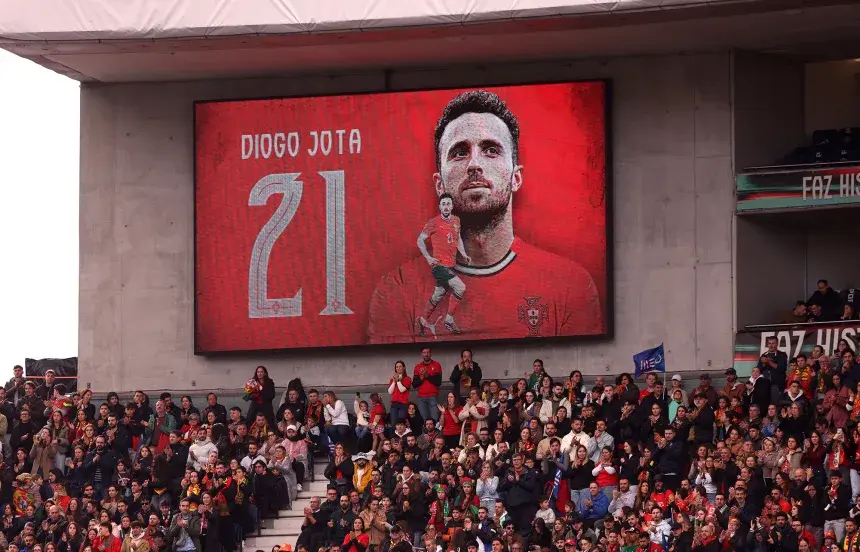
The profound impact of this tragedy is not confined to the grass of the pitch. It has washed over the supporters in the stands, transforming the atmosphere of Portugal’s matches from typical sporting events into mass, moving memorials.
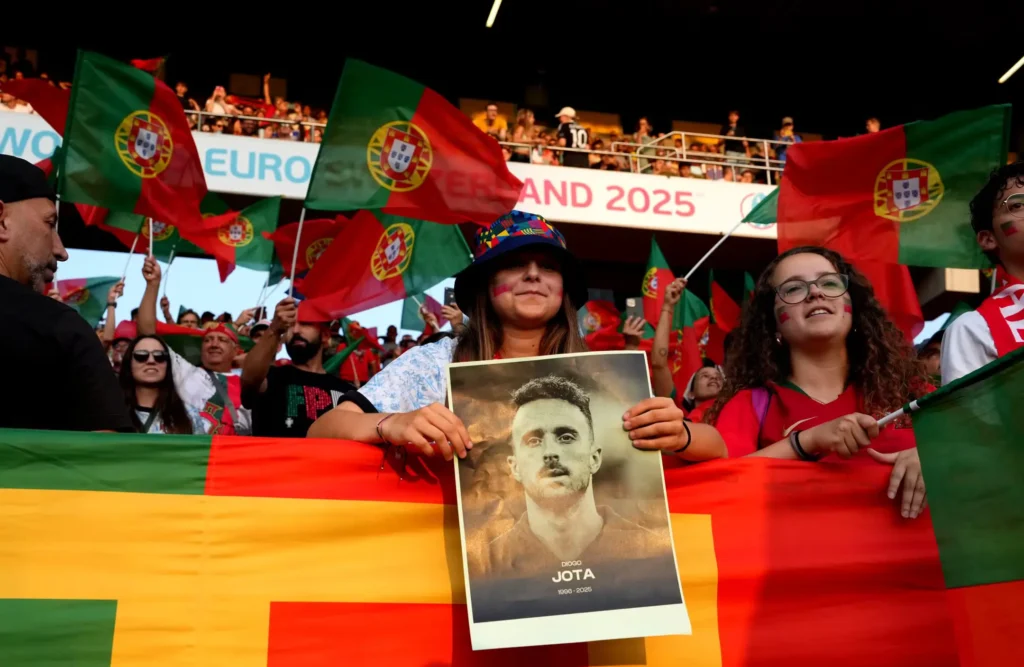
Toronto, the host city for this crucial knockout fixture, is home to one of the largest and most passionate Portuguese diaspora communities in the world. Hundreds of thousands of first and second-generation immigrants have turned the streets of the Canadian city into a sea of red, green, and gold. But amidst the vibrant scarves and the waving flags, there is a deep, unified solemnity. The fans have brought thousands of banners bearing his likeness, accompanied by the simple, heartbreaking phrase: “Eternamente Jota” (Forever Jota).
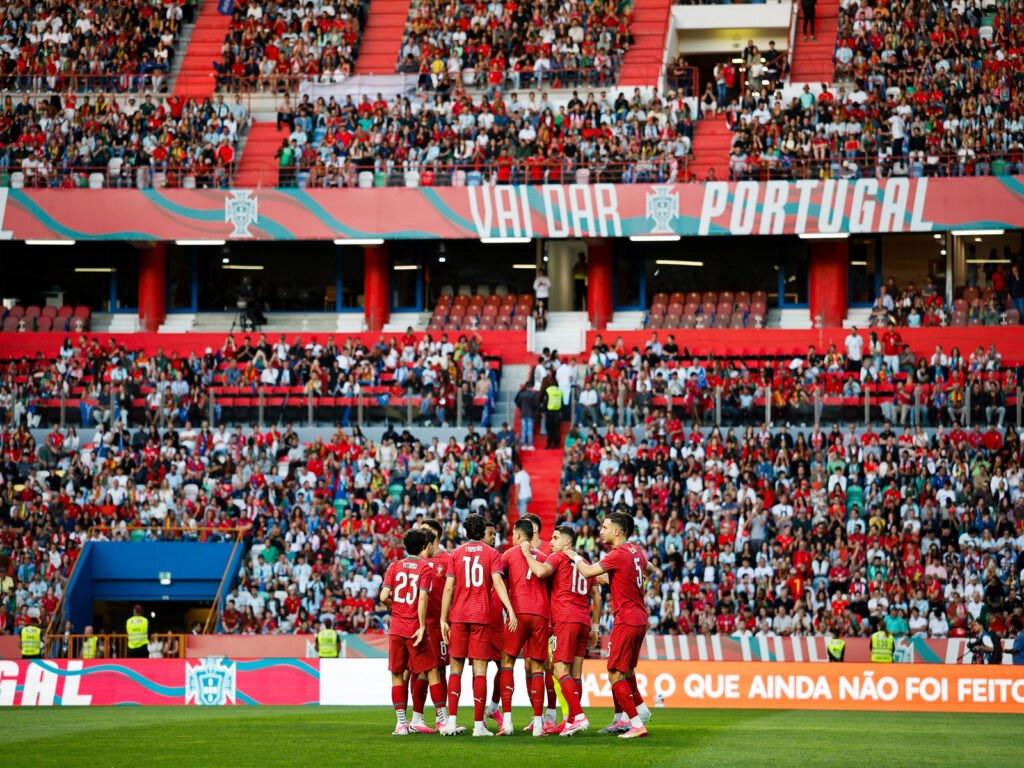
When the opening chords of A Portuguesa, the national anthem, ring out across the stadium, the lyrics about the “heroic sea” and the “immortal name” carry a devastating new weight. Furthermore, a beautiful tradition has been established by the traveling supporters. During the 20th minute of every match, honoring the number he wore so proudly for his country, the entire stadium rises to its feet. For sixty seconds, the tense, anxiety-filled atmosphere of a World Cup match is completely shattered by a thunderous, standing ovation. It is a moment of pure, unified love, sending a wall of sound up into the night sky to ensure that the 12th man hears them.
A Poignant Anniversary: Facing Croatia in Toronto

The brackets of the World Cup knockout stage are decided by mathematical points and goal differences, but sometimes, the schedule aligns to produce a timeline that is almost too heavy to comprehend. The emotional weight of the tournament reached its absolute peak during the Portugal vs Croatia 2026 World Cup clash.
When the referee blows the opening whistle beneath the bright stadium floodlights in Toronto, the shifting global time zones will dictate a chilling, inescapable reality: it will already be July 3 in Europe. This fixture marks the exact one-year Diogo Jota death anniversary tribute. Stepping onto the pitch exactly 365 days after the horrific car accident requires an incomprehensible level of mental fortitude. The players are not just battling a world-class Croatian midfield; they are battling the cruel poetry of the calendar.
The Croatian national team, led by their legendary, veteran captain Luka Modrić, has approached the fixture with immense class and profound respect. They understand that on this specific night, football is entirely secondary to the human experience. There will be no pre-match hostilities, no manufactured drama. There is only mutual respect between professionals who understand how fragile a sporting career, and a human life, truly is. The match will be fiercely competitive, but it will be contested with the utmost dignity, honoring the gravity of the day.
Beyond the Pitch: Remembering Jota and André Silva
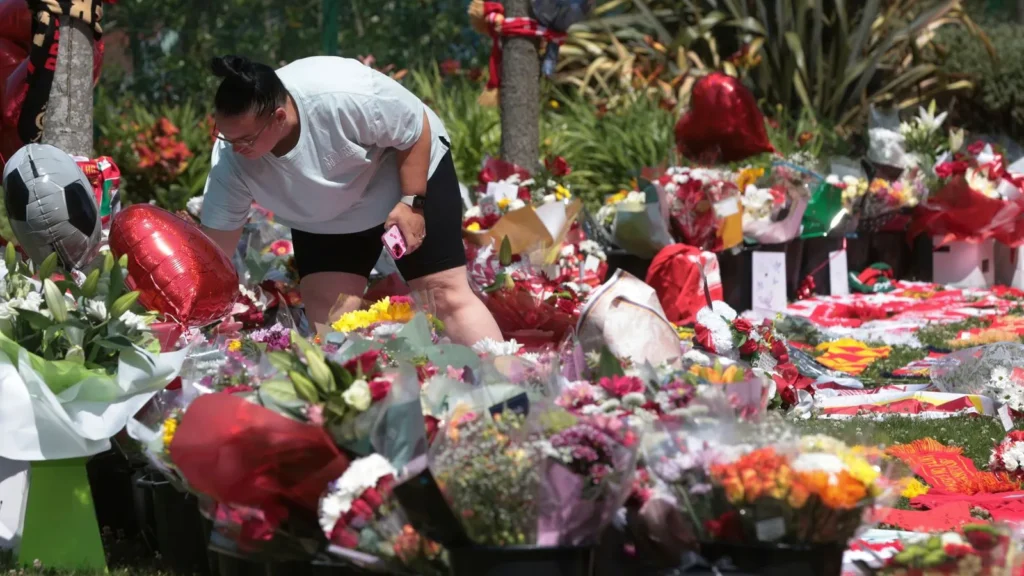
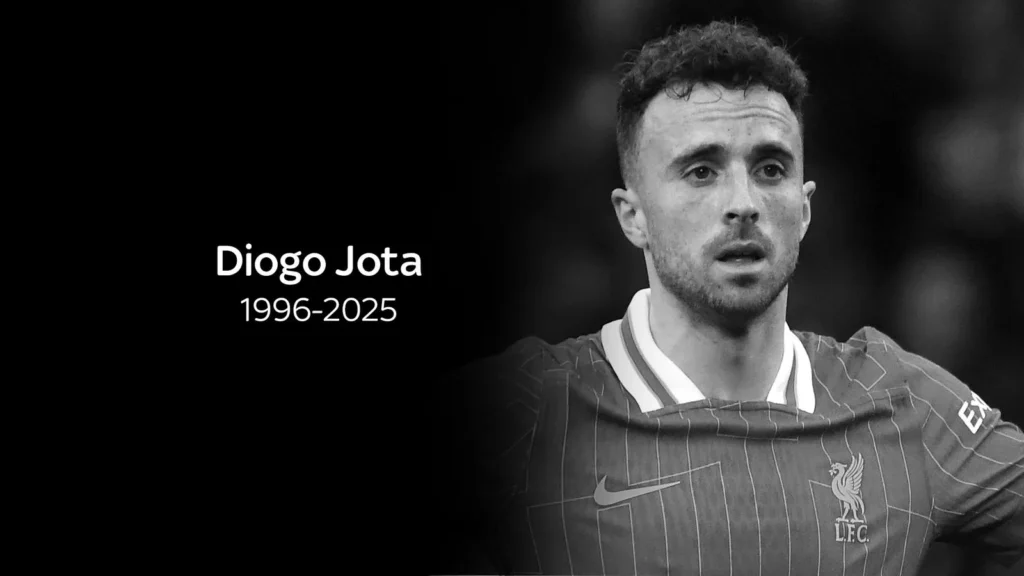
As the footballing world reflects on the legacy of the Diogo Jota 12th man of Portugal, it is absolutely vital to step entirely away from the tactical diagrams, the goal tallies, and the shiny accolades. The true, devastating scale of this tragedy cannot be measured in missing statistics, empty spots on a roster sheet, or missed opportunities in a tournament bracket.
Twelve months later, the world still mourns the irreplaceable loss of two beautiful, vibrant lives. Diogo was just 28 years old, standing at the absolute peak of his physical and professional powers, with a young family waiting for him at home. His brother, André Silva, was only 25, a young man with a vast, completely unwritten future stretching out ahead of him. While the global public knew Diogo for his brilliant, explosive abilities on the football pitch, the brothers’ deepest impact was felt intimately, quietly, behind closed doors.
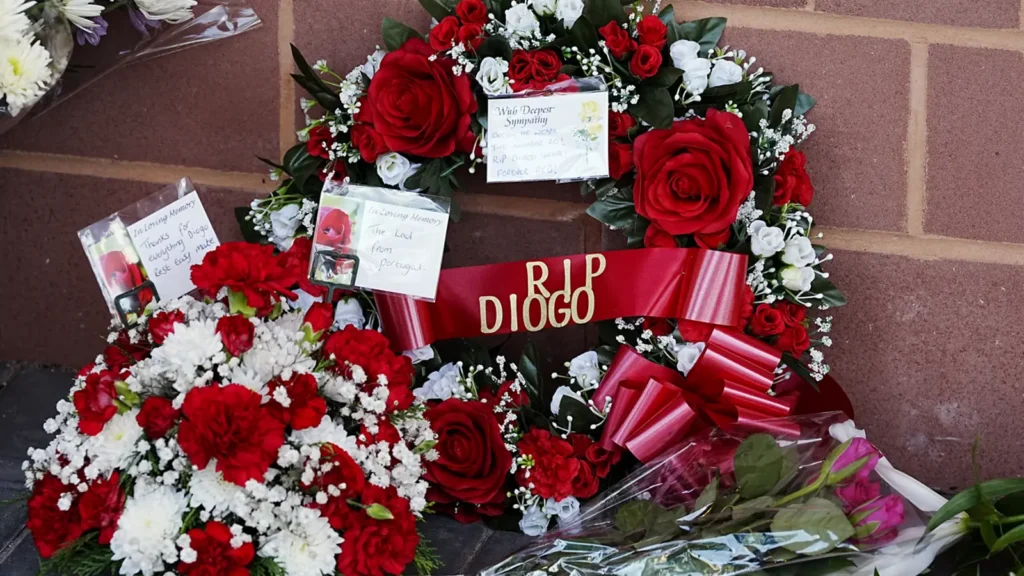
They were renowned in their hometown of Massarelos, and throughout the tight-knit footballing communities of Porto and Liverpool, not just as athletes, but as profoundly good men. They lived with an infectious, warm joy, characterized by their deep humility, their constant laughter, and their unwavering, fierce devotion to their family. The most profound, echoing loss does not belong to the national team; it belongs to the parents who must now navigate the rest of their lives without their sons, and the friends who lost their brightest, most reliable anchors.
When the Portuguese players touch the black bracelets on their wrists in Toronto, they are not just honoring a lethal forward who could score goals. They are honoring a son, a brother, a father, and a beloved friend. They are reminding the watching world that beneath the armor of the national team jersey, these athletes are just young men. The World Cup will eventually end, and a victor will be crowned, but the love this team carries for their fallen brother will outlast any trophy. He is their 12th man, today, tomorrow, and forever.