To comprehend the sheer, staggering gravity of the Lionel Messi World Cup 2022, Argentina, Qatar final triumph, one must first look away from the golden trophy and focus on the immediate, physical collapse of the man himself. It is December 18, and the heavy, artificial night in Lusail has stretched into a realm of agonizing, unbearable tension. The Lusail Stadium is a colossal, glowing golden bowl vibrating with the manic, terrified energy of nearly ninety thousand souls.
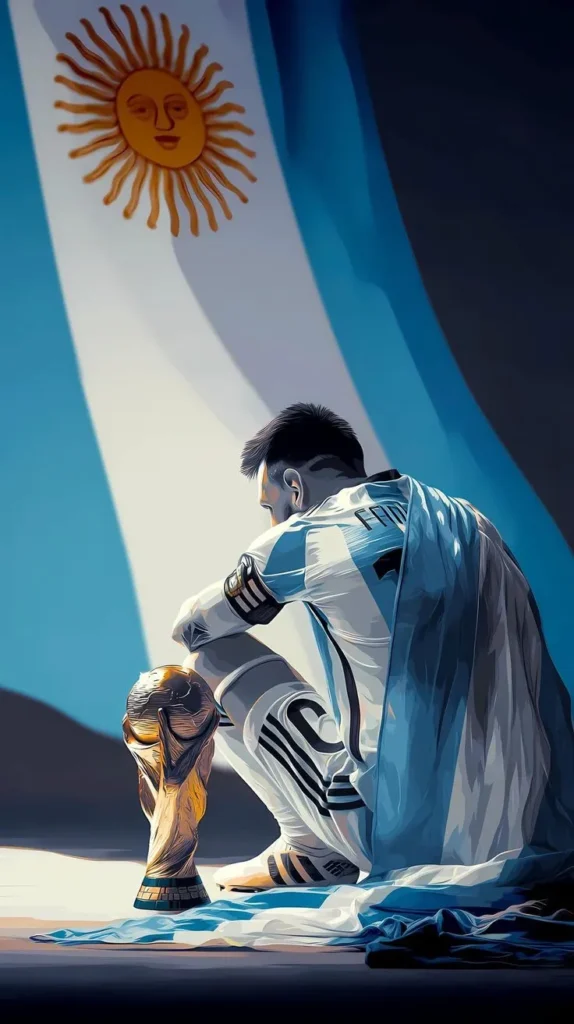
Look at the center circle. The moment Gonzalo Montiel’s right boot connects with the synthetic leather of the Al Hilm, sending it past the sprawling limbs of Hugo Lloris, time violently fractures. Before the ball even kisses the white netting, before the deafening, apocalyptic roar of the Argentine congregation shatters the desert sky, Lionel Messi simply disintegrates. His knees buckle beneath him. He does not sprint; he does not leap in a violent explosion of triumphant joy. He collapses onto the meticulously manicured, air-conditioned turf. The heavy, suffocating weight of thirty-five years of national suffering, the agonizing ghosts of previous failures, the relentless, crushing demands of a desperate republic, all of it instantly evaporates from his small, fragile frame, leaving him entirely hollowed out on the grass. He covers his face with trembling hands, a solitary figure drowning in a chaotic sea of ecstatic, weeping men. The ritual of his suffering is finally over.
To fully grasp the atmospheric density of this triumph, we must trace the strange, surreal tapestry of the era in which it was woven. This was a tournament divorced from the traditional, muddy, rain-swept European winters or the humid, chaotic, sun-baked summers of the Americas. Qatar was an alien landscape, a hyper-modern oasis of glass and steel thrust violently from the ancient, indifferent sand. The stadiums were sterile, architectural marvels, pumping freezing artificial air into the sweltering Arabian night, creating a jarring, unnatural ecosystem that felt entirely disconnected from the visceral, terrestrial roots of the sport.
Yet, into this sterile, corporate amphitheater poured the raw, bleeding heart of South America. Argentina arrived not merely as a football team, but as a desperate, migrating cult. The nation was entirely consumed by a crippling economic crisis, navigating a daily reality defined by hyperinflation and profound, structural despair. They possessed nothing but the desperate, blinding hope wrapped entirely around the aging legs of their number 10. The congregation that descended upon Doha transformed the pristine, silent metro stations and the sterile boulevards into vibrating, chaotic cathedrals of noise, chanting Muchachos until their throats bled.
Hovering over this entire spectacle, casting a long, impenetrable shadow over the neon lights of the desert, was the undeniable ghost of Diego Armando Maradona. The deity of 1986 had passed into the ether just two years prior, cementing his legacy in absolute, tragic amber. For over a decade and a half, Messi had been cruelly measured against this ghost. He had been accused of lacking the fire, lacking the street-fighter venom, lacking the fundamental, chaotic soul required to truly wear the sacred blue and white armor. He had walked past the golden trophy with blank, haunted eyes in the devastating silence of the Maracanã in 2014. He had retired, un-retired, and bled for a nation that demanded he be a god while constantly punishing him for being a mortal. The Argentina Qatar final was not just a match; it was the ultimate, necessary exorcism.
The match itself defied every logical parameter, evolving from a masterclass of South American dominance into a terrifying, visceral nightmare. For eighty minutes, Argentina had woven a beautiful, suffocating web, reducing the defending French champions to terrified spectators. But football is a cruel, chaotic theater. In the space of ninety seconds, the terrifying, mechanical brilliance of Kylian Mbappé shattered the illusion, dragging the corpse of the French team from the grave and plunging the stadium into absolute, paralyzing panic.
The true climax of Messi’s epic, however, is not a moment of pristine, untouchable aesthetic beauty. It does not possess the sweeping, slow-motion grace of Maradona’s slalom in the Azteca. It is born, instead, in the brutal, suffocating trenches of the 108th minute.
The players are physically destroyed, dragging their heavy, cramping legs across the turf, their lungs burning in the strange, chilled air. Enzo Fernández plays a desperate, heavy ball to Lautaro Martínez. The shot is violently parried by Lloris. The ball rebounds into the chaotic, congested space of the six-yard box.
In a stadium paralyzed by exhaustion and terror, his mind operates in a realm of terrifying, glacial clarity. He does not strike it with a poetic, sweeping volley. He aggressively, desperately bundles it. It is an ugly, heavy, concrete-laden touch with his weaker right foot. The ball crawls over the line just millimeters before Dayot Upamecano violently boots it away. It is a goal completely devoid of his usual divine aesthetics, yet it is arguably the most visceral, profoundly human act of his entire career. It is the raw, unadulterated manifestation of pure, desperate will.
Even when Mbappé, the relentless grim reaper of the French attack, equalizes again from the penalty spot to drag the nightmare into a shootout, Messi’s aura fundamentally shifts. When he steps up to take Argentina’s first penalty in the shootout, the stadium is a maelstrom of screaming, weeping, hyperventilating chaos. Emiliano Martínez, the towering, chaotic guardian of the Argentine net, has just watched Mbappé score. The psychological pressure is a physical, crushing weight.
Messi walks to the spot. The slow, hypnotic rhythm of his gait is a stark contrast to the tragic, hurried anxiety of Roberto Baggio in Pasadena. He places the ball. He takes his steps back. Lloris, a sprawling, imposing figure, bounces on the line, trying to disrupt the silence.
The whistle blows. Messi approaches the ball not with the terrifying, violent power of a man seeking to break the net, but with the gentle, almost arrogant softness of a father passing a ball to a child in a garden. He waits an agonizing, imperceptible fraction of a second for Lloris to commit his weight to the right. Then, with a subtle, delicate opening of his left foot, he simply rolls the ball into the opposite corner. The ball trickles across the line. It is an act of supreme, cold-blooded magic. He turns to his teammates, a serene, almost detached smile on his face. In that singular, whispered penalty, he drains the terror from the Argentine veins. He communicates to the congregation that the ghosts have been banished. The inevitable is finally here.
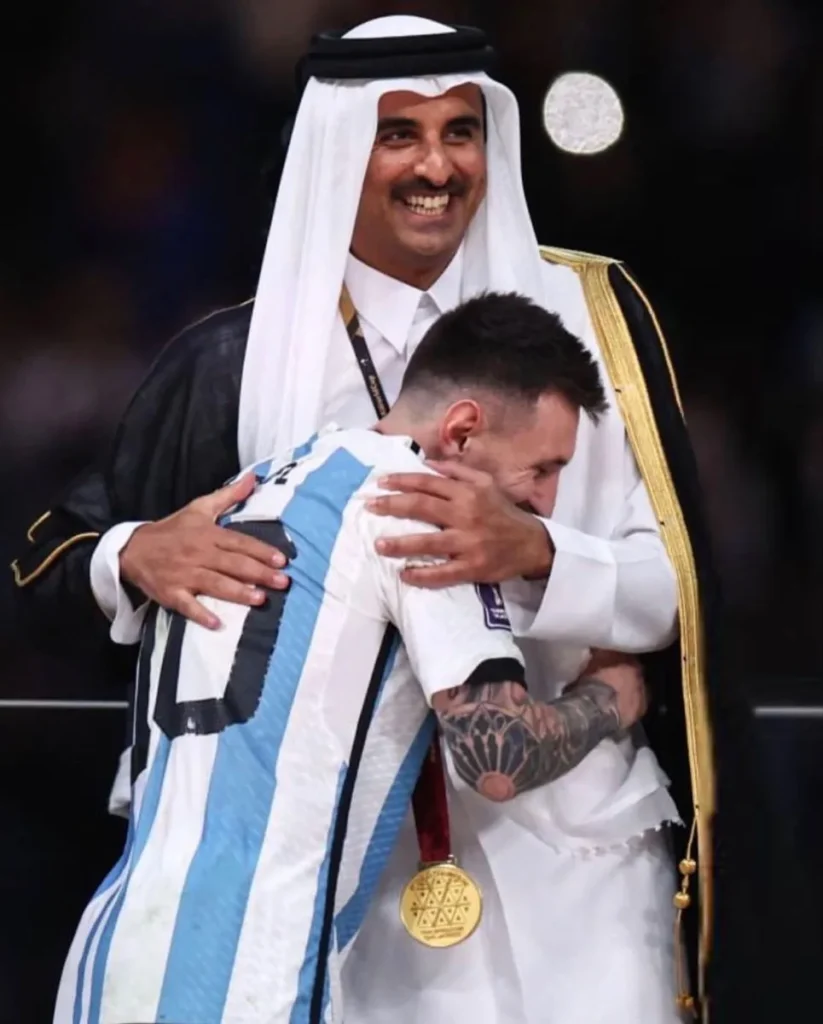
The chaos of the final whistle eventually yields to the highly choreographed, heavily regulated theater of the podium. The desert night has settled. The confetti cannons are primed. The world waits for the definitive image, the photograph that will be permanently etched into the grand, sweeping archives of the sport.
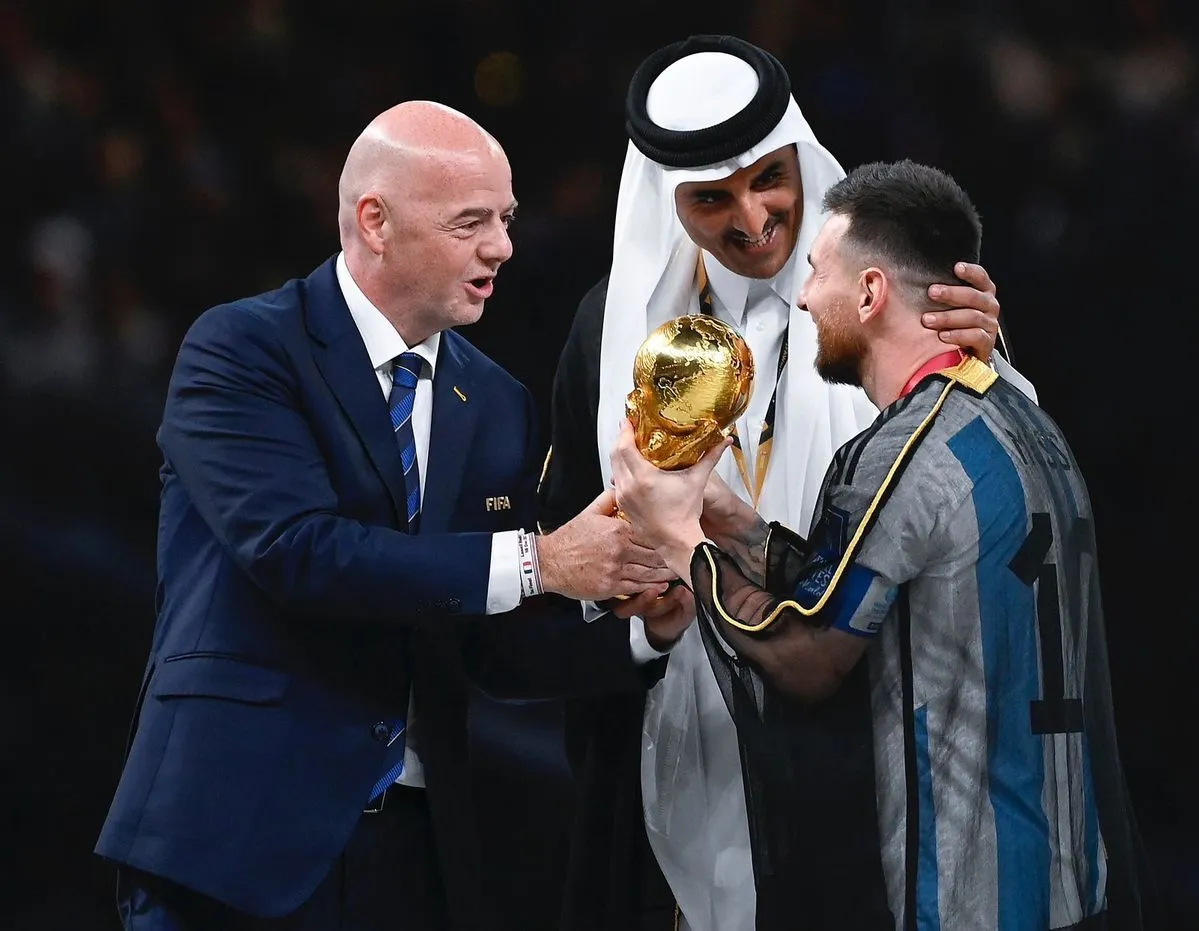
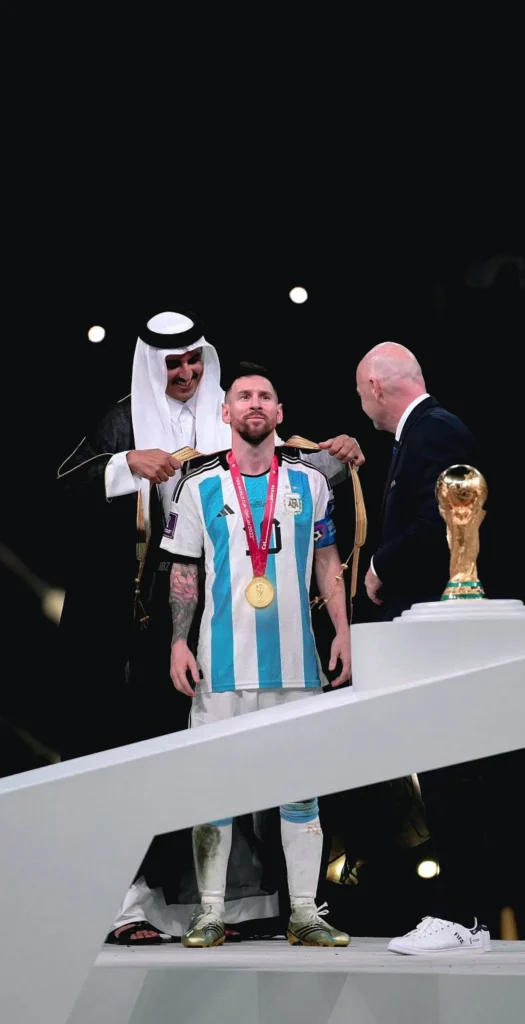
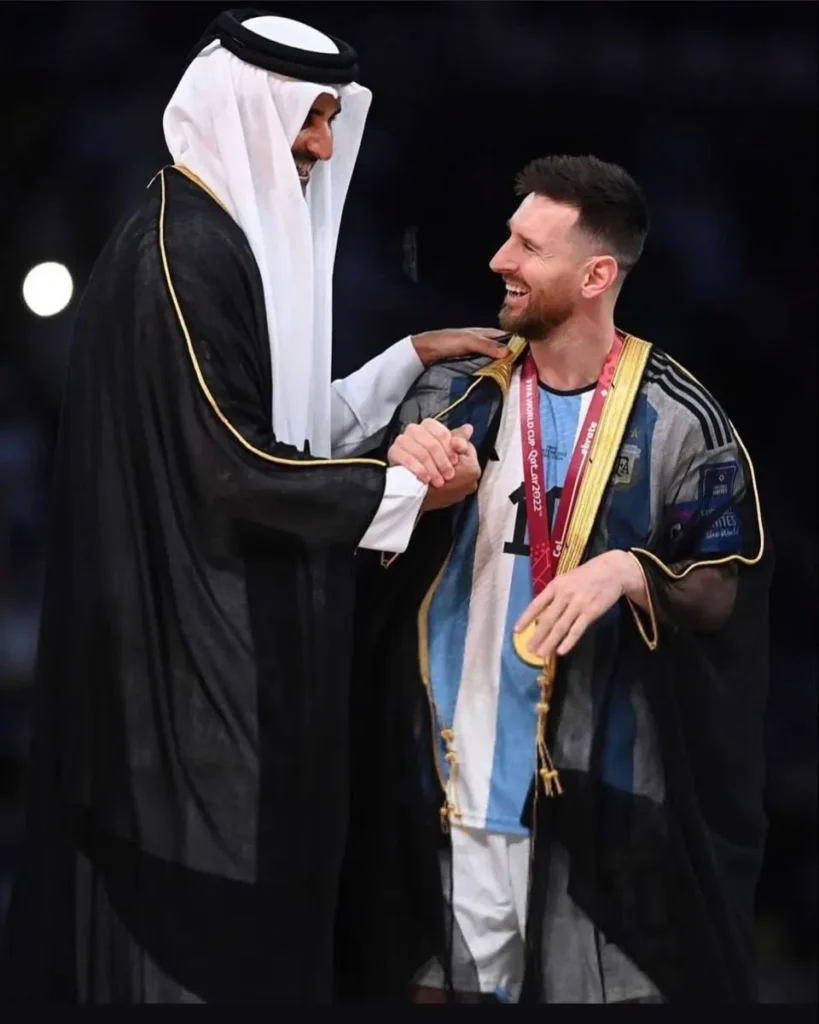
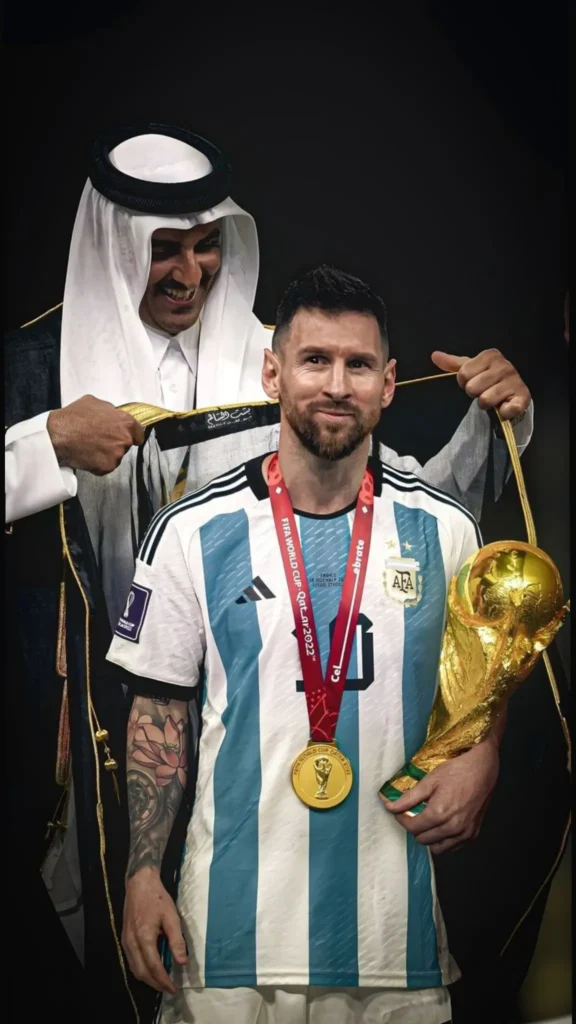
But Qatar 2022 had one final, deeply surreal twist of the tapestry. As Messi approaches the golden pedestal, the Emir of Qatar steps forward, holding a sheer, black fabric trimmed heavily in gold. It is a bisht, a traditional Arabic cloak worn by royalty and dignitaries during ceremonies of high honor.
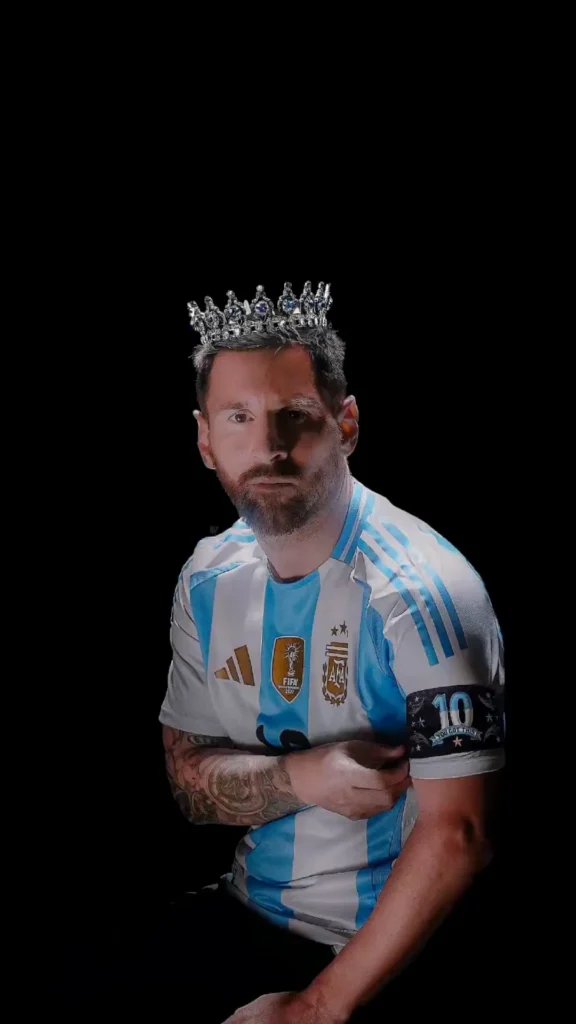
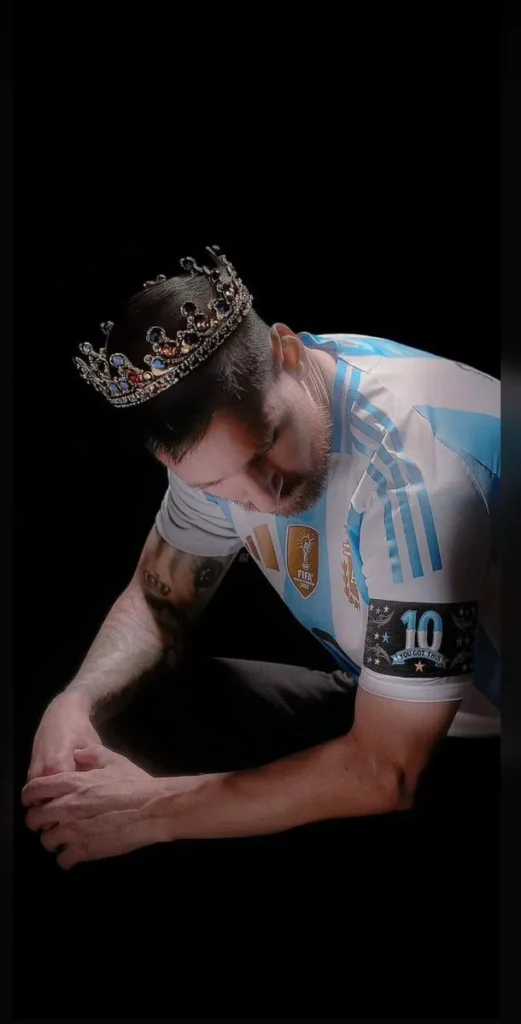
Before Messi can grasp the trophy he has chased for his entire conscious life, the dark, translucent fabric is draped heavily over his shoulders, obscuring the iconic, sacred pale blue and white stripes of the Argentine jersey. For a fleeting second, there is a visual shock, a jarring collision of ancient desert tradition and modern global commercialism. It is a deeply controversial, highly politicized imposition, a reminder of the power and control that defined the tournament’s very existence.
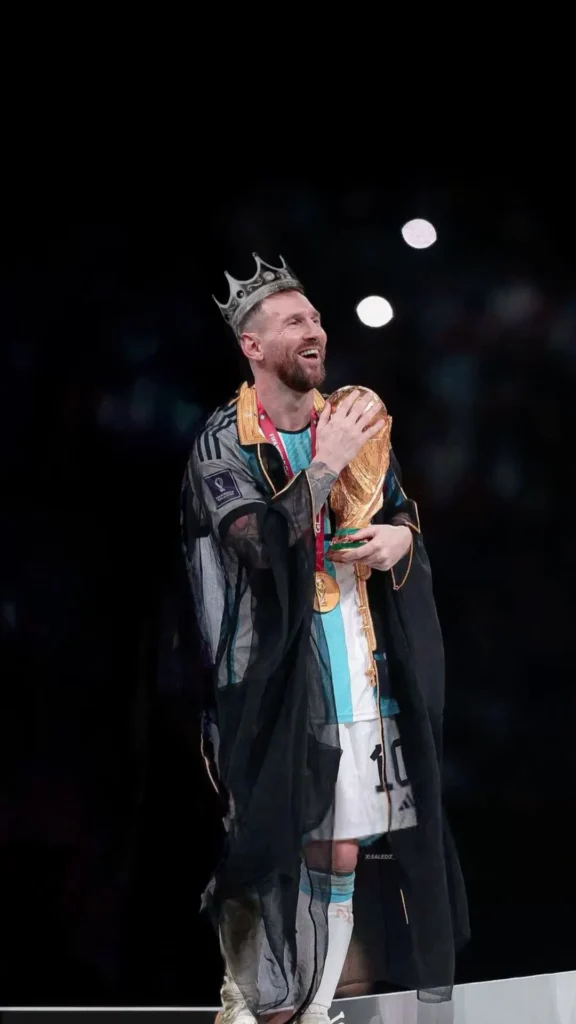
Yet, as he walks toward his weeping, exhausted teammates, lifting the heavy, golden globe into the artificial light, the aesthetic of the bisht undergoes a strange, cinematic transformation. The black and gold fabric ceases to be an imposition; it becomes a royal mantle. He looks less like a modern athlete and more like an ancient, conquering king, a mythological figure who has survived a brutal, decades-long crusade and returned from the desert with the ultimate prize.
The echo of that night in Lusail has permanently altered the psychological landscape of the modern game. We live in an era defined by tactical algorithms, physical optimization, and cold, sterile efficiency. Yet, the saga of Lionel Messi in Qatar proved that the sport is still profoundly vulnerable to the power of a narrative. It proved that true, enduring magic requires suffering, that the deepest love is forged in the terrifying crucible of repeated failure.
If you stare into the empty, silent photographs of that podium today, you do not just see a man holding a trophy. You see the complete, absolute resolution of a thirty-five-year-old trauma. You see the final, peaceful rest of Diego’s ghost. The win will forever be woven into the fabric of human history as the moment the game surrendered its cruelty, allowing the architect of its most beautiful dreams to finally wake up in a reality of his own making.