In the modern landscape of sportswear design, the prevailing methodology has often been a race toward the absolute minimum. Brands have relentlessly stripped away materials in pursuit of weightless, microscopic silhouettes, resulting in a market saturated with translucent, characterless boots. However, when it comes to elite football boots, the Adidas Predator 2026 release represents a severe, calculated pivot. True disruption does not always require inventing a new language; sometimes, it demands speaking the old language with absolute, undeniable authority. With this drop, Adidas has weaponized nostalgia, engineering a silhouette that rejects the fragile minimalism of its competitors.

This capsule is not merely an athletic tool; it is a psychological trigger. The Predator is undeniably the most culturally significant franchise in football history. To redesign it for a World Cup year requires an understanding of its inherent visual weight. The designers recognized that the modern consumer, and the modern athlete, craves a physical anchor. They desire a garment that feels bespoke, heavily structured, and deeply rooted in a tangible lineage. The 2026 iteration operates as a masterclass in this philosophy. It takes the aggressive, unapologetic aesthetic of early-2000s terrace culture and subjects it to the rigorous, clinical execution of contemporary high fashion. It is the definitive working-class icon elevated to a piece of luxury architecture.
To understand the immense cultural weight of this drop, we must trace its structural lineage. The Predator framework was born in 1994, defined by its vulcanized rubber fins and its stark, visceral color palette. But the heritage that the 2026 capsule pulls from is highly specific. Adidas did not look to the neon futurism of the 2010s; instead, they excavated the archives to retrieve the exact design intent of the 2003 Predator Pulse and the legendary 2002 Mania. This era represents the peak of the franchise’s visual identity, a time when the boot was characterized by heavy, armor-like constructions and the unmistakable fold-over tongue.

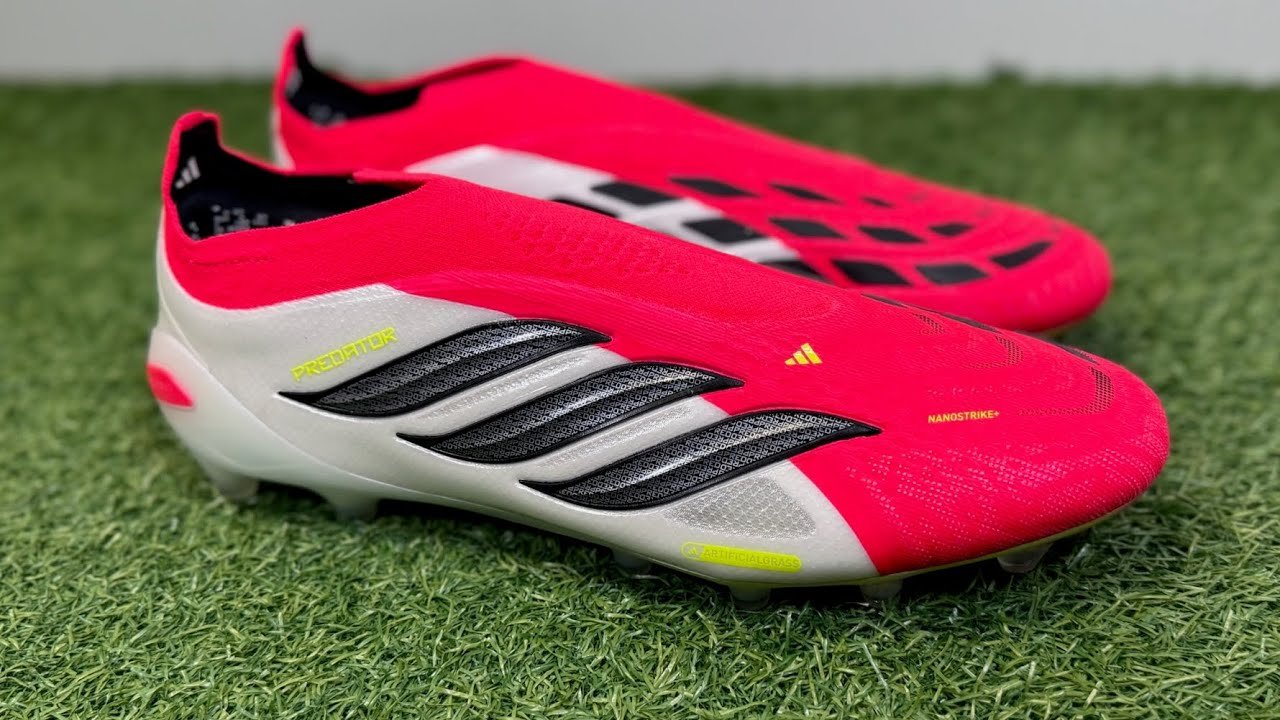
The launch of the new Predator football boots relies heavily on this specific archival retrieval. The introductory Iron Metallic and Lucid Red colorway is a direct homage to the famed “Gunmetal” editions of the past. This is a deliberate psychological choice. By reintroducing this muted, industrial palette accented with a sudden strike of aggressive infrared, Adidas taps into a collective memory of dominance and control. It is a visual identity that speaks to purists, reminding the market that before football apparel was heavily digitized, it was built on raw, physical impact. The heritage here is not just about aesthetics; it is about the posture the wearer assumes when strapping into a piece of documented history.
When deconstructing the physical anatomy of the new Predator football boots, the most critical shift occurs in the textile engineering of the upper. Historically, the Predator relied on the heavy, luxurious drape of Kangaroo leather, and later, the synthetic HybridTouch. For the 2026 release, Adidas has completely reimagined the material foundation, transitioning to an advanced textile-mesh matrix. This is where the silhouette achieves its modern relevance. It provides the structured, bespoke feel of a classic leather boot while delivering the feather-light, aerodynamic properties demanded by modern physiological data.
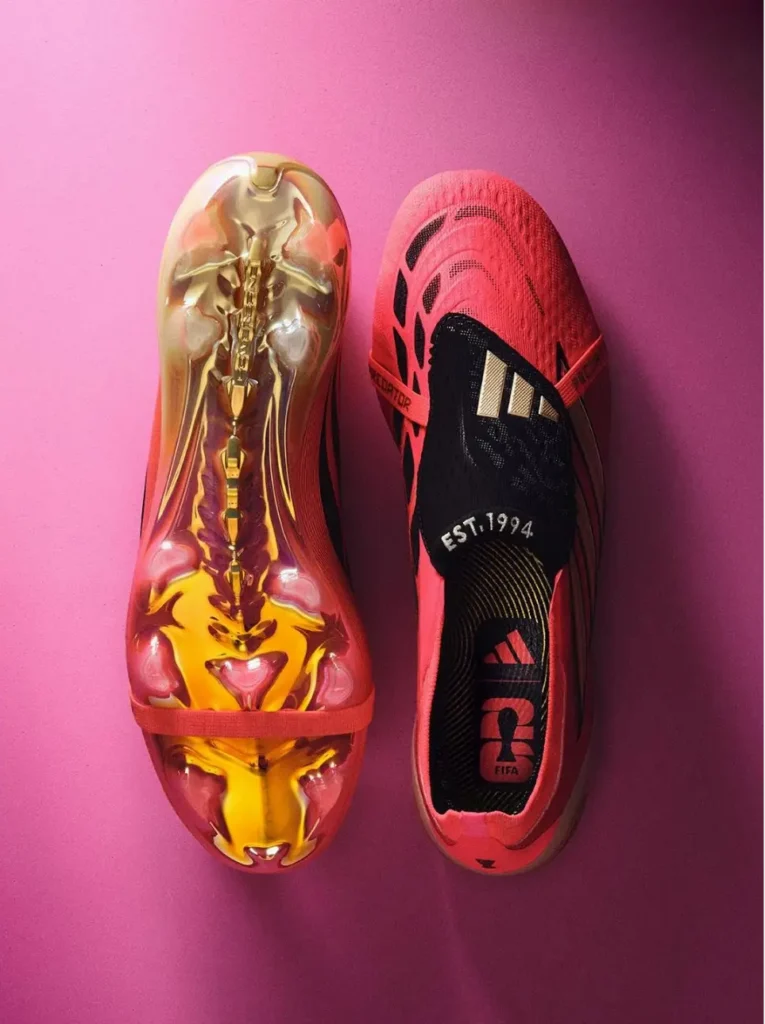
The integration of the NanoStrike+ technology into this mesh framework is a triumph of understated design. In past iterations, the rubber grip elements were rendered as exaggerated, raised fins that disrupted the visual flow of the toe box. The 2026 architecture introduces grip elements that sit almost entirely flush against the textile. These wavy, microscopic ridges are woven directly into the structural integrity of the fabric. This creates a silhouette that is brutally sharp from a distance, yet obsessively detailed upon closer inspection. It is a refinement that aligns perfectly with the principles of luxury tailoring: the complexity of the garment should serve the overall drape, not distract from it.
A bespoke upper requires an equally rigorous foundation, and the lower anatomy of the new Predator football boots delivers a complex structural response. Adidas has resurrected the PowerSpine technology, a rigid, kinetic plate running beneath the midfoot. This is not merely a marketing term; it is a critical architectural decision. The PowerSpine acts as a physical chassis, preventing the boot from warping under extreme torque. This structural rigidity contrasts beautifully with the adaptable, sock-like lockdown provided by the Primeknit collar, creating a garment that is simultaneously armored and fluid.
Furthermore, we must analyze the fold-over tongue on the Elite FT (Fold-over Tongue) variant. In a lesser design, this element could easily register as a cheap, nostalgic gimmick. However, the 2026 execution treats the tongue as a functional, geometric shroud. It covers the lacing system to provide a mathematically perfect, smooth striking surface, while an engineered elastic strap anchors it to the soleplate. Visually, the tongue breaks up the aerodynamic line of the foot, adding bulk and dimension to the instep. It transforms a standard athletic shoe into a piece of heavy, disruptive footwear that commands visual attention on the pitch.

How does a high-performance, Iron Metallic control boot transition from the hyper-optimized environment of a stadium pitch to the unforgiving concrete of the street? With an aggressive, industrial elegance. The Adidas Predator 2026 release is uniquely positioned to dominate the intersection of “Terrace Culture” and the modern Techwear movement. Unlike speed boots, which often look fragile and out of place in a lifestyle context, the Predator possesses a brutalist, chunky framework that allows it to hold its ground against heavy, structured clothing.
The street translation of this silhouette requires a masterful manipulation of proportion. The FT edition, with its bulky fold-over tongue, acts as a disruptive focal point. Worn in a high-fashion studio setting, this shoe demands to be paired with severe, utilitarian textiles. The rigid STRIKEFRAME soleplate and metallic upper align perfectly with articulated nylon cargo pants, heavy wide-leg denim, or modular tactical trousers.

By allowing the hem of a wide-cut pant to drape over the Primeknit collar, leaving only the aggressive, infrared-accented toe box and the iconic tongue exposed, the wearer transforms the boot into a high-end, structural sneaker. It strips the garment of its purely athletic context, elevating it to a statement piece that rivals the output of luxury fashion houses. Adidas has not merely released a football boot for the 2026 cycle; they have engineered a bespoke, weaponized capsule that redefines how sporting heritage operates within the modern aesthetic consciousness.