Como 1907: How a Club by the Lake Became the Ultimate Blueprint for Football Aesthetics
Picture this: you’re standing by the water, taking in the serene lake side views as the deep blue of Lake Como slaps against the stone walls near the stadium. But we aren’t looking at the boats; we’re looking at a Como 1907 football kit that has fundamentally redefined modern football aesthetics. The exact second you get your hands on this jersey, you realize this isn’t normal football gear.
Think about what a standard replica shirt feels like today. It feels like wearing a plastic bag. It’s thin, it’s covered in loud gambling sponsors, and it costs half your paycheck. But this? This is entirely different. You run your fingers over the chest. It’s woven with a stunning, subtle water-ripple pattern that catches the afternoon light. It makes the mass-produced kits of the big European giants look like cheap, rushed knock-offs.
This isn’t just a shirt you wear to spill a pint of cheap lager on in the stands. It’s a limited, one-off piece. It feels like it belongs hanging in a luxury boutique window in Milan, but somehow, it still carries the damp, earthy scent of the old Italian concrete just a few blocks away. For decades, football fashion has been trapped in a boring, repetitive, copy-and-paste cycle. But standing here, holding this heavy, beautiful blue shirt, you realize the old rules have just been completely ripped up and thrown into the lake. This right here is the exact moment the aesthetic of the game changed forever.
Rejecting the Corporate Football Kit Template
To really feel the weight of what’s happening here, you have to look at the massive, soulless machine of modern football. For years, the big apparel companies have treated fans like walking billboards. They design a neon template, slap a sponsor logo across the chest, and call it a day. It’s a plastic tapestry of identical, forgettable designs. The actual soul of the club is completely wiped out, replaced by whatever loud color scheme looks best on a television screen halfway across the world. Most clubs treat fashion as an absolute afterthought. A chore to check off before the season starts.
But Como 1907 took one look at that system and refused to play the game.
How a Lake Side Setting Redefined Como 1907 Football Aesthetics
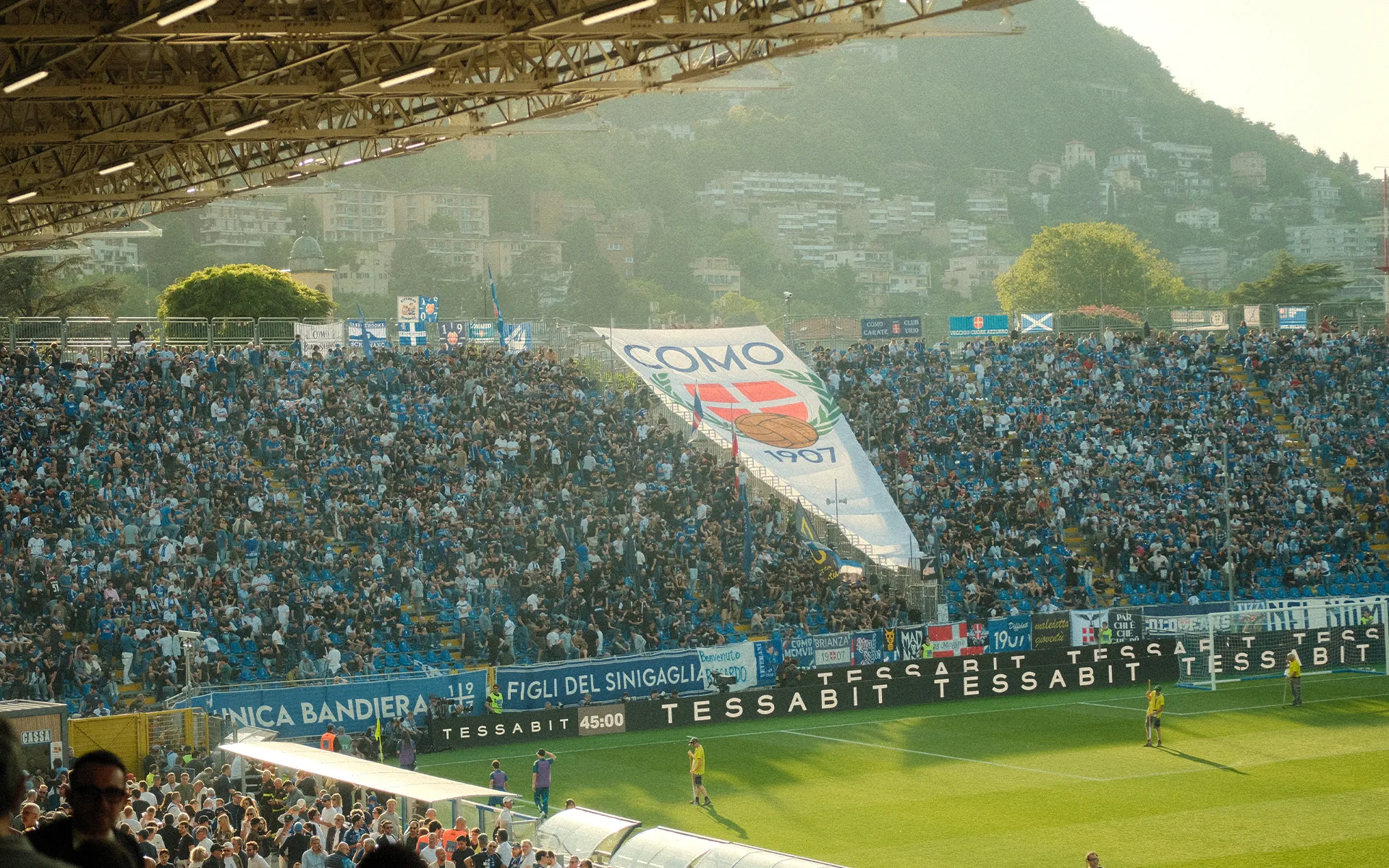
They didn’t look at a spreadsheet; they looked around at their own backyard. The Stadio Giuseppe Sinigaglia sits literally right on the edge of the water. It’s an unbelievable, almost ridiculous setting for a football ground. You can practically watch the seaplanes landing on the lake while you’re waiting for the referee to blow the whistle for a corner kick.
And the town of Como itself? It is world-famous for silk. For centuries, it has been the absolute heartbeat of high-end Italian textile manufacturing. It’s a place of slow, foggy mornings, strong espresso on the terrace, and effortless, timeless elegance. So, why on earth would a football club from a town like this wear something mass-produced and totally soulless?
It just makes perfect sense. The club decided that their aesthetic had to feel completely authentic to its surroundings. If the town is known for absolute luxury, the club’s gear should reflect exactly that. They stopped treating their fans like blind consumers and started treating them like a deeply respected congregation. They understood that the ritual of putting on your team’s colors on a Saturday morning should feel incredibly special. It shouldn’t feel like wearing a billboard. It should feel like putting on a piece of your home.
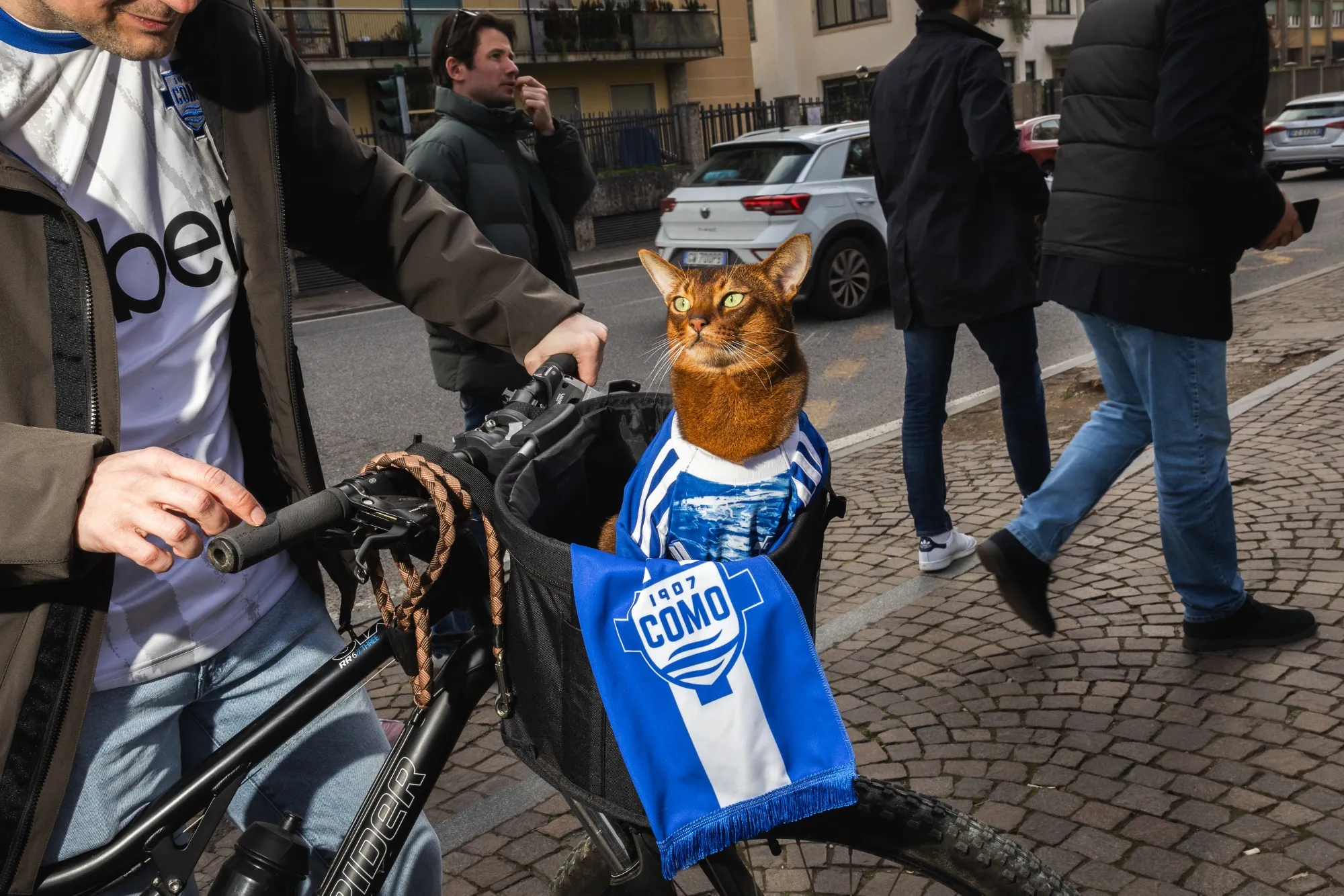
Suddenly, Como wasn’t just dropping basic football kits. They were releasing tailored suits. They were putting out high-end silk shirts, tailored swimwear, and sleek bomber jackets that you could wear to a Michelin-star dinner. They completely blurred the line between the muddy, visceral, bone-crunching reality of a Serie A relegation scrap and the polished beauty of a luxury runway. And the craziest part? It worked flawlessly. Every single collection feels like a totally natural extension of the club’s identity. It doesn’t feel forced. It feels like it was always meant to be this way.
Rhuigi Villaseñor: The Architect of a New Era
Now, you can’t talk about this unbelievable glow-up without talking about the guy pulling the strings behind the curtain. In late 2024, the club made a move that made the entire football world stop dead in its tracks and stare. They didn’t hire some boring, traditional sports marketing guy in a grey suit. They brought in Rhuigi Villaseñor as their Chief Brand Officer.
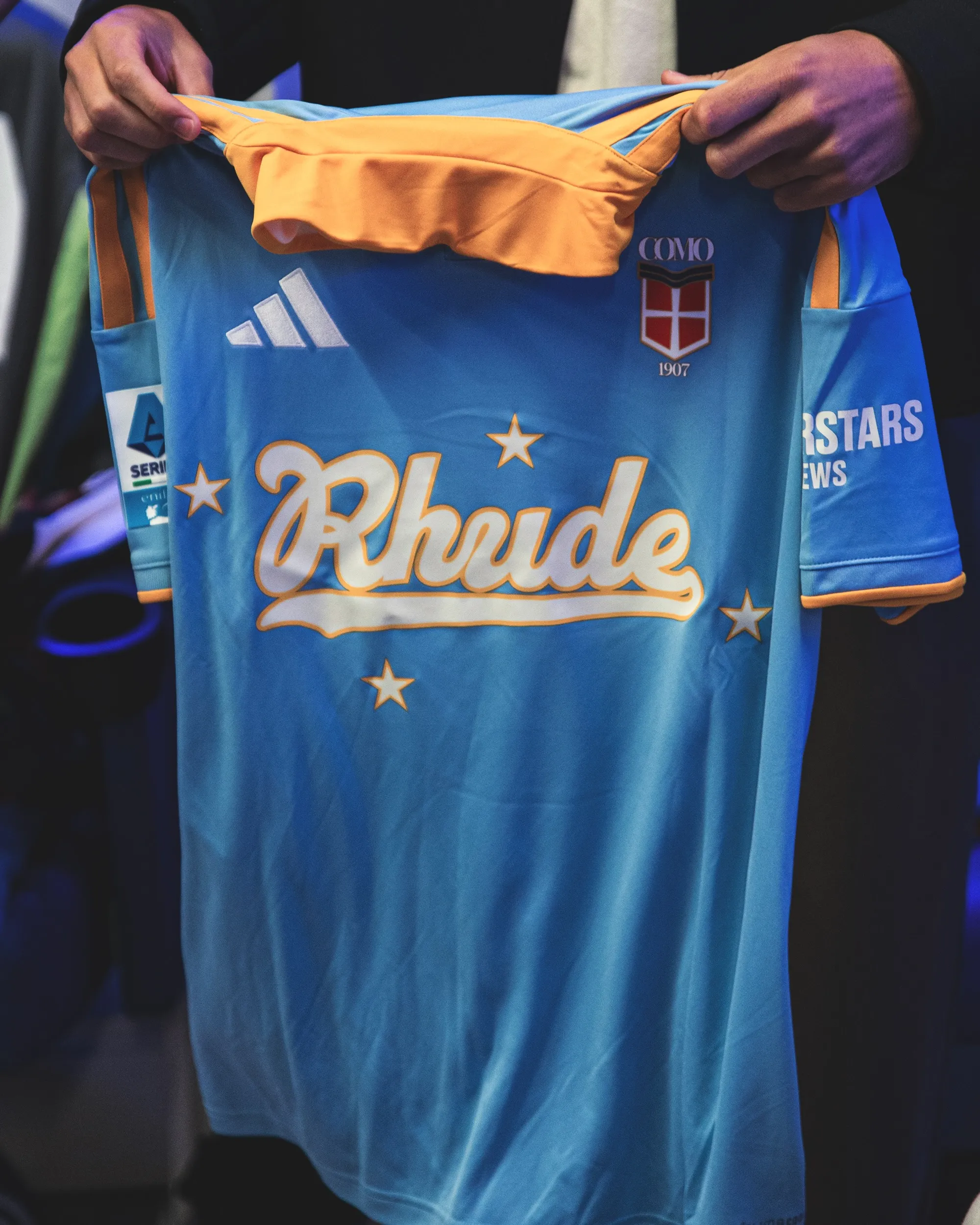
If you know anything about modern streetwear, you know Rhuigi. He’s the founder of RHUDE. He is a guy who took the gritty, rebellious, loud energy of Los Angeles and turned it into a globally recognized luxury label worn by everybody who matters. He’s a guy who inherently knows how to build a fiercely loyal cult following.
When Rhuigi stepped into the damp, historic tunnels of Como, it was a massive collision of two completely different worlds. But he didn’t come in with a massive ego trying to erase history. He fell head over heels in love with it. He looked at the ghosts of the club, the old legends who used to tear up the pitch, the dark decades the club spent wandering in the lower amateur leagues, the sheer, heartbreaking tragedy of a club that had gone totally bankrupt and had to brutally claw its way back from the dead, and he decided to honor every single piece of that struggle.
Rhuigi didn’t just want to design a nice shirt. That’s too easy. He wanted to build an entire lifestyle. He threw out the old, tired playbook completely.

It wasn’t just a fashion show. It was a massive cultural statement. You had absolute football icons mixing drinks with high-fashion models and A-list celebrities. They were showing off stunning co-branded rugby tops, sleek zip-up sweatshirts, and heavy, beautifully made baseball caps. Rhuigi took the raw, aggressive, sweaty energy of the football terrace and wrapped it up in high-end European elegance.
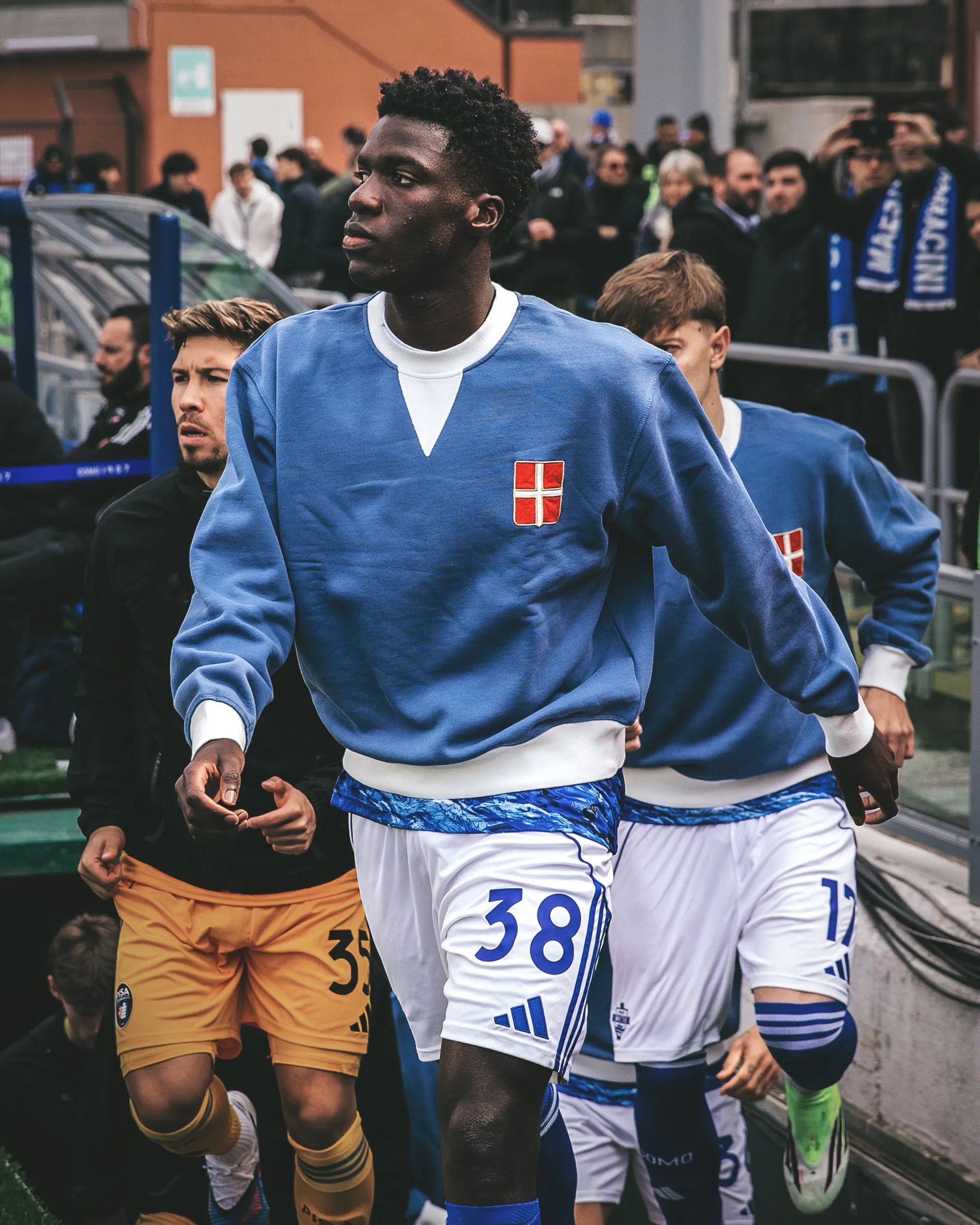
He proved once and for all that you don’t have to choose between being a die-hard, vocal football fan and actually caring about how you look. He made fashion a core, beating part of the club’s story, not just a cheap, plastic add-on to sell in the club shop. Every single piece they release, from a heavy, retro 1950s sweatshirt that looks like it belongs in a museum, to the sleek ‘Standard Issue’ sneakers, sells out almost instantly. People aren’t just buying clothes anymore. They are buying straight into the magic.
What Como 1907 and Rhuigi Villaseñor have done over the last few years has permanently, irreversibly changed the game. They have created the ultimate blueprint. Right now, as you read this, there are panicked marketing executives sitting in glass boardrooms in London, Madrid, and Munich, frantically scrambling to figure out how to copy this. They are desperately trying to manufacture the exact same kind of effortless cool factor.
But here is the beautiful, undeniable truth of the matter: they can’t.
You cannot just manufacture authenticity in a sterile boardroom. You can’t fake the heavy, misty air of Lake Como. Other clubs can hire high-end luxury designers and drop limited-edition hype sneakers all they want, but it will always feel a little bit hollow. It will always feel like a corporate strategy designed to squeeze another twenty bucks out of your pocket.
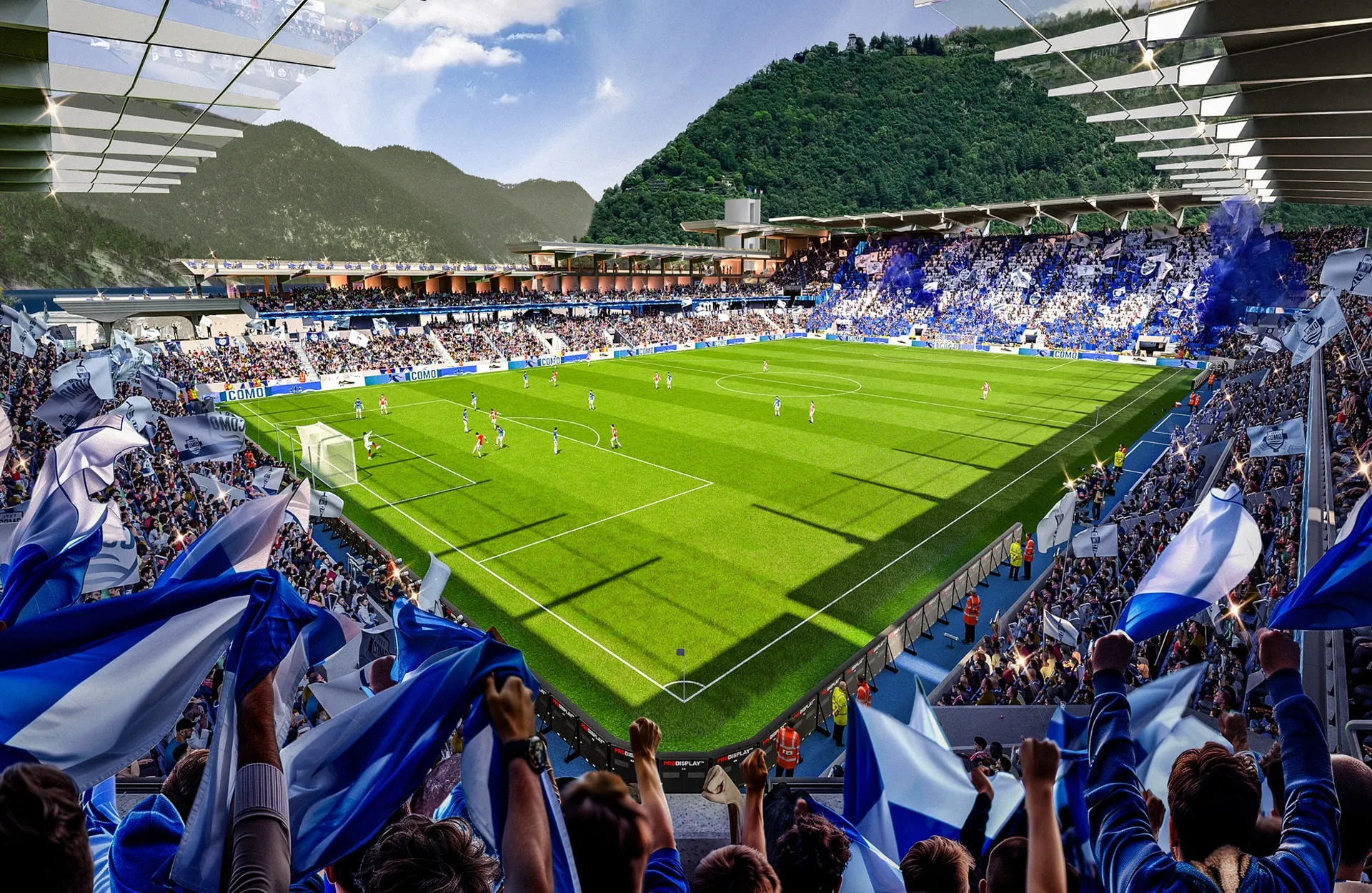
Como’s aesthetic works because it’s deeply, permanently rooted in the cracked concrete of their stadium and the deep, freezing waters of the lake next door. It works because it’s a massive tribute to the people who stood in the freezing rain on those terraces when the club was rotting away in Serie D, playing against part-time mechanics and postmen. The luxury doesn’t erase the struggle; it highlights it. It says, “We survived the mud, and now we are going to look absolutely incredible while we take on the world.”
The modern football world is so loud, so impossibly fast, and so incredibly sterile. But Como 1907 is offering us something totally different. They are offering a feeling. When you pull that heavy, water-rippled jersey over your head, you aren’t just supporting a football team. You are actively participating in a beautifully woven tradition.
Decades from now, when people look back at how football culture finally broke out of its ugly, plastic shell, they won’t point to a massive, billion-dollar Champions League final in a mega-stadium. They will point to a tiny, beautiful old ground sitting right on the edge of the water in Lombardy. They will talk about the club that decided to treat their colors like high fashion, and the brilliant designer who took a battered football congregation and turned them into the best-dressed cult in the entire world.