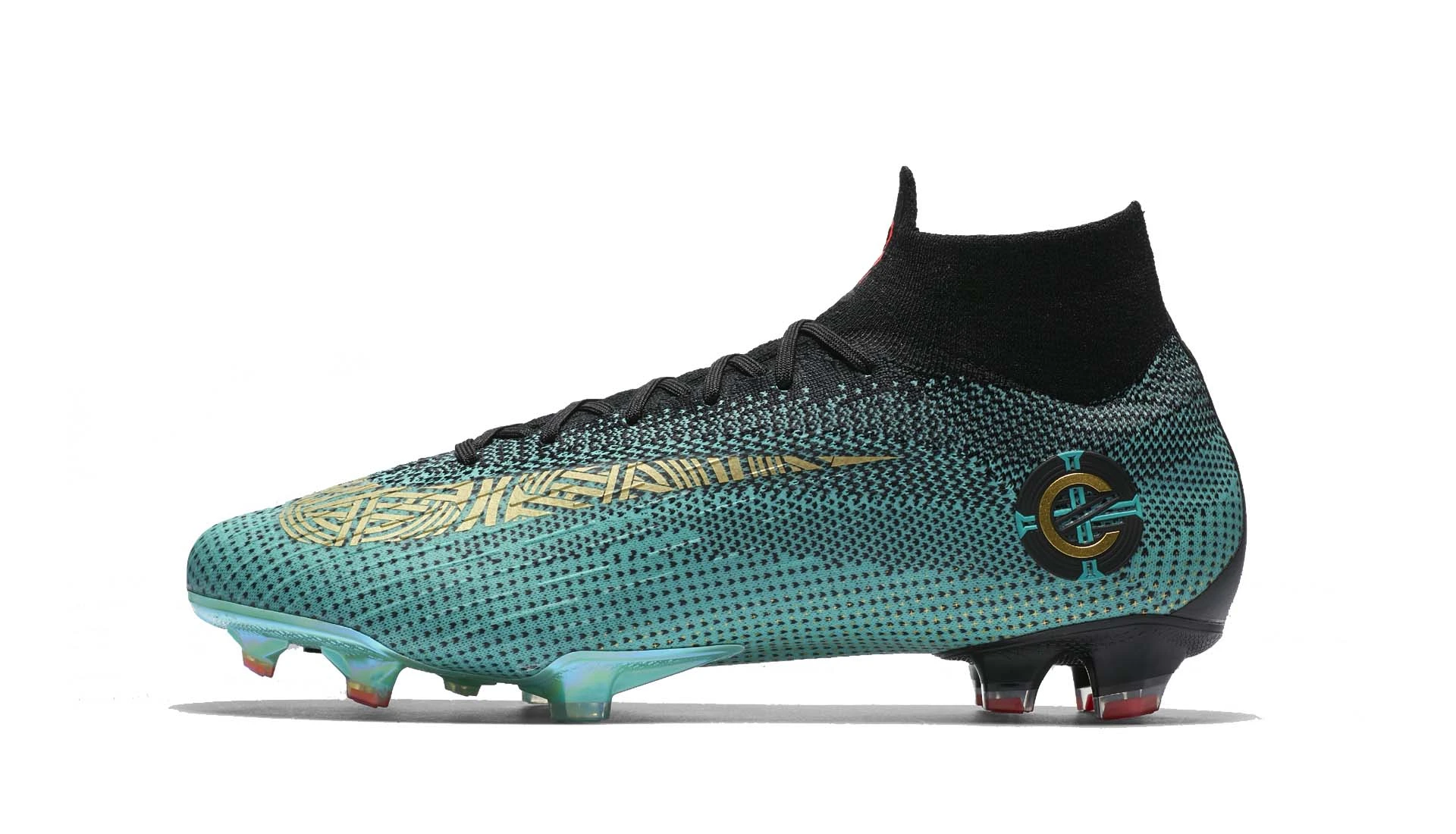
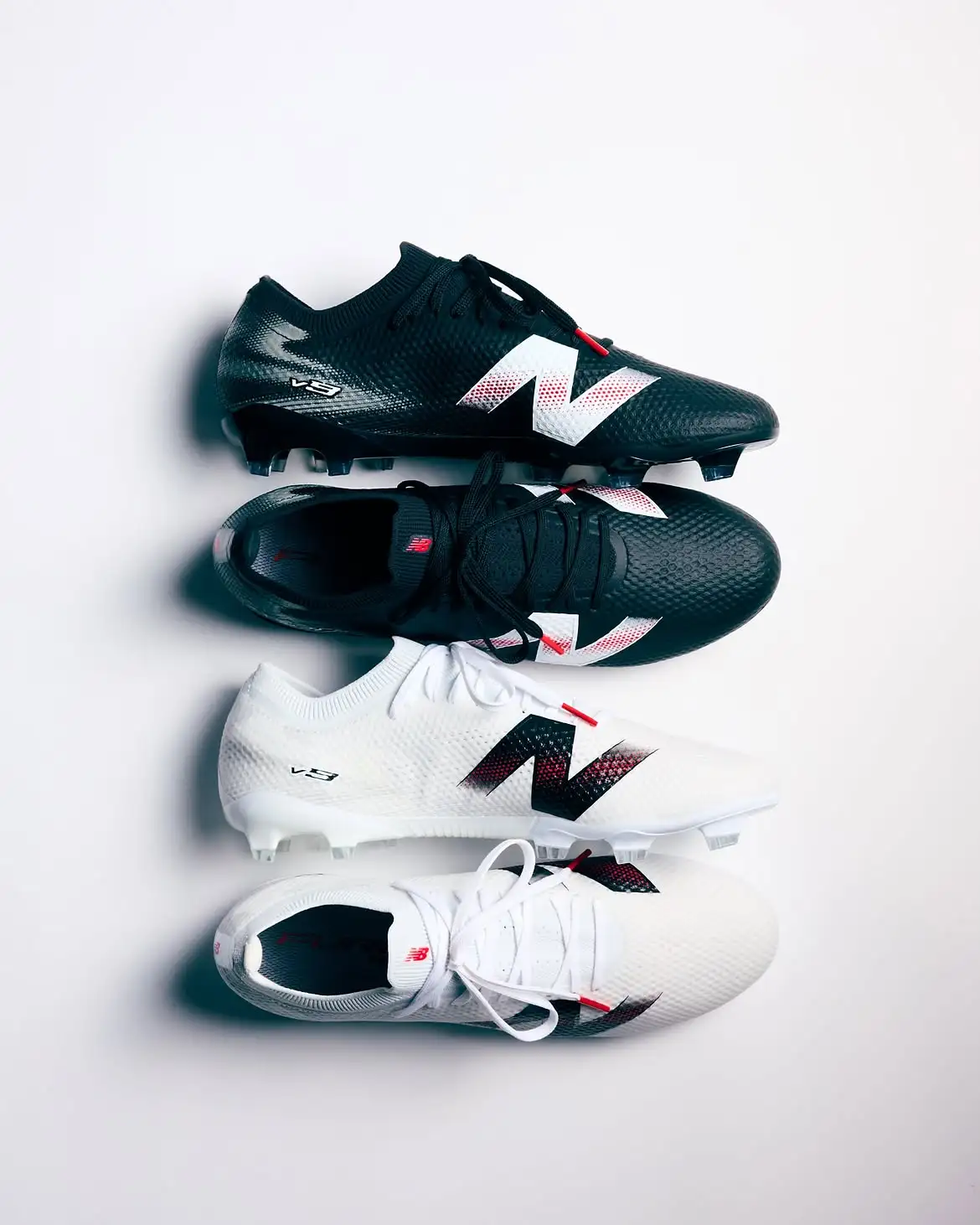
In the early 2010s, speed boots were judged almost entirely by the kitchen scale.
The original adidas F50 adizero initiated a race to the bottom, stripping away linings, internal reinforcements, and structural integrity until players were essentially wearing tracing paper attached to a plastic plate. We romanticise that era of 150-gram minimalism today. But we tend to forget how easily those boots tore, and how little support they offered when a player tried to change direction at pace.
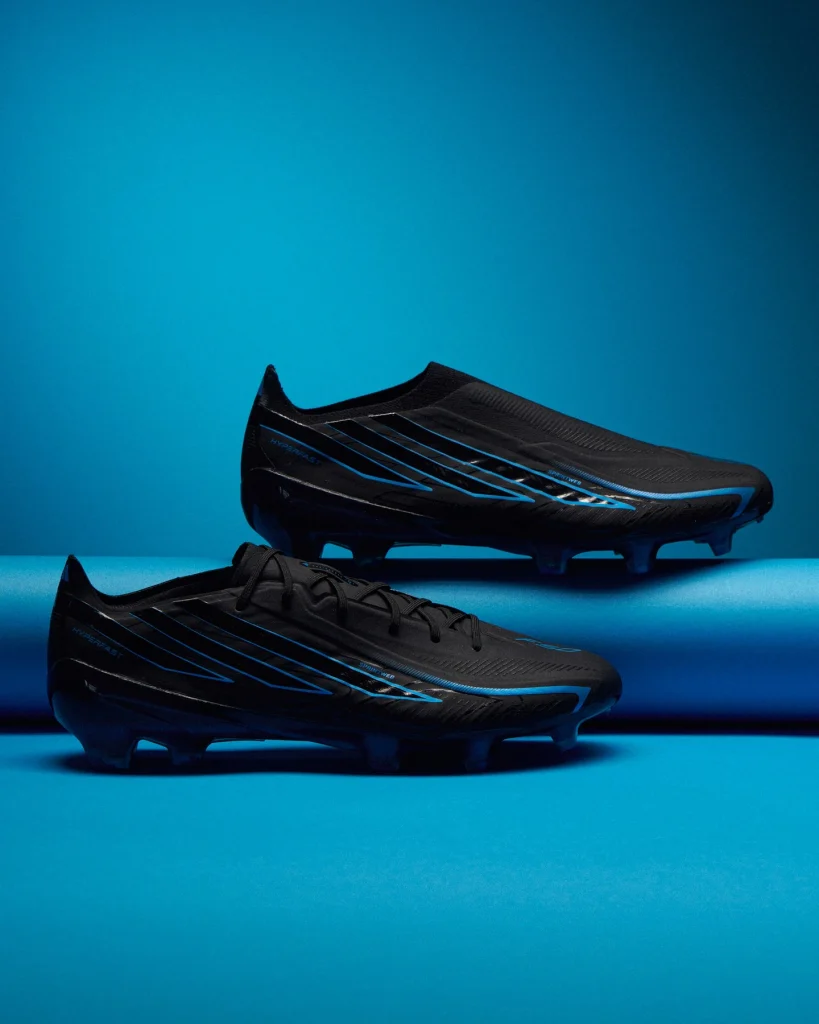
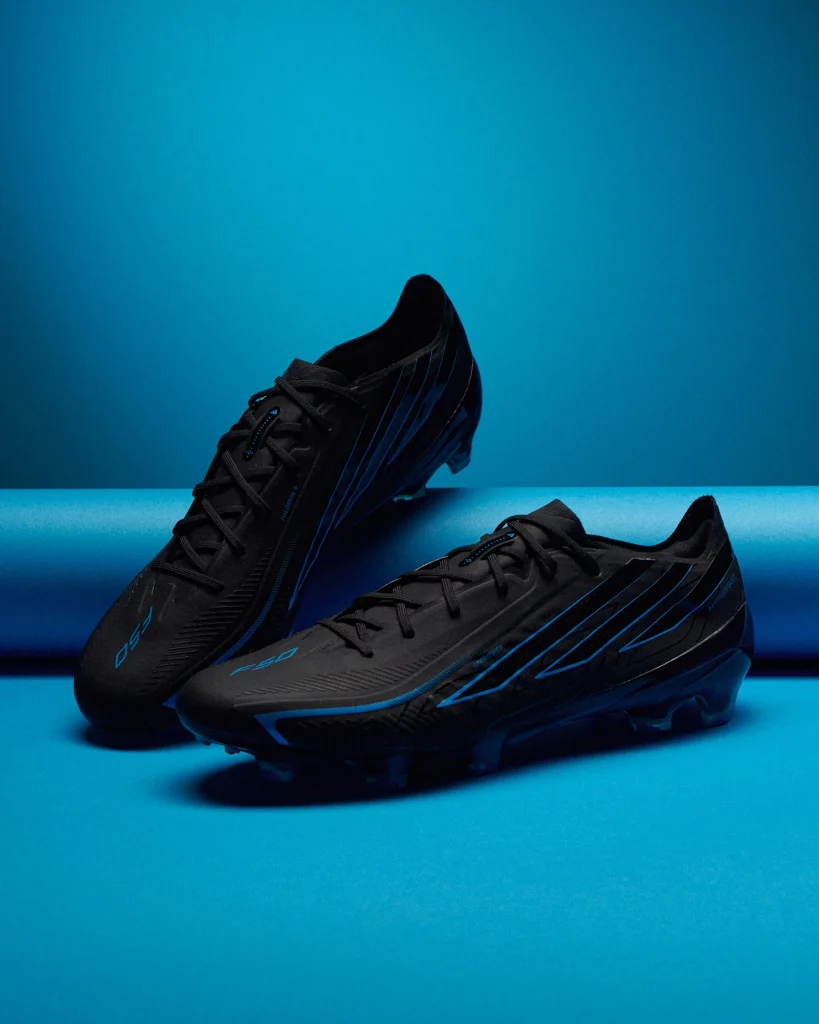
The 2026 adidas F50 Hyperfast Elite is not a retro remake. It is an explicit rejection of that fragile history.
adidas F50 Hyperfast Elite: Exposing the Skeleton Beneath the Skin
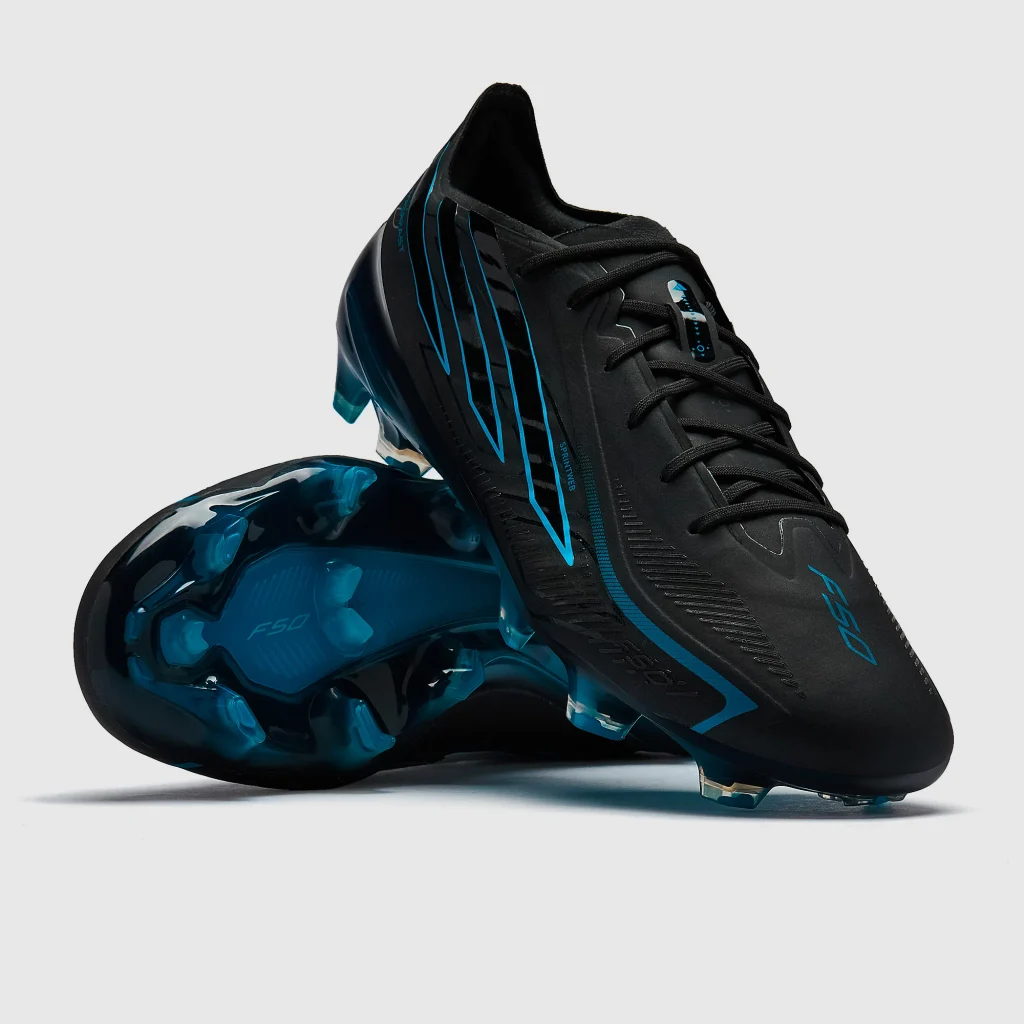
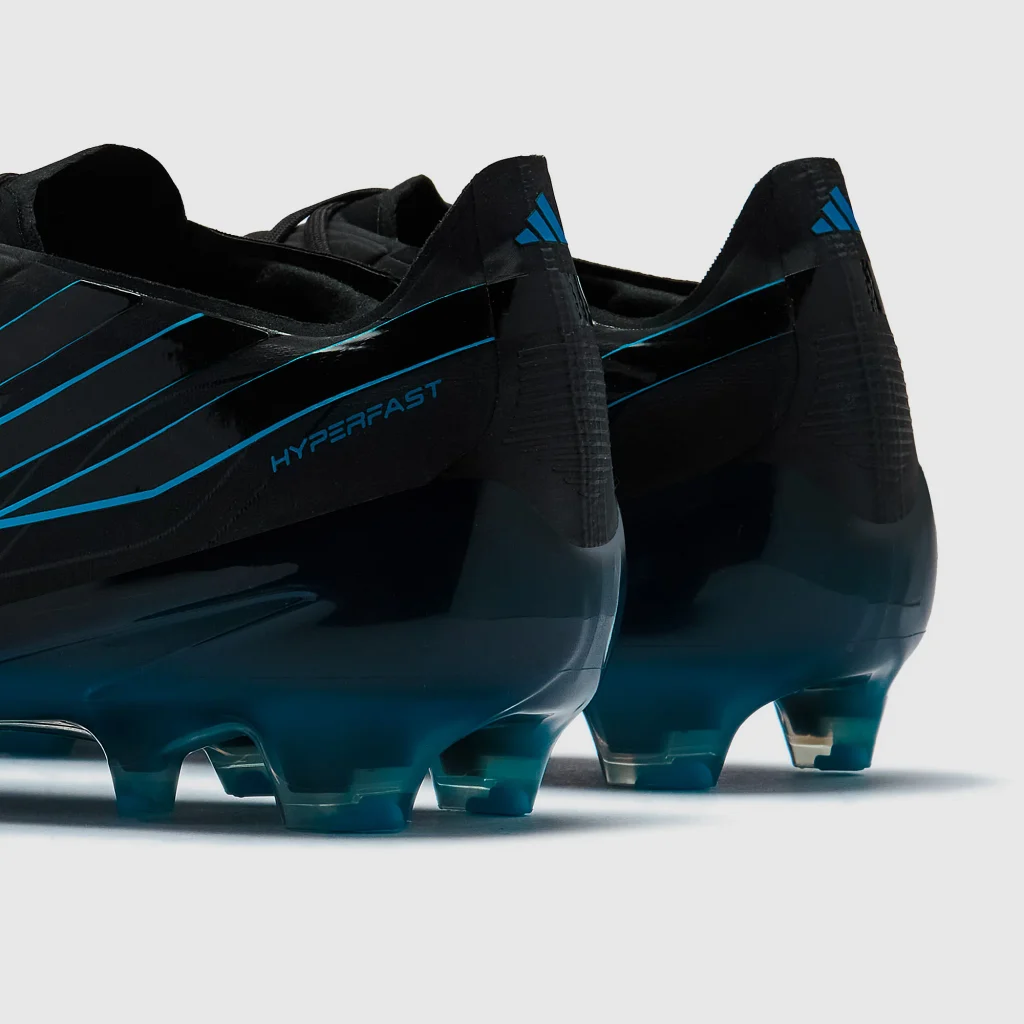
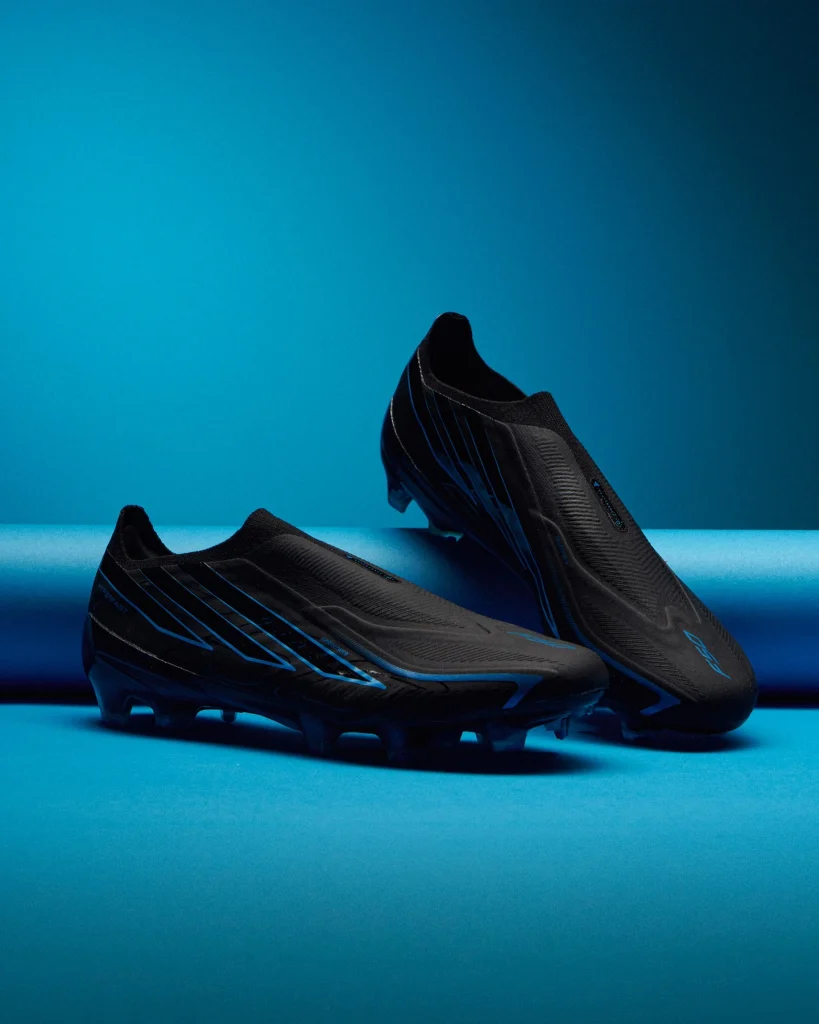
The Core Black and Lucid Ray Blue colourway is an exercise in technical transparency. Instead of using a solid synthetic to mask the boot’s internal architecture, adidas built the upper from a semi-translucent engineered mesh called F50 Shell+. The material acts like an x-ray, deliberately exposing the F50 Cage+—a thick network of TPU ribbing running aggressively through the midfoot.
It looks like an architectural blueprint.


By putting the skeleton on display, adidas proves that containment is no longer a flaw to be hidden in the pursuit of a barefoot feel. The visual weight of the cage makes a clear statement: structural support is now the central feature of a speed boot.
The Marathon Crossover: Why Lightstrike Pro Changes the Speed Conversation


The most significant shift in the Hyperfast Elite sits completely out of sight. Hidden within the insole is a layer of Lightstrike Pro foam, the exact rebound material lifted directly from the brand’s record-breaking marathon super shoes.
Traditional ultra-thin speed boots offered harsh stud pressure and zero energy rebound on firm ground. By dropping road-racing technology into a football boot, adidas changes the conversation around speed entirely. The industry has finally moved past passive lightness—how the boot weighs in your hand—toward dynamic energy return, measured by how much physical pop you get pushing off the forefoot. Modern speed is dictated by kinetic energy economy, not just gram reduction.
Speedsystem Outsole: Engineering for Lateral Violence on Firm Ground
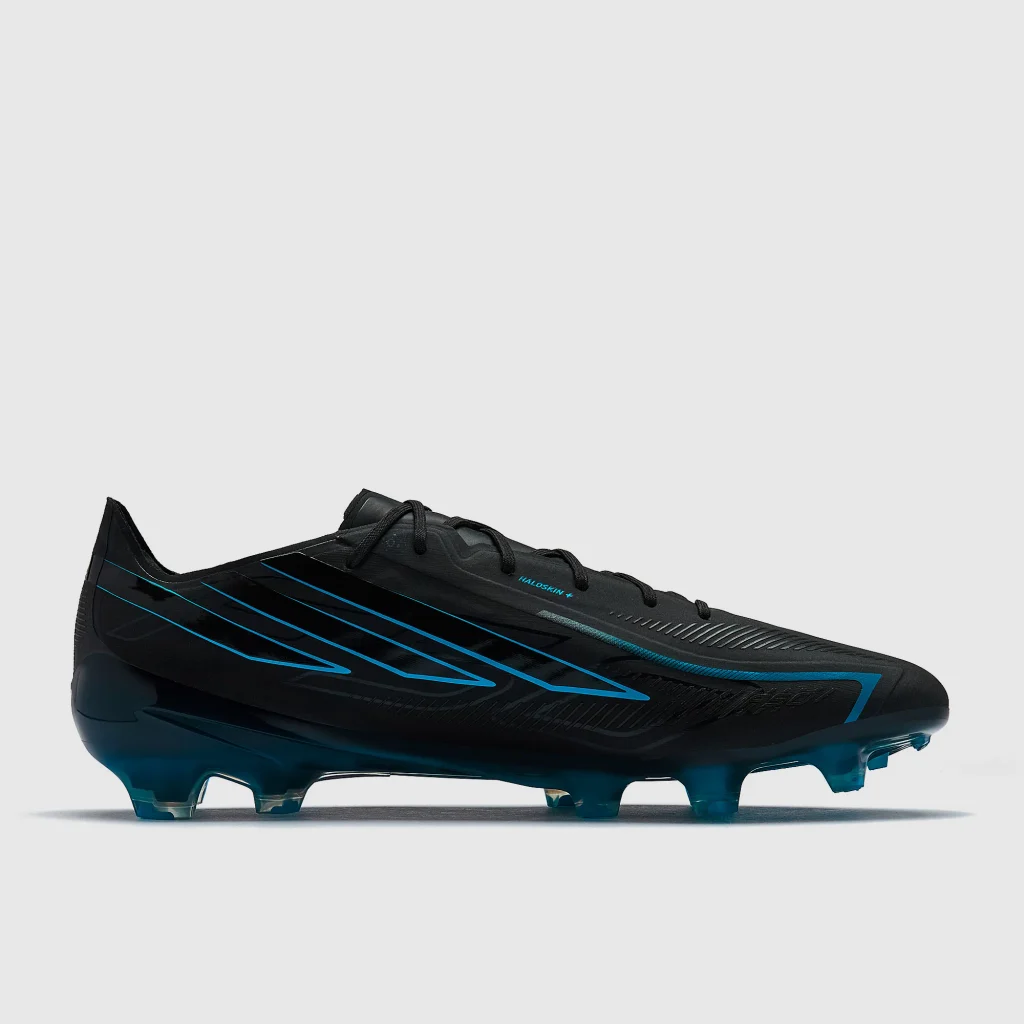
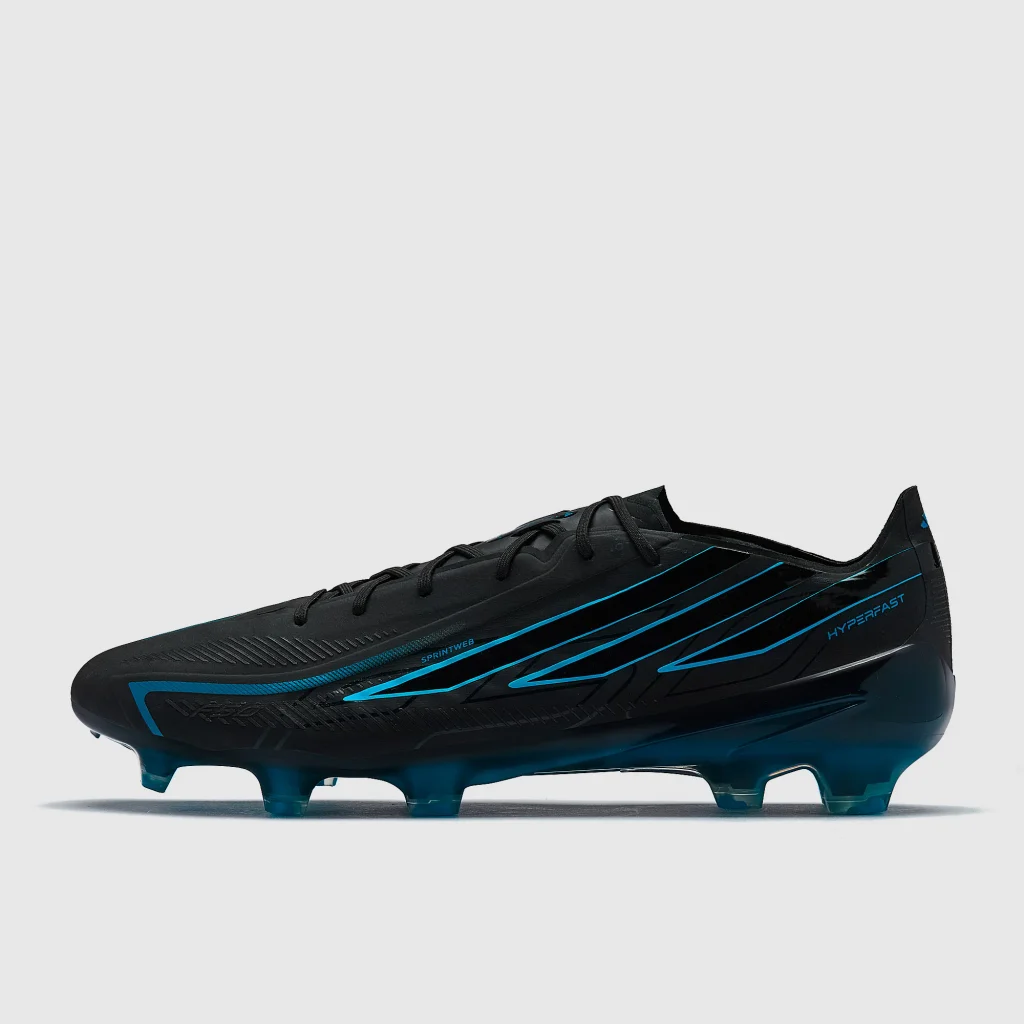
Modern attackers do not sprint on 100-metre straight tracks. Players like Lamine Yamal and Rafael Leão decelerate aggressively, drop a shoulder, and push off at severe angles. This kind of lateral violence requires absolute midfoot lockdown.
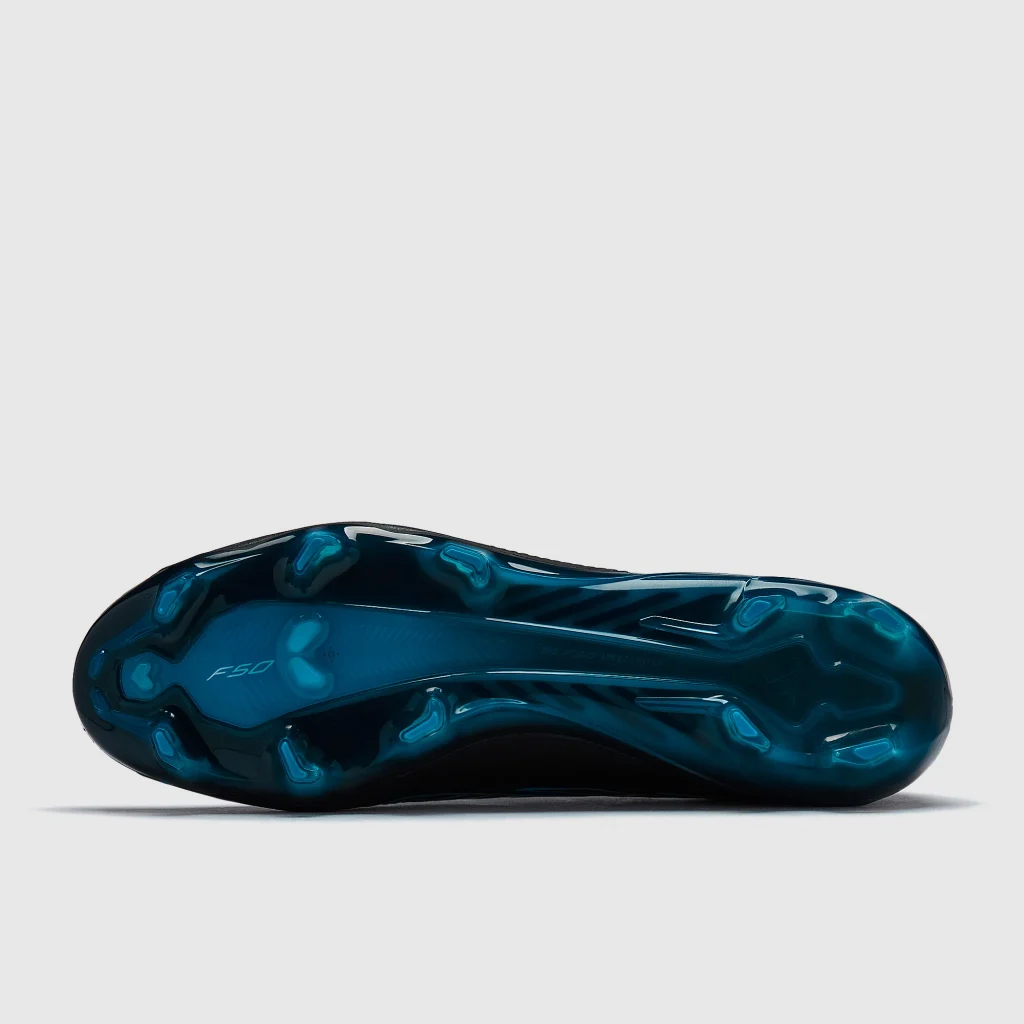
The Hyperfast Elite anchors that movement with the Speedsystem outsole, a heavily cored-out chassis using elongated, bladed studs designed specifically to bite into dry natural grass. But that aggressive straight-line traction is useless if the foot slides off the soleplate during a heavy cut. The laced Elite solves this by pairing an adaptive tunnel tongue with the exposed TPU cage to clamp the foot down. The bladed setup works precisely because the upper refuses to let the foot spill over the edge of the plate under heavy torque.
A Legend Redefined: Growing Beyond the Kitchen Scale
Resurrecting the F50 nameplate was a calculated risk that carried heavy cultural expectations.
If adidas had simply recreated the paper-thin aesthetic of the 2010 original, modern players would have rejected its lack of stability. Instead, they used the F50 badge to capture attention, while quietly engineering a boot that corrects the fatal flaws of its ancestor.
Nostalgia makes great marketing. But marathon foam and architectural lockdown are what actually survive ninety minutes on a pitch.