Walk onto any high-level amateur pitch, and look for the player in Mizuno Football Boots. They rarely have a commercial boot deal, and they are almost always the sharpest technician on the grass. Choosing Mizuno Football Boots is a quiet rejection of modern boot hype. It remains the ultimate “if you know, you know” choice in football footwear.
There is a distinct visual language to this decision. In a changing room where younger players unbox laceless boots built from knitted yarns and iridescent plastics, the Mizuno wearer is lacing up a piece of equipment that looks like a relic. But on the grass, the dynamic shifts. The purist is not fighting their footwear. There is no heel slippage. There is no rigid toe box causing blistering during the first three weeks of the season. They are wearing a boot that moves exactly as their foot moves, providing a dampening sensation on the ball that modern synthetics, for all their supposed technological advancements, have never truly managed to replicate.
The rest of the industry runs on relentless reinvention. Every eighteen months, major silos are scrapped, renamed, or rebuilt from scratch. They arrive wrapped in aggressive rubber strike fins, blinding neon colourways, and multi-million-pound social media campaigns, all selling the promise that complex synthetic geometry leads to better performance.
Mizuno ignores that treadmill entirely. The Japanese brand does not chase seasonal fads or attempt to out-shout the marketing machines of Nike, adidas, or PUMA. Their reputation is built on the exact opposite discipline: keeping their heads down, slowing down, and refining proven ideas.
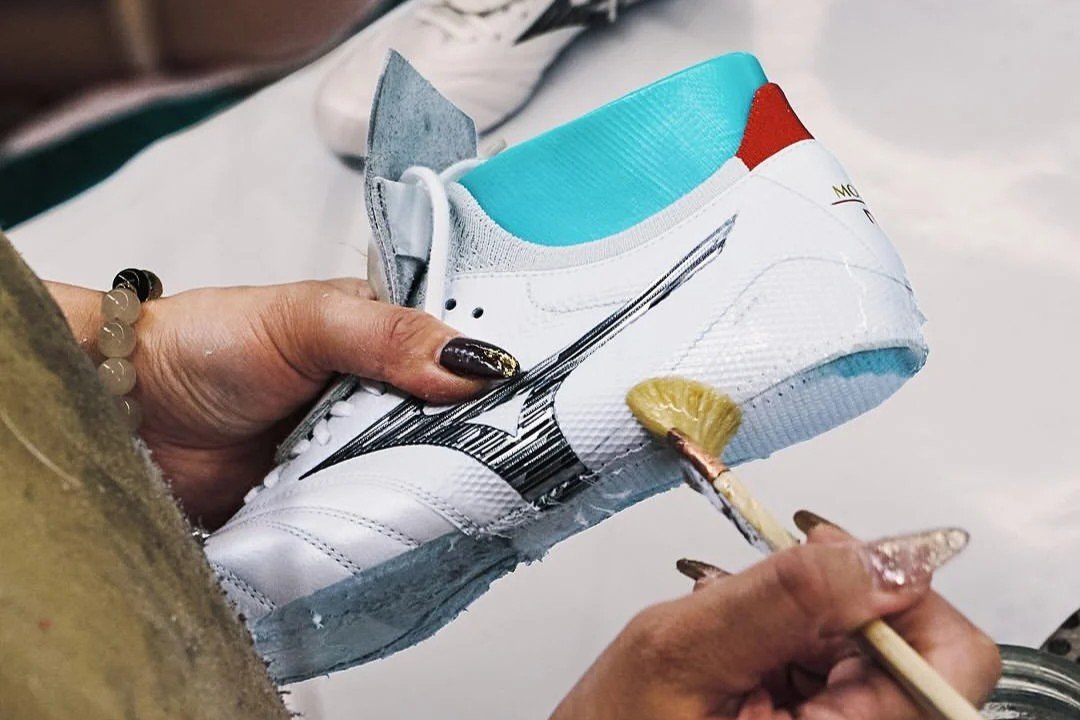
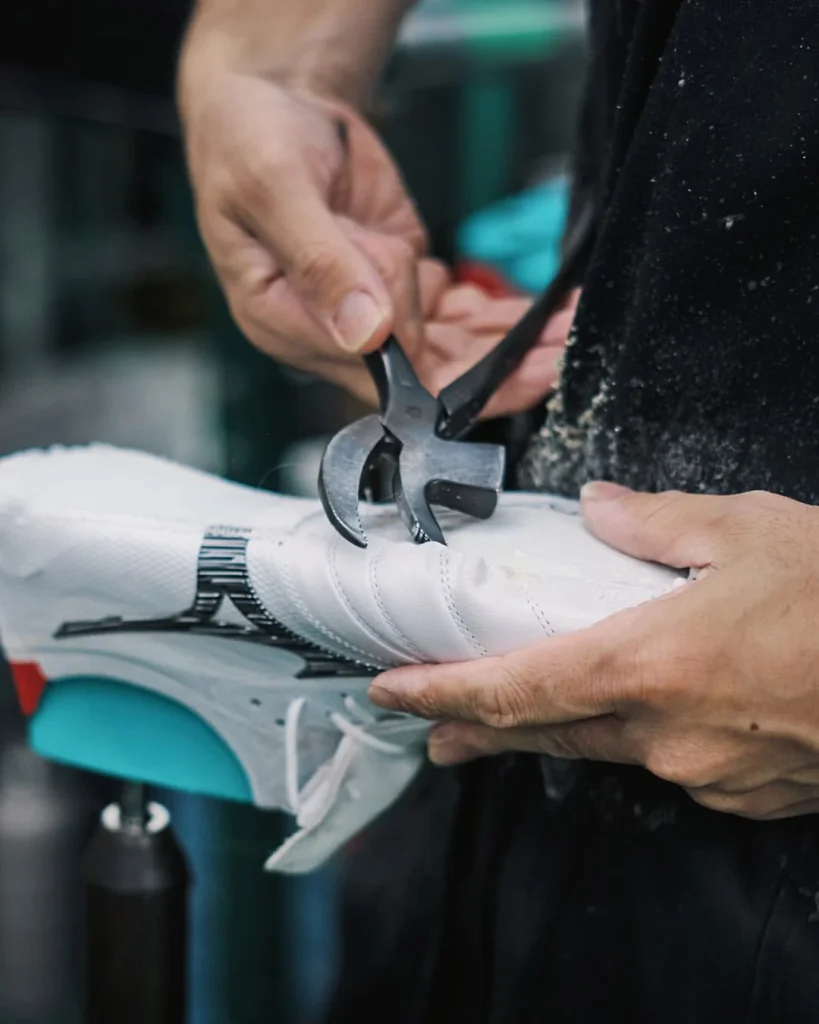
The epicenter of this philosophy is located in Osaka, Japan. While the heavyweights of the football industry rely on massive, outsourced manufacturing hubs designed to churn out millions of units at maximum speed, Mizuno operates on a different frequency. Their top-tier production facilities look more like artisanal workshops than modern factories. The technicians grading the kangaroo leather have often been doing it for decades. They examine individual hides for grain structure, thickness, and natural imperfections, discarding anything that could compromise the structural integrity of the final boot. This obsessive quality control happens long before the material ever reaches the cutting floor.
Defying the Conveyor Belt: “Mizuno Made in Japan” The 24-Hour Last
That discipline is anchored in Mizuno’s ‘Made in Japan’ line. Plenty of manufacturers slap words like “elite” or “pro” on boots pressed in minutes on automated assembly lines. Mizuno grounds its premium price tag in physical, mechanical differences on the factory floor.
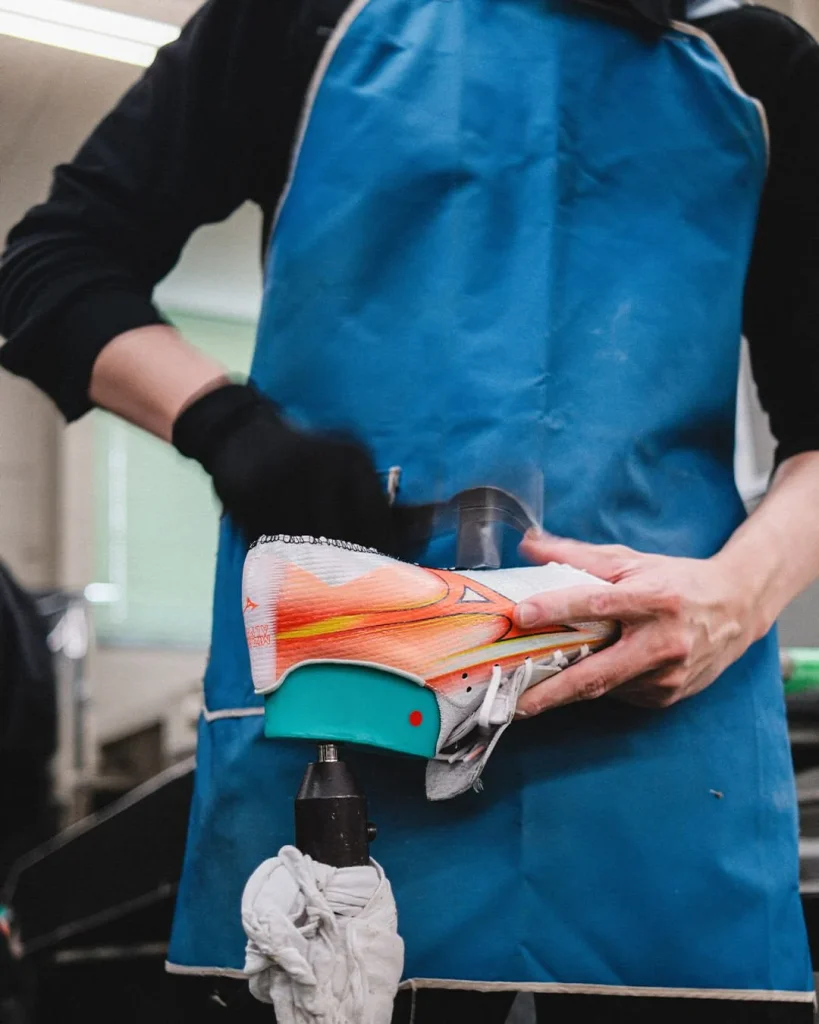
The lasting process illustrates that gap perfectly. A last is the anatomical foot mold that dictates a boot’s final shape. On a standard mass-production line, a synthetic upper sits on a last for roughly twenty minutes before being pulled off to keep the conveyor belt moving.
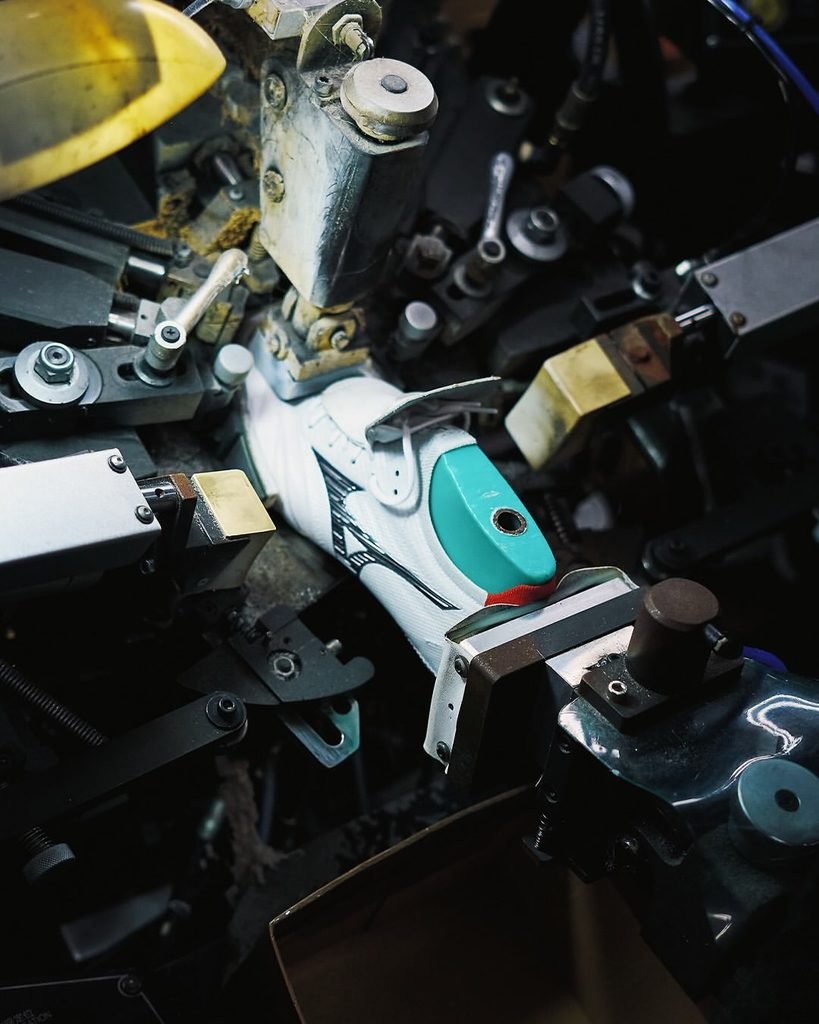
Mizuno leaves its Made in Japan boots on the last for twenty-four hours.
That extended window forces the kangaroo leather to settle naturally around the contours of the mold. It relaxes the material under sustained tension, rather than relying on heat and harsh adhesives to force a quick shape. On the pitch, that mechanical patience translates to zero break-in stiffness, zero heel friction, and an upper that holds its structure over an entire season without stretching out into a loose bag.
This mechanical patience fundamentally changes how the boot ages. A standard mass-produced synthetic boot often feels best on day one, slowly degrading as the adhesives weaken and the plastic loses its structural memory. Mizuno Made in Japan operates in reverse. Because the leather has already been pushed to its natural limit on the last, it does not blow out under the stress of match play. Instead, it softens further, molding perfectly to the individual bone structure of the wearer’s foot. It is enhanced by a Scotchgard treatment applied during the tanning process, rendering the leather highly water-resistant. Even on saturated winter pitches, the upper refuses to absorb water and become heavy, solving the historical flaw that pushed the industry toward synthetic materials in the first place.
Kaizen and the 40-Year Silhouette
That patience explains the Mizuno Morelia II. First introduced in 1985, the silhouette has barely changed in four decades. It survives in an era of one-piece knit collars and laceless synthetics simply because the leather patterning and forefoot cross-stitching actually work. It remains the absolute reference point for natural leather touch.
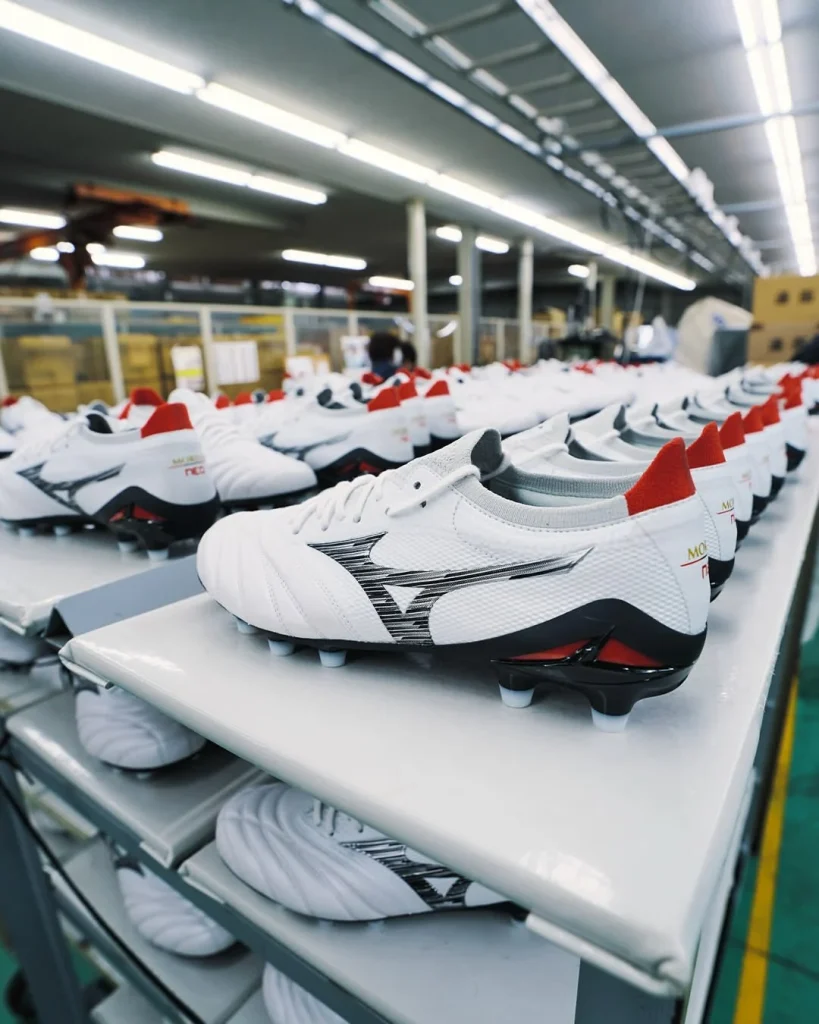
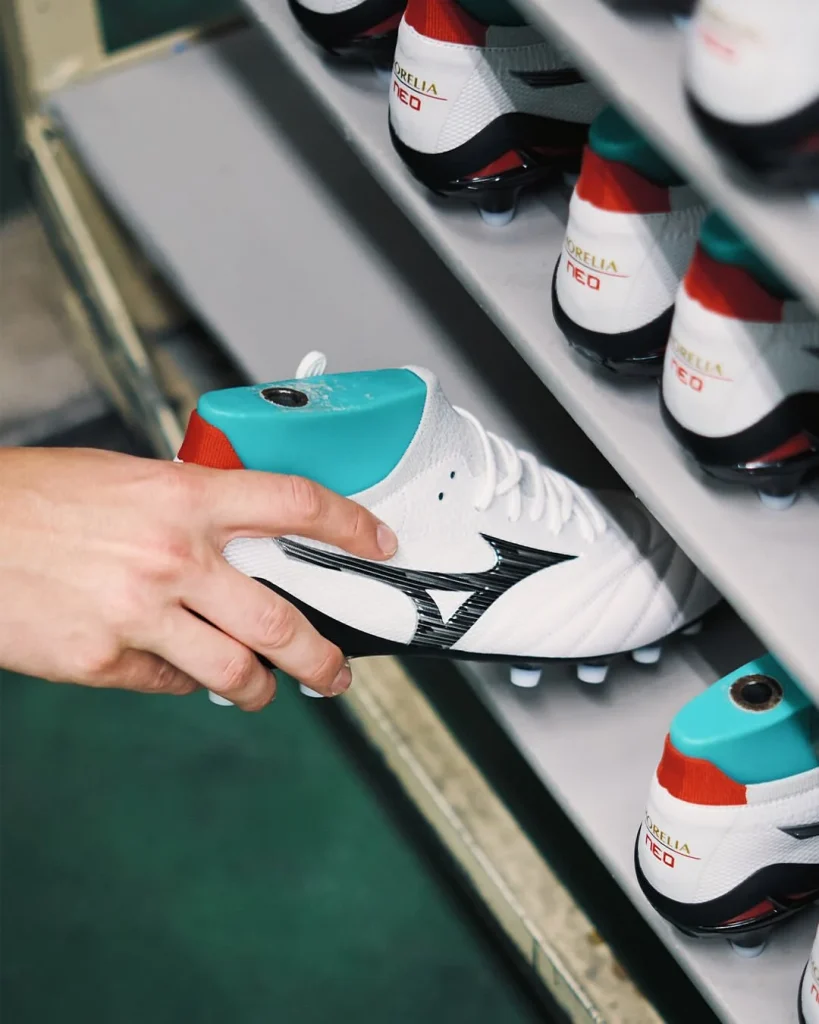
The approach is driven by Kaizen, the Japanese philosophy of continuous, incremental improvement. Rather than replacing a silhouette every two seasons to manufacture marketing headlines, Mizuno’s craftsmen spend years adjusting stitch tensions by half a millimetre or trimming individual grams from a chassis.
Mizuno is not trapped in the past, however. The Mizuno Morelia Neo series acts as a bridge, pairing an ultra-thin kangaroo leather forefoot with a lightweight, modern sprint plate. It gives speed-focused players the aggressive snap of an external heel counter without forcing their feet into a rigid plastic shell.
The Mizuno Morelia Neo series is a masterclass in compromise without concession. When the market demanded a lighter, more responsive boot to compete with the explosion of the speed category, Mizuno did not abandon their heritage. Instead, they evolved the midfoot and heel constructions. The current Mizuno Morelia Neo IV Beta integrates a specialized barefoot knit around the collar and tongue, securing the midfoot with a compressive fit, while maintaining the elite kangaroo leather strictly in the strike zone. The result is a boot that weighs under 200 grams but still delivers the padded, natural touch that speed-focused wingers and forwards assumed they had to sacrifice to drop weight.
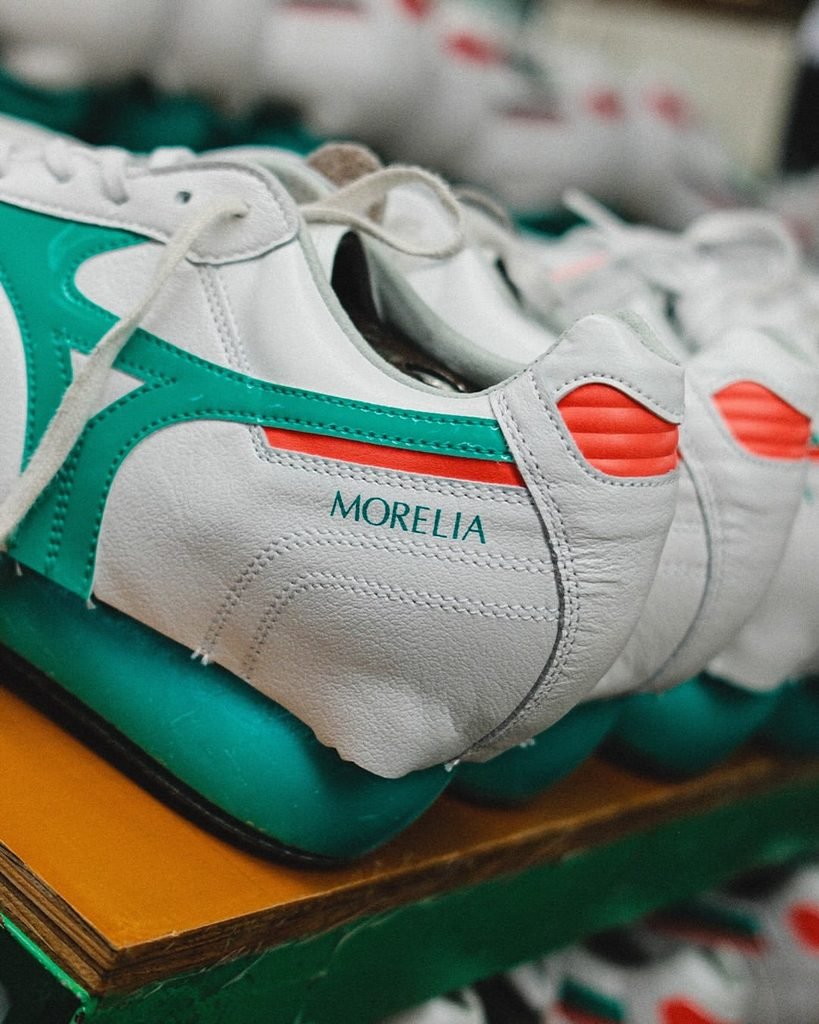
Even when Mizuno finally built a fully synthetic speed boot with the Mizuno Alpha silo, they brought their workshop habits with them. Instead of treating synthetic textiles as a way to cut production costs, they subject the Alpha to the same twenty-four-hour lasting standard to ensure the fit mirrors their leather heritage.
The Mizuno Alpha proves that Mizuno’s superiority is not purely dependent on animal products. The engineering inside the Mizuno Alpha is incredibly complex, featuring an Engineered Fit Woven upper, a polyurethane skeleton for lockdown, and a Karvo half-board in the soleplate for aggressive energy return. On paper, it reads like a specification sheet from any major brand’s speed silo. In practice, the difference is the execution. Because the synthetic components are subjected to the rigorous Made in Japan lasting process, the Mizuno Alpha eliminates the stiff, plastic sensation that plagues its direct competitors. It wraps the foot with the same accommodating flexibility as a leather Morelia, providing modern propulsion without the usual penalty of severe blistering.
The Out-of-Pocket Professional
That quiet consistency is exactly why professionals regularly buy Mizunos out of their own pocket when their commercial contracts expire. When a player is no longer being paid to wear a specific logo, they gravitate toward what physically protects their feet and improves their touch. Mizuno boots survive without massive influencer campaigns or viral rollouts because they respect the mechanics of the foot. In a football culture that constantly screams for attention, Mizuno’s appeal is incredibly simple: they just do the job properly.
When a player is no longer being paid to wear a specific logo, they gravitate toward what physically protects their feet and improves their touch. Mizuno football boots survive without massive influencer campaigns or viral rollouts because they respect the mechanics of the foot. In a football culture that constantly screams for attention, Mizuno’s appeal is incredibly simple: they just do the job properly.
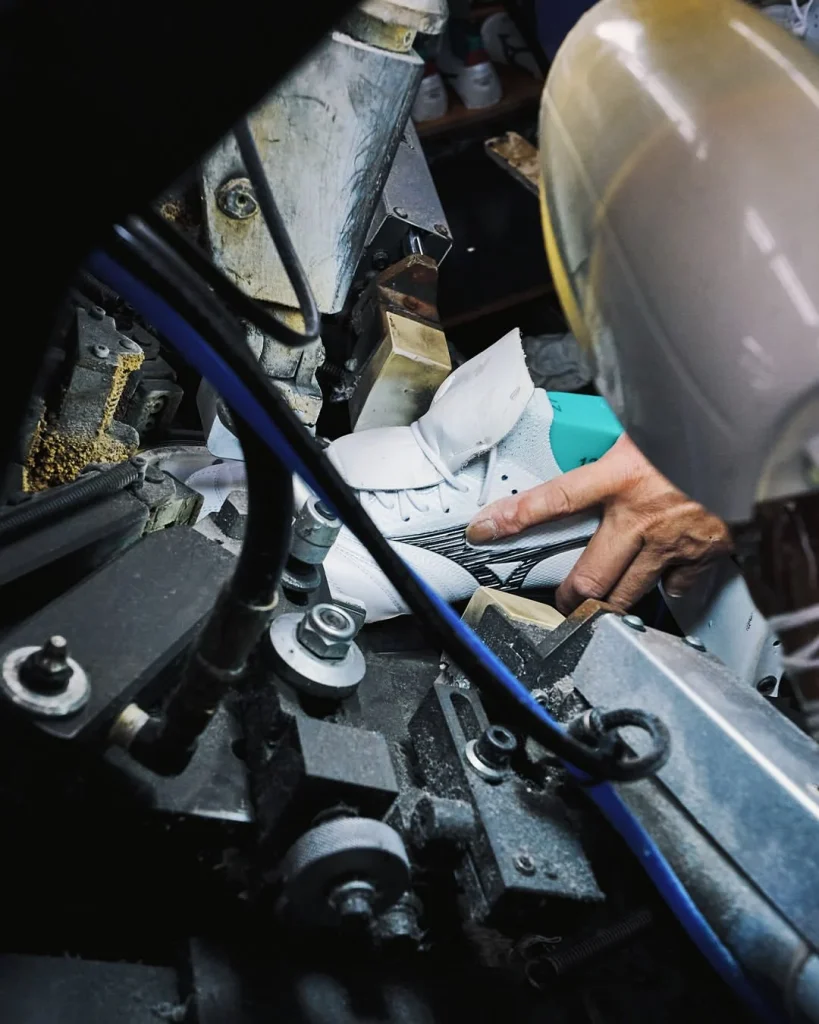
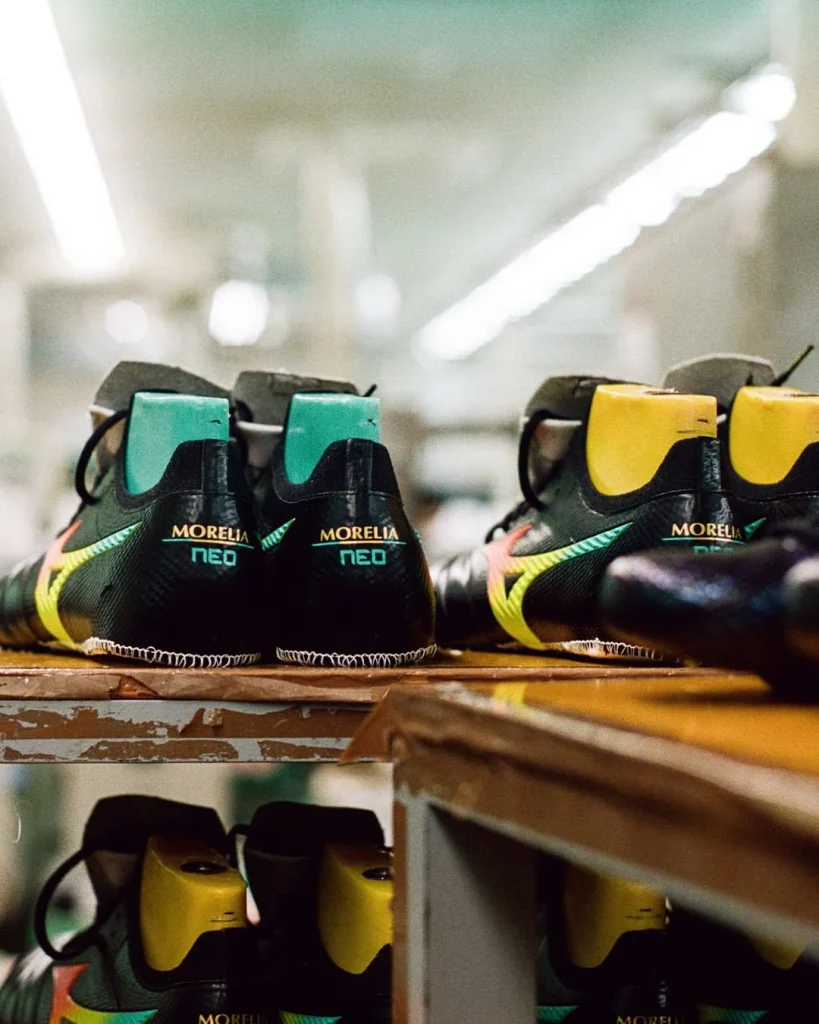
This phenomenon is the quietest, most powerful endorsement in the sport. When elite players enter contract disputes or reach the twilight of their careers where commercial obligations fade, the blacked-out Morelia frequently appears on training pitches. These are athletes who have access to literally any boot on the planet, customized to their exact specifications by the biggest brands in the world. Yet, when given absolute freedom of choice, they spend their own money to secure a pair of boots designed in Osaka.
They understand what the amateur purist understands. Football boots are tools. They are not billboards, and they are not fashion accessories. When the noise of the industry is stripped away, all that remains is the relationship between the foot, the boot, and the ball. Mizuno simply respects that relationship more than anyone else.