
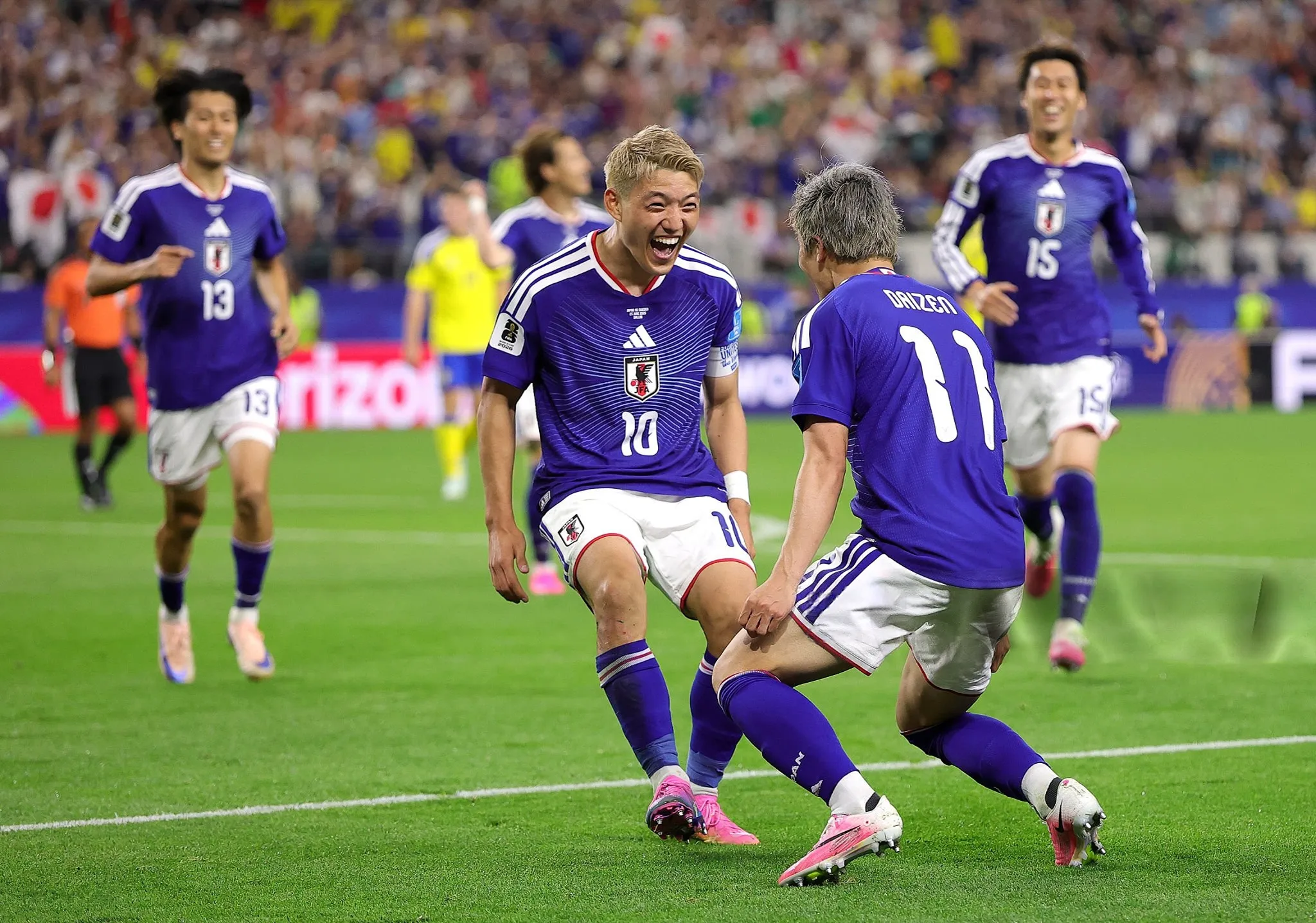
Why do experts believe Japan will win the World Cup? It is driven by ‘The Japan Way,’ a detailed 58-page football manifesto targeting a World Cup victory by 2050. Through structural development, Europe-based talent, and a culture of on-pitch joy, the Samurai Blue are turning fantasy into fact.
Every four years, nations arrive at the World Cup with desperate hopes. They bring famous managers and incredibly expensive superstars. They play with intense, crushing pressure. When they inevitably lose, they fire the coach. They completely tear up the playbook. They start over from scratch in a frantic panic. The cycle of sporting chaos repeats itself forever.
But Japan does not play that game. They do not operate on a frantic four-year cycle. They are operating on a one-hundred-year timeline.
When casual fans ask the question, “Can an Asian nation win the World Cup?“, they usually expect a polite, doubtful answer. Historically, the global tournament belongs entirely to Europe and South America. The traditional powerhouses have locked the gates for decades. But the Japanese Football Association (JFA) did not just ask the question. They wrote down the exact mathematical and cultural answer. They published a meticulous blueprint. They confidently declared that Japan Will Win the World Cup. It is not a blind wish. It is a highly active construction project.
By executing The Japan Way football manifesto, this nation has fundamentally altered its footballing DNA. We are watching the future arrive early in North America this summer. The team stormed out of Group F completely undefeated. They are marching into the Round of 32 to face mighty Brazil with absolutely zero fear. The world is watching, completely mesmerized by their speed and precision. They are not just winning football matches. They are validating a massive, generational theory on the grass.
From the Doldrums to 2050: The Samurai Blue 100 Year Vision
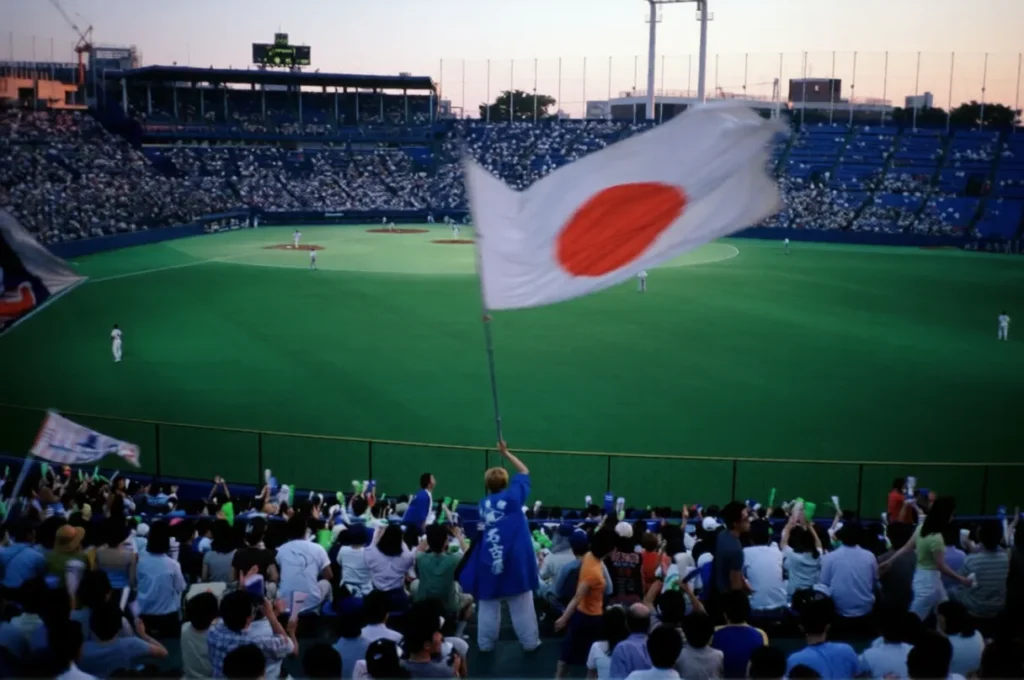
To truly understand the tactical genius of this current squad, you have to look backward. You must travel back to 1992. That was the year the professional J-League was officially formed. At that specific time, Japan had never even qualified for a single World Cup tournament. Their footballing infrastructure was incredibly basic. They were completely invisible on the global sporting stage.
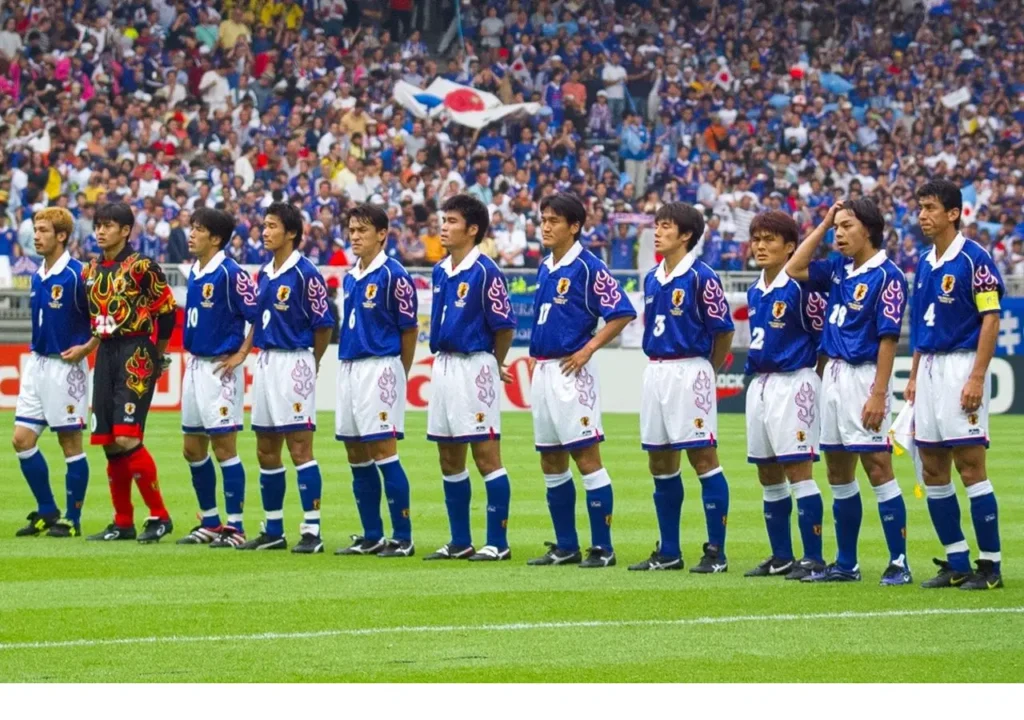
But Japanese culture deeply respects systemic architecture. They do not build their houses on sand. They created the brilliant Samurai Blue 100 year vision. The initial, highly ambitious target was to win the global tournament by the distant year of 2092. They gave themselves a full, patient century to catch up to the rest of the world.
Progress moved much faster than anyone originally predicted. The domestic league exploded in popularity. The newly built youth academies began producing highly technical players at a rapid pace. By 2005, the JFA realized they were massively ahead of schedule. They aggressively revised the timeline. They locked in the bold Japan World Cup 2050 goal. They declared that by the exact middle of the century, Japan would lift the heaviest trophy in sports.
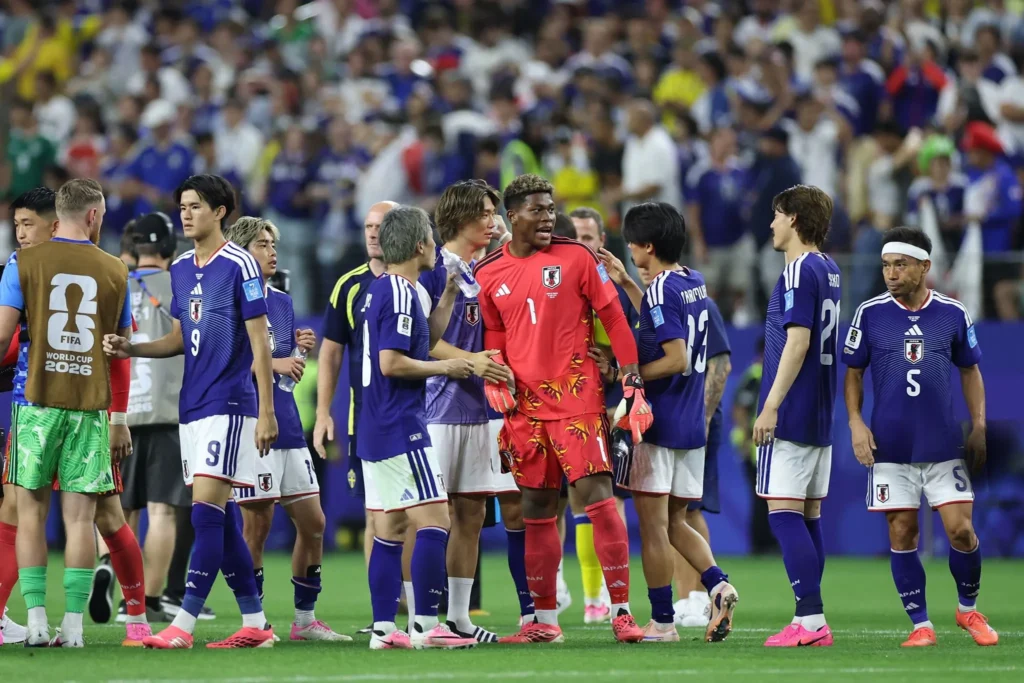
If you look closely at the Japan national football team history 2026 squad, you see the direct results of this meticulous planning. For decades, the ultimate goal was to export local talent to tough, physical European leagues to learn the modern game. Today, that mission is fully complete. Look at the 26-man roster competing in North America. Almost every single player operates in elite European divisions.
Takefusa Kubo pulls the strings in Spain. Wataru Endo anchors the midfield in England. Daizen Maeda terrorizes exhausted defenders in Scotland. Hiroki Ito defends the backline in Germany. The JFA built an entire squad of hardened, world-class professionals completely from scratch. They did not sit around waiting for a singular, once-in-a-generation superstar to magically save them. They built a reliable, unstoppable factory of consistent excellence.
This is exactly how Japan plans to win the World Cup. They are simply out-planning and out-working the rest of the globe. The foundation starts at the very bottom. Japan has the most incredible high school football system on earth. Their national high school tournament draws massive crowds of over 50,000 screaming people. Teenage players learn how to handle immense pressure before they even sign a professional contract. By the time they reach the World Cup stage, they are tactical veterans.
The Manifesto of Joy: More Than a Smile
When Western sports critics first read the official JFA blueprint, many of them smirked. Corporate sports documents are usually incredibly dry. They are filled with boring buzzwords and empty management phrases. The Japanese manifesto certainly has its share of technical jargon. It frequently uses analytical words like “proactive,” “fluidity,” and “systemic integration.”
But if you look past the clinical vocabulary, you find something deeply romantic. The absolute core metric of the manifesto is “joy.”
The JFA decided that technical perfection was not enough. To eventually beat the Brazilians and the French, the team needed to play with an infectious, uncontainable love for the game. They needed to express themselves freely. The manifesto demands that players take brave risks on the ball. It demands that they attack with speed and creativity. It explicitly states that the football must bring absolute joy to the fans watching in the stands.
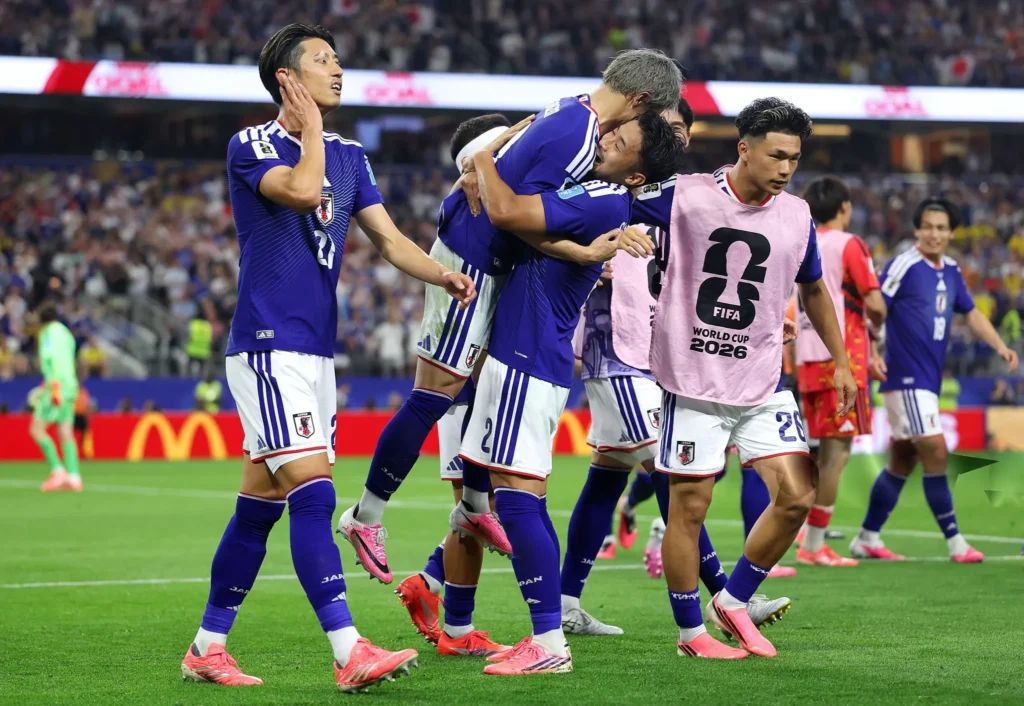
This concept of joy is entirely visible on the pitch in 2026. This team does not play fearful, defensive football. They do not park the bus and pray for a lucky counter-attack. They press high. They pass with blinding, one-touch speed. When they have the ball, they move like a synchronized flock of birds. It is a beautiful, breathtaking style of play.
Consider their recent 4-0 demolition of Tunisia in the group stage. They did not just win the match; they completely dismantled their opponent with a smile. The physical embodiments of this joy are easy to spot. Wataru Endo sits at the base of the midfield, breaking up opponent attacks with a calm, smiling ruthlessness. Takefusa Kubo dances through defenders like he is playing in a local park with his childhood friends. Daizen Maeda sprints at terrified defenders for ninety minutes without ever stopping to breathe, forcing mistakes through sheer, joyful intimidation.
This joy is a highly calculated weapon. When a team plays with fear, their muscles tighten. Their decisions become slow and predictable. But when a team plays with joy, they enter a state of pure athletic flow. The Japanese players are not crushed by the heavy weight of national expectations. They are lifted up by the total clarity of their mission. They trust the system perfectly, which gives them the absolute freedom to be brilliantly creative.
Hajime Moriyasu’s Machine: Delivering Early in North America
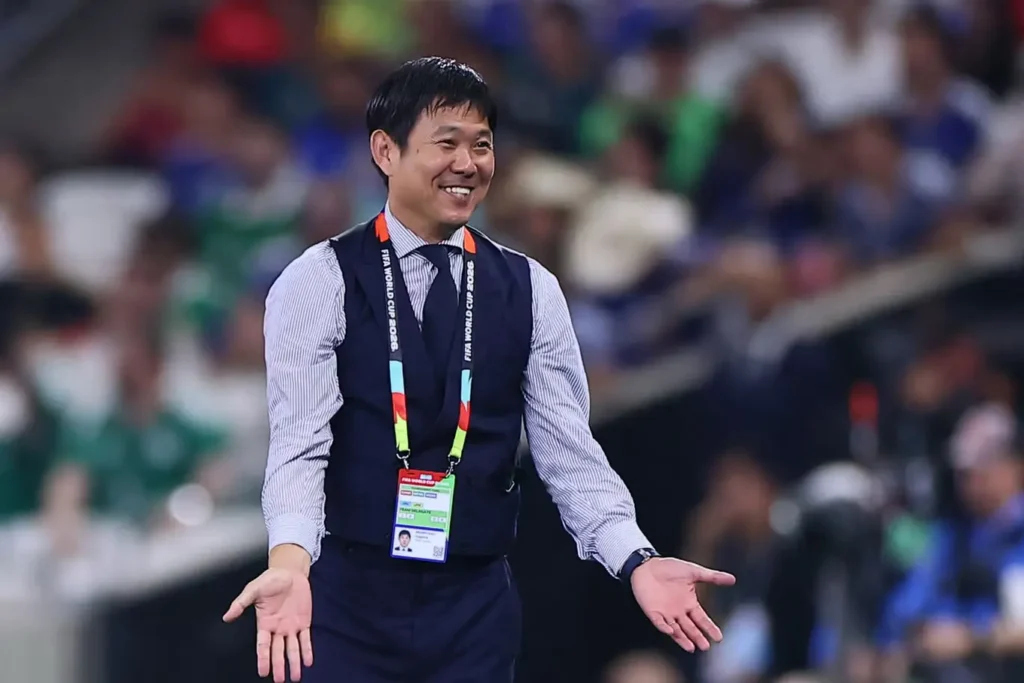
The man trusted to drive this highly advanced machine is head coach Hajime Moriyasu. He is the quiet, brilliant architect standing on the touchline. Moriyasu is not a flashy, arrogant manager who constantly seeks the cameras. He is a deeply respectful leader who views himself as a humble servant to the grand 2050 vision. He took charge in 2018 and has slowly, methodically built an absolute powerhouse.
Under his calm guidance, the Samurai Blue have maintained an uninterrupted residency in the top 20 of the global FIFA rankings since 2023. They are not a fun dark horse anymore. They are an established global elite. They arrived in North America this summer ready to execute their plans flawlessly.
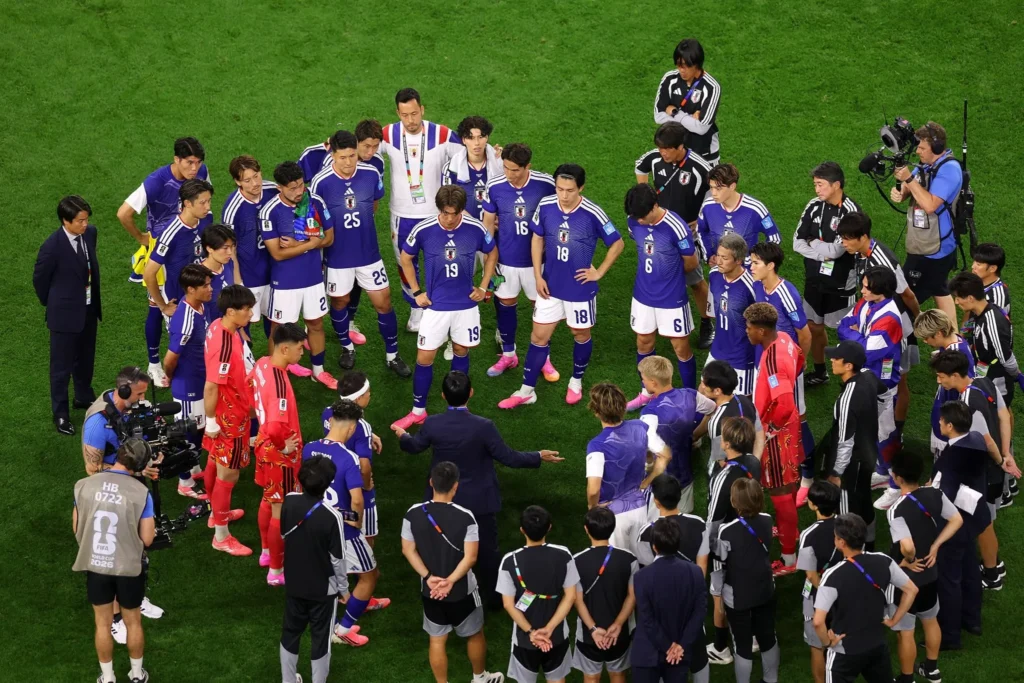
The group stage performance in Group F was a masterclass in tactical flexibility. They opened with a massive, high-stakes clash against the Netherlands. They followed it with the dominant 4-0 victory over Tunisia. Finally, they secured a crucial 1-1 draw against a tough, physical Swedish side in Dallas. Daizen Maeda scored a brilliant opening goal right after halftime. Even when Sweden equalized a few minutes later, Moriyasu did not panic. He calmly adjusted his defensive lines, secured the vital point, and pushed his team safely into the knockout rounds.
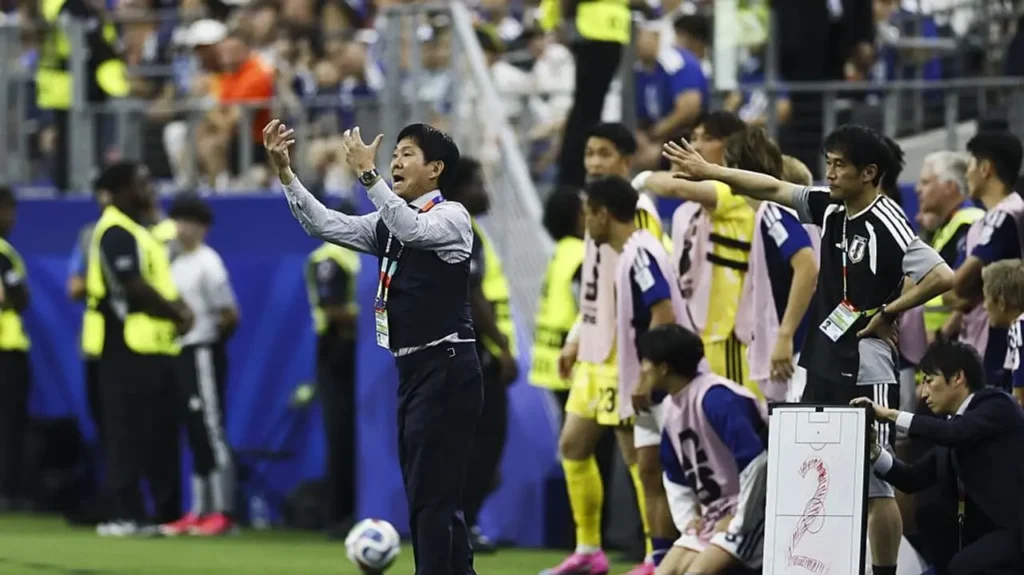
Moriyasu’s greatest strength is his in-game management. He treats formations like fluid suggestions rather than rigid cages. He can shift his team from a solid 4-2-3-1 structure into an aggressive 3-4-3 shape in a matter of seconds. The players understand these complex tactical triggers perfectly. When the manager makes a substitution, the entire shape of the team morphs instantly. It is like watching a highly trained orchestra respond to a master conductor.
Now, the true test of Moriyasu’s machine arrives. In the Round of 32, they will face Brazil. It is the ultimate boss battle against the five-time world champions. But Moriyasu is not intimidated. Just last October, Japan faced Brazil in a high-profile friendly. The Samurai Blue fell behind 0-2 early in the match. Most teams would have collapsed. Instead, Japan staged a massive, dramatic comeback, scoring three unanswered goals to win 3-2.
“Last time we proved to Brazil that we aren’t a pushover,” Moriyasu stated calmly to the press this week in Arlington. “The Brazilian team is a top team in the world and we greatly respect them. We don’t know what is going to happen, but we will have a chance to win as well.” That is not arrogance. That is the quiet, terrifying confidence of a man who knows his machine is functioning perfectly.
Target Final: Shattering the Last-16 Glass Ceiling
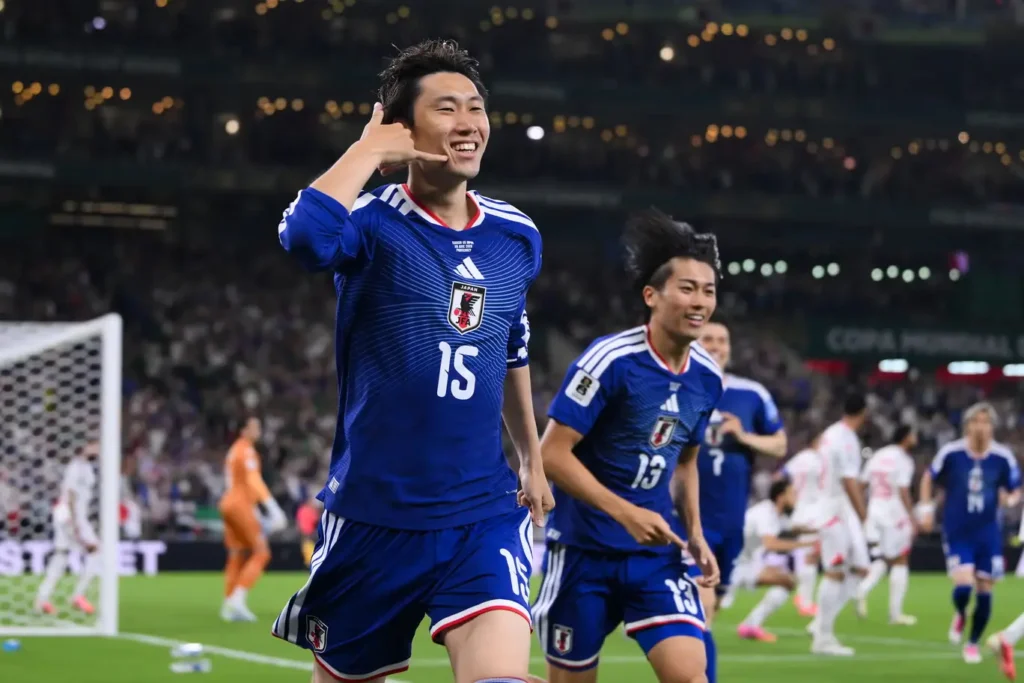
The history of Japanese football is filled with agonizing near-misses. They have reached the knockout stages multiple times in 2002, 2010, 2018, and 2022. But every single time, they hit a brutal glass ceiling in the Round of 16.
The pain of those exits is permanently burned into the national memory. In 2018, they suffered a heartbreaking last-second collapse against Belgium in Russia. In 2022, they endured a crushing penalty shootout defeat to Croatia in Qatar. Those moments were devastating. But in the context of the 100-year vision, they were simply necessary data points. They were harsh lessons that the system immediately absorbed and corrected.
The current leadership refuses to accept another polite, honorable exit. The JFA President and football chief Tsuneyasu Miyamoto has made a bold, public declaration. He does not just want a deep run. He has explicitly demanded that the team push all the way to the tournament final. He believes that the long development phase is officially over. The winning phase has begun.
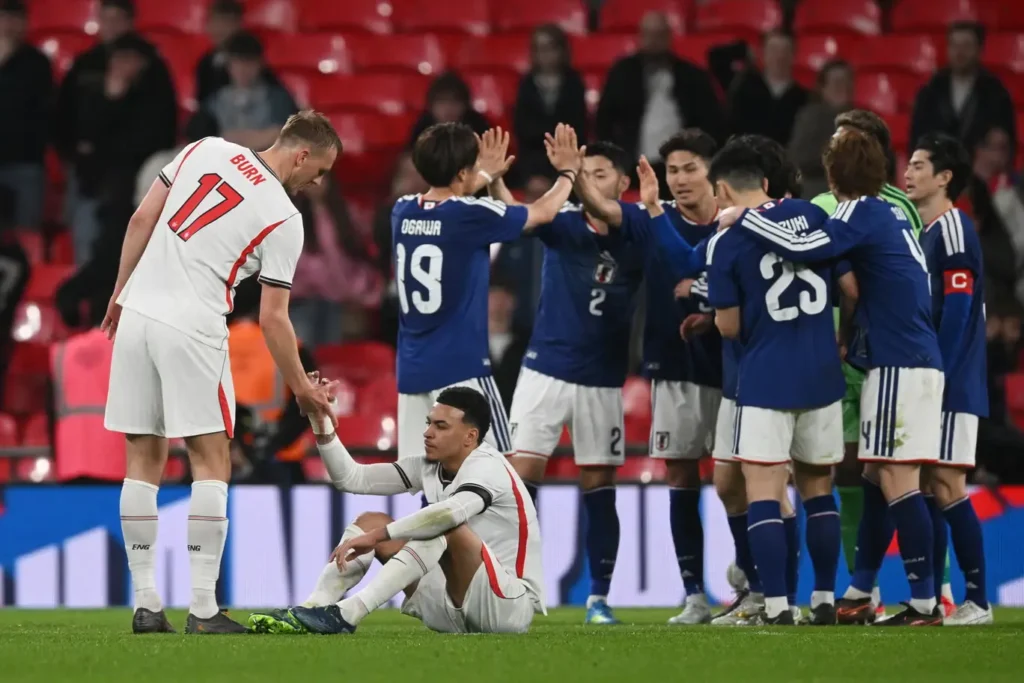
Technical experts across the globe are starting to agree. When you analyze the raw data, Japan has absolutely everything required to lift the trophy. They have elite goalkeepers pushing each other for the starting spot. They have a rock-solid central defense anchored by European veterans. Their midfield is incredibly deep, and their forward line is utterly ruthless.
The discipline required to execute the 2050 manifesto is not just contained to the players on the grass. It is reflected perfectly in the culture of the Japanese supporters in the stands. After every single match, regardless of the emotional result, the fans stay behind to clean the stadium. The players replicate this behavior by leaving their locker rooms in pristine condition. This is a profound reflection of a society built on mutual respect and absolute discipline. When a culture is this unified, success on the football pitch becomes inevitable.
If they can defeat Brazil on Monday, the entire landscape of the tournament changes. The psychological barrier will be completely shattered. The path to the final will suddenly open up like a wide, clear highway.
The 2050 manifesto was written to give future generations a roadmap. But this current squad of players does not want to wait twenty-four more years. They look around the dressing room and realize they have the talent to do it right now. They have combined the fierce discipline of their culture with a pure, electric joy for the sport. The critics can continue to doubt them, but the machine is fully operational. The Samurai Blue are no longer just dreaming. They are executing.